If your mower leaves ragged grass around fences, trees, and flower beds, that’s the gap weedeating fills. This guide covers the weedeating meaning, how to do it correctly and safely, and, since a lot of people searching this term are trying to price the job rather than do it themselves, what to actually charge for it.
Quick Answer: Weedeating means using a handheld string trimmer to cut grass and weeds in spots a mower can’t reach, along fences, around trees, and at tight edges. It’s the same task as weed whacking or string trimming, just a different regional name for it. Most homeowners weedeat every time they mow. If you’re pricing this as a service rather than doing it yourself, standard trimming is usually bundled into the mowing price ($45 to $90 per visit for a typical residential lot), with heavy or overgrown trimming billed separately at $10 to $25 extra.
What Does Weedeating Mean?

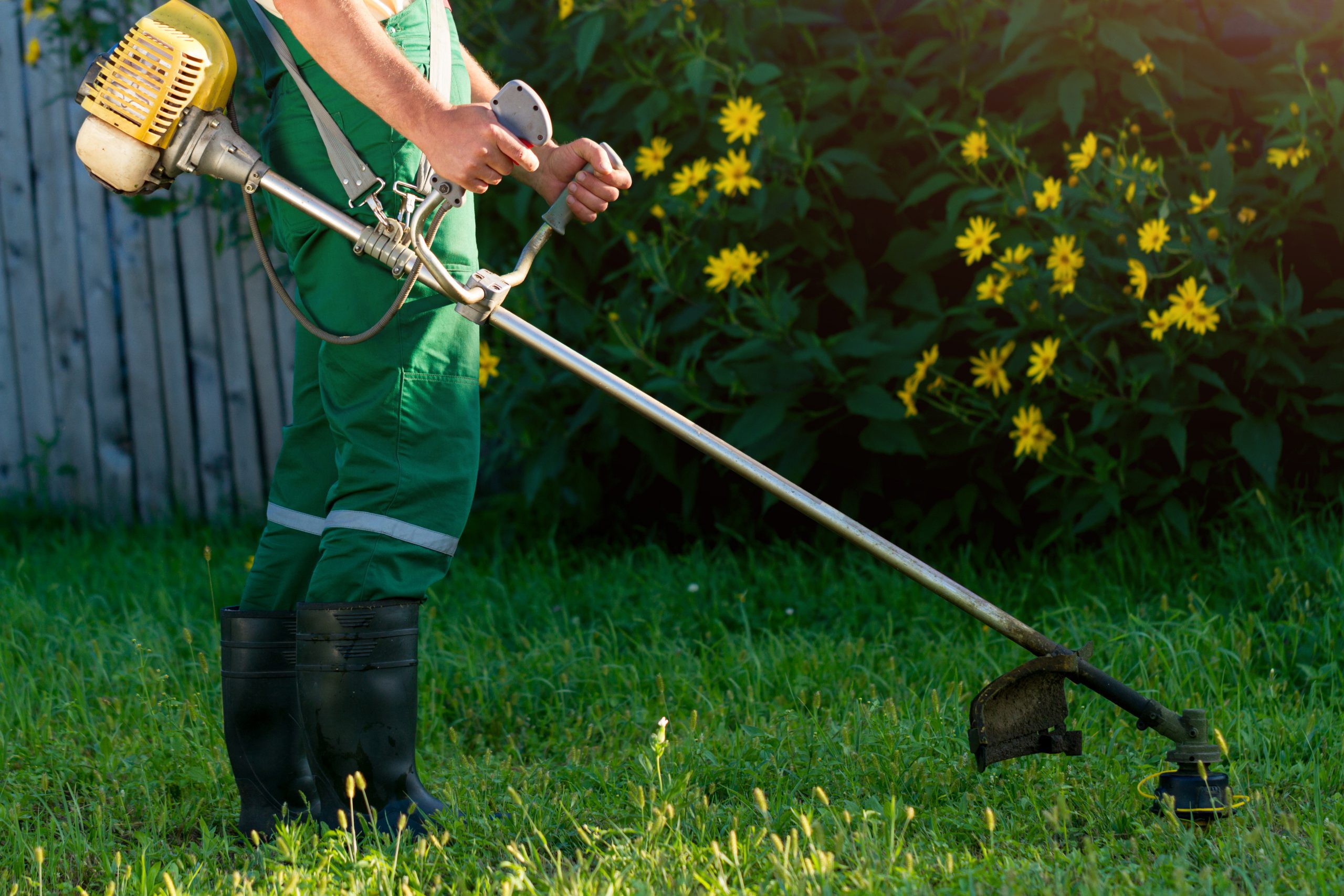
Weedeating means cutting grass and weeds with a handheld string trimmer, in the spots a lawn mower physically can’t reach: along fence lines, around trees and mailboxes, next to garden beds, and on narrow or sloped edges. The tool itself uses a spinning nylon line instead of a blade, which is what lets it get close to hard surfaces and delicate landscaping without the damage a mower blade would cause.
The term varies by region. “Weed eating” and “weed eater” are more common in the South and Midwest, while “weed whacking” shows up more in the Northeast. All three, along with the more equipment-neutral “string trimming,” describe the exact same task and tool. If you want the fuller regional and brand-history breakdown, what weed whacking is and why it matters covers that in more depth.
Why Weedeating Matters
Skipping the areas a mower can’t reach leaves a lawn looking unfinished even right after mowing, and it gives weeds room to spread from the edges inward. Regular weedeating:
- Keeps edges along sidewalks, driveways, and garden beds clean
- Stops grass and weeds from creeping into mulch beds or landscaping
- Handles slopes, tight corners, and areas around obstacles a mower can’t touch
- Gives a property the finished, maintained look that mowing alone doesn’t
Most yards need weedeating every time they’re mowed, or at minimum every other mow during the peak growing season, since edges grow back into view fast once the rest of the lawn is cut short.
How to Choose the Right Weed Eater
String trimmers are the standard choice for most yards, cutting with a rotating nylon line. Brush cutters are heavier-duty tools built for thick brush and overgrowth, and most typical residential yards don’t need one.
Beyond that, the main decision is power source:
- Gas trimmers handle large properties and thick, established weeds best, but they’re heavier, louder, and need regular fuel and maintenance.
- Battery trimmers are lighter and quieter and start instantly, but they’re limited to roughly 20 to 60 minutes of runtime per charge, which matters on bigger properties.
- Corded electric trimmers work fine for small yards close to an outlet, but the cord limits range and can tangle in tight spaces.
For a small to mid-sized yard, a battery or corded string trimmer with a bump-feed line system covers most needs. Larger properties or consistently overgrown areas are where a gas model earns its extra weight and noise.
How to Weedeat, Step by Step
Before starting: clear the area of rocks, sticks, and anything else the line could throw, check that the string is fed to the right length and the guard is attached, and wear closed shoes, long pants, and safety glasses.
Working the yard: start with the edges, keeping the trimmer head flat and moving in a steady line along borders, tilting it slightly when you want to define a sharper edge. Work in small, overlapping side-to-side sweeps rather than wide swings, and keep the trimmer level, since cutting at a sharp angle scalps the grass and throws more debris. Go back over any spots the mower missed once you’re done trimming.
Tricky spots: near fences, guide the line close to the base without letting it bang directly into posts. Around trees and garden beds, work from the outside in rather than cutting toward the plant. On slopes, stand uphill when it’s safe to do so for better control, and don’t force the trimmer through thick, resistant patches, ease into them instead.
Weedeating Safety Basics
A string trimmer throws debris faster than most people expect, rocks, mulch, even small pieces of glass. The basics cover most of the risk: safety glasses for flying debris, long pants and closed, sturdy shoes, hearing protection with gas models, and gloves to help with grip and prevent blisters. Keep kids and pets well clear of the work area, and never trim in sandals or barefoot, which is a more common mistake than it should be.
How Much to Charge for Mowing and Weedeating
If you’re on the other side of this, pricing the service rather than doing it yourself, here’s how it typically breaks down.
Standard trimming is usually bundled, not billed separately. Most flat-fee mowing prices already include basic edging, trimming, and blowing clippings off hard surfaces. Reasonable ranges for a standard visit:
| Lawn Size | Typical Price Range |
|---|---|
| ¼ acre | $25–$60 |
| ½ acre | $50–$75 |
| ¾ acre | $100–$150 |
| 1 acre | $150–$200 |
Rates according to Jobber and Housecall Pro, which both put a standard residential visit, mowing and trimming included, at roughly $45 to $90 for a typical quarter-acre lot.
Heavy or overgrown trimming is where extra charges make sense. If the property hasn’t been maintained in a while, has thick brush, or needs significantly more line time than a routine visit, pricing that as a separate line item, typically an extra $10 to $25, is standard practice rather than absorbing it into the base rate. Hourly pricing for lawn care work more broadly tends to run $30 to $65 per hour depending on region and equipment used.
A few pricing habits that hold up over time: quote trimming-heavy properties after seeing them in person or from recent photos, not blind. Standardize your add-on list (heavy trim, bagging and haul-away, edging along beds) so customers see consistent pricing instead of a number that changes every visit. And don’t undercut the base rate to compete on price alone, a property that needs real trimming time costs you the same in labor whether or not you charged for it.
Looking for the work itself rather than just the pricing? LawnGuru connects local providers with homeowners who need mowing and trimming done, with instant quoting and job tracking handled through the app.
Basic Weed Eater Maintenance
A well-maintained trimmer is easier to control and leaves a cleaner cut. Replace the line before it gets too short to feed reliably, clean grass buildup off the guard and head after each job to keep airflow clear, and check regularly for cracked guards or loose parts. Store trimmers indoors when possible, battery models especially hold up better with dry, temperature-stable storage.
Frequently Asked Questions
Is weedeating the same as weed whacking?
Yes. Weedeating, weed whacking, and string trimming all describe the same tool and the same task, cutting grass and weeds with a handheld string trimmer in spots a mower can’t reach. The difference is purely regional naming, not a different tool or technique.
How often should I weedeat my yard?
Most yards need it every time they’re mowed, since edges and obstacles regrow into view as soon as the rest of the lawn is cut. During slower growth periods (early spring, late fall), every other mow is usually enough to keep edges looking maintained.
Can I weedeat wet grass?
It’s possible but not ideal, wet grass clumps around the line, cuts unevenly, and wears the string down faster. The full breakdown on trimming wet grass covers the technique adjustments if you can’t wait for it to dry.
How much should I charge for weedeating on its own, without mowing?
Standalone trim jobs, no mowing involved, typically run $10 to $30 depending on property size and how overgrown the edges are. For recurring customers already on a mowing schedule, it’s more common to fold this into the regular visit price than to itemize it every time.
Do I need a separate weed eater if I already own a mower?
Yes. A mower can’t safely get close to fences, tree trunks, or garden bed edges without damaging them or leaving a ragged cut. A string trimmer is a low-cost, essential companion tool for finishing what the mower can’t reach.
The Bottom Line
Weedeating is what finishes a lawn: cutting the edges, corners, and obstacles a mower physically can’t reach. Doing it yourself comes down to the right tool for your yard size, a level, steady technique, and basic safety gear. If you’re pricing it as a service, standard trimming belongs in the base mowing rate, with heavy or overgrown work billed as a separate line item. If keeping up with the edges yourself keeps sliding down the to-do list, LawnGuru can connect you with a local pro who’ll handle it as part of a regular mowing visit.