Lawn edging is the practice of creating a clean, defined border along the edges of a lawn where grass meets driveways, sidewalks, curbs, garden beds, or mulch. The goal is a sharp separation line that keeps grass where it belongs and gives any yard a finished, maintained appearance. As a product, lawn edging also refers to physical border materials, such as metal strips, plastic, or stone, installed in the ground to create a permanent boundary.
Edging is one of those tasks that homeowners skip until they notice it missing. A mowed lawn with ragged, overgrown edges still looks untidy. A lawn that gets edged regularly looks intentional and well cared for, even if it was not mowed as recently.
This guide covers everything about lawn edging: what it is, why it matters, the tools and materials involved, how to install edging products, what homeowners pay for the service, and what professionals should charge when pricing edging jobs.
What Lawn Edging Actually Is (And Is Not)
Lawn edging refers to two related but different things, which is why a single search returns both product pages and lawn care how-tos.
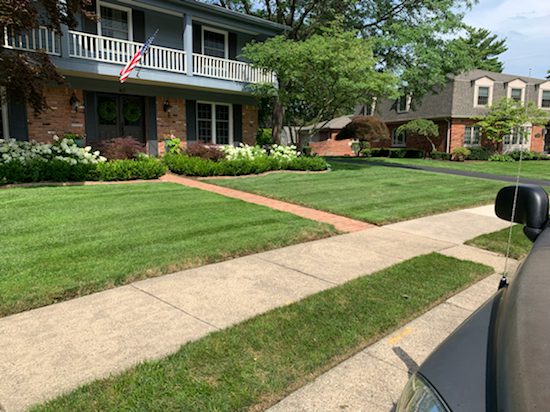
Lawn edging as a practice is the act of cutting a clean, vertical line along the border where grass meets another surface. This is done with a rotary edger, a stick edger, or the edge of a flat spade. The result is a defined cut line that separates turf from concrete, gravel, or soil.
Lawn edging as a product (also called landscape curbing) refers to physical material installed in the ground to create a permanent or semi-permanent border. This includes plastic strips, steel edging, rubber borders, concrete curbing, and brick or stone edging installed along garden beds, flower borders, or tree rings.
Both are “lawn edging.” Covering only one and not the other is one of the most common gaps in competing content on this topic.
Edging vs. Trimming: Two Different Jobs
People use “edging” and “trimming” interchangeably, but they are not the same job.
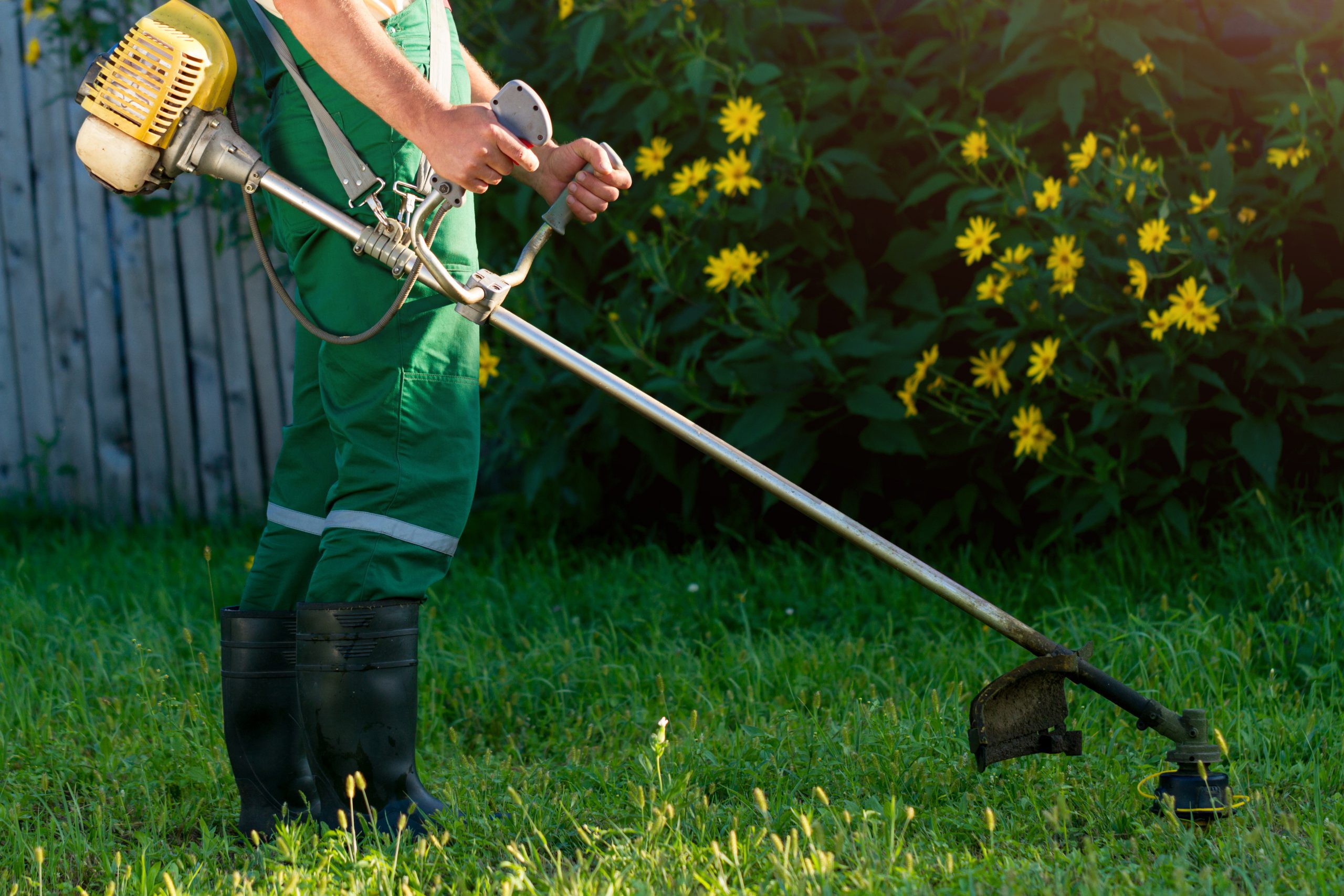
Trimming (also called weed eating or weed whacking) means cutting grass along areas a mower cannot reach, such as around fence posts, trees, and tight corners. A string trimmer does this horizontally, at the same height as the mowed lawn. It cleans up obstacles and tight spots. If you want to understand how trimming works in detail, this guide covers what weed eating is and how to use a weed eater correctly.
Edging cuts vertically into the soil along hard boundaries like driveways and sidewalks. The goal is not to cut grass to height but to create a clean vertical wall between the turf and the hardscape. The cut removes the ribbon of grass that creeps horizontally across concrete over time.
A standard lawn care visit typically includes both: trimming removes stray grass around obstacles, edging sharpens the boundary lines where lawn meets concrete. Charging for only one while delivering both is how some operators undercut their own margins.
Why Edging a Lawn Makes Such a Big Difference
The purpose of edging a lawn is twofold: aesthetics and control.
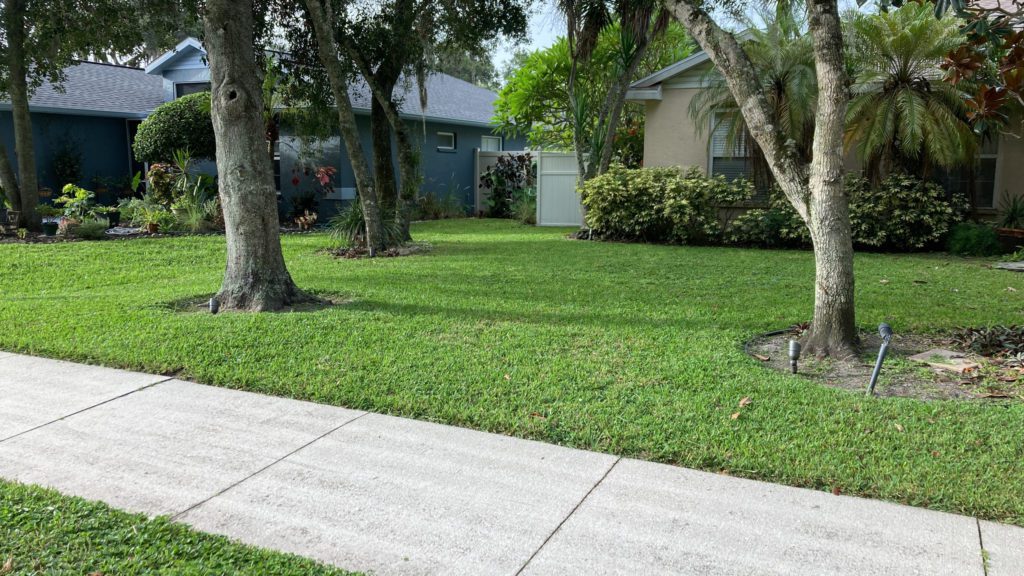
On the aesthetic side, a sharp edge transforms how a lawn looks. Even slightly overgrown grass looks maintained when the edges are clean. Real estate photographers know this. Curb appeal photography almost always features tight edge shots. For lawn care professionals, edging is one of the fastest visible upgrades you can deliver on a property.
On the practical side, grass spreads. Warm-season grasses like Bermuda, Zoysia, and St. Augustine send horizontal runners that creep across driveways and into garden beds over weeks. Left unchecked, that growth invades landscape fabric, mulch, and planted borders. A vertical cut stops that spread before it becomes a removal project.
Edging also affects mowing efficiency. The order of operations, whether you edge or mow first, affects how much cleanup you need afterward. Most lawn care professionals edge after mowing so they are not blowing fresh debris onto an already-mowed lawn a second time.
Bottom line: edging is the fastest single task that separates a lawn that looks cared for from one that just looks mowed.
Types of Lawn Edging: From Plastic Strips to Steel Borders
When homeowners search for lawn edging products, they are looking at materials installed to create permanent borders. The options span a wide range of cost, durability, and look.
| Material | Cost Per Linear Foot (Materials Only) | Best For |
|---|---|---|
| Plastic | $1.00 – $3.50 | Curved beds, budget installs |
| Rubber | $1.50 – $4.00 | Yards with pets or children |
| Brick | $2.50 – $6.50 | Classic, formal borders |
| Wood | $2.50 – $7.00 | Rustic aesthetic, raised beds |
| Concrete (precast) | $3.00 – $5.50 | Replaceable straight runs |
| Concrete (poured) | $3.00 – $8.00 | Custom curves, permanent install |
| Stone | $3.00 – $21.50 | Natural look, high-end projects |
| Metal (aluminum/steel) | $5.00 – $11.00 | Modern look, professional installs |
Labor adds $1.50 to $10 per linear foot on top of material costs depending on your market.
Plastic is the most affordable and easiest to install without special tools. It handles curves well but tends to heave out of the ground in freeze-thaw climates over multiple winters.
Rubber is made from recycled material and is forgiving if stepped on or hit by equipment. A practical choice for residential yards.
Metal edging (aluminum or steel) is the preference among professional landscapers for a clean, modern look that holds its shape for years. Steel edging in particular gives a crisp, formal border that never warps or heaves.
Brick and stone add timeless visual appeal but require individual placement and leveling. Labor costs run higher, and the finished product is not easily moved once set.
Concrete edging delivers the most durable result. Precast blocks are easier to reconfigure; poured concrete handles complex curves but requires professional equipment and cannot be moved once cured.
For a full breakdown of installed costs with labor included, see our landscape edging cost guide.
Bottom line: metal edging gives the cleanest professional result at a reasonable cost. Plastic works for DIY curved beds. Stone and poured concrete are permanent investments best suited for high-end projects.
How to Install Lawn Edging Step by Step
The installation process is similar across plastic, rubber, and metal edging. The steps below apply to any staked or trench-set edging product.
Step 1: Mark the layout. Use a garden hose, rope, or landscaping spray paint to mark the line you want to follow. For straight runs along driveways or sidewalks, a string line stretched between two stakes gives a cleaner guide than freehand. Take time here: a crooked edge is harder to correct once the material is set.
Step 2: Dig the trench. Use a flat spade, a half-moon edger, or a manual rotary edger to cut a trench along your marked line. Most edging products require a 3 to 4-inch trench. The top of the edging should sit approximately half an inch above soil level to form a visible barrier during mowing.
Step 3: Set the edging in place. Place the material into the trench and press it firmly against the vertical soil wall. For flexible plastic or rubber edging, start at one end and work along the run, using your foot to press the base into the trench. For heavier materials like brick or stone, add a 1-inch layer of sand or gravel at the base before setting to improve drainage and level the surface. University of Minnesota Extension recommends setting edging materials on a compacted base to prevent shifting during freeze-thaw cycles.
Step 4: Secure and backfill. For staked edging, drive stakes or connectors every 24 to 36 inches using a rubber mallet. Backfill soil against both sides of the edging and tamp it down firmly. For no-dig edging, the stakes anchor it in place and no trench is needed.
Step 5: Check alignment and clean the surface. Walk the full run from both ends to spot any sections that shifted during installation. Adjust before the soil settles fully. Sweep away displaced soil from the hardscape surface to prevent weed seed germination along the new border.
For the technique side of edging, maintaining a clean line along an existing lawn border, this guide on how to get a clean edge on your lawn covers using a rotary and stick edger to maintain it between seasons.
Bottom line: the trench depth and top-of-edging height are the two most important variables. Get those right and the rest of the install is straightforward.
What Pros Should Charge for Edging a Lawn
Pricing edging jobs on a real cost basis matters more than matching what competitors quote online. Most published price guides reflect homeowner costs, not what a professional should bid to stay profitable.
Start with your true hourly operating cost. Pull last year’s business expenses (vehicle costs, equipment, insurance, software, phone, accounting), subtract labor and materials, divide by 52 weeks and then by 40 hours. That is your overhead per hour. Add to that the true cost of each worker: base wage multiplied by 1.25 to 1.4 to account for payroll taxes, workers’ compensation, and benefits. According to the U.S. Small Business Administration, that multiplier is the standard for calculating true employee cost. A worker paid $25 per hour costs you $31 to $35 per hour in reality. Add your target margin on top of overhead plus labor.
Measure the linear footage, not the lot. A small property with complex bed borders and curved edges can take longer than a larger lot with two straight concrete runs. Measure every line you plan to edge before quoting. Factor in whether this is a maintained edge (quick cleanup cut) or a first-time cut into overgrown turf (harder, slower, needs more cleanup).
Set a job minimum. Standalone edging visits rarely make sense below $35 to $45. LawnGuru data shows the average edging job booked through the platform costs $49. When edging is bundled with a full mow, it typically adds $15 to $30 to the ticket depending on lot size and edge length.
For residential edging on maintained properties, a reasonable rate runs $0.25 to $0.75 per linear foot. New edges cut from scratch into overgrown turf justify the higher end of that range or an additional one-time setup fee.
Bottom line: know your hourly operating cost before you set a price. Bidding from internet averages without knowing your own numbers is how lawn care operators lose money on every job.
What Homeowners Typically Pay for Edging
For homeowners hiring a lawn care professional, cost depends on whether you want recurring edging service or a one-time landscape edging installation.
Recurring edging as part of a mow-and-edge visit typically adds $15 to $30 per visit. For standalone edging service on a residential lot, expect $35 to $75 depending on lot size and frequency.
For landscape edging installation, total cost varies by project size:
| Project Size (Linear Feet) | Typical Installed Cost |
|---|---|
| 12 ft | $42 – $106 |
| 32 ft | $112 – $282 |
| 50 ft | $175 – $440 |
| 80 ft | $280 – $704 |
| 100 ft | $350 – $880 |
| 180 ft | $630 – $1,584 |
| 250 ft | $875 – $2,200 |
Prices above are based on standard materials ($3.50 to $8.80 per linear foot installed). Metal, stone, or poured concrete projects run higher. Location also shifts the number significantly:
| Region / City | Installed Cost Per Linear Foot |
|---|---|
| Southeast (Dothan AL, Orlando FL, Houston TX) | $3.10 – $7.80 |
| National average | $3.50 – $8.80 |
| Midwest (Chicago IL, South Bend IN) | $3.60 – $10.00 |
| Northwest (Seattle WA, Salem OR) | $3.40 – $10.30 |
| Northeast (New York NY) | $4.20 – $11.20 |
If you want clean edges without picking up a tool, LawnGuru connects you with local lawn care pros who handle edging as a standalone service or as part of a regular mow. You can book in minutes and manage everything online.
The 3-Inch Edging Rule and Common Mistakes to Avoid
The “3-inch edging rule” refers to the recommended trench depth when installing or cutting edges. Three inches is enough to remove the grass crown and any runners without cutting into irrigation lines or deep root systems. Going shallower means runners cross back quickly; going deeper risks damaging buried infrastructure and plant roots.
Other mistakes that cause edging problems:
Edging too infrequently. A lawn edged once a season requires hard work to reclaim the line each time. Edging every two to three weeks, aligned with mowing cycles, keeps the work light and the border sharp with minimal effort per visit.
Using a string trimmer vertically as an edger. It can produce a rough edge, but the result is inconsistent and the trimmer often scalps the soil surface unevenly. A dedicated rotary or stick edger produces a cleaner, more consistent cut with less effort over time.
Skipping cleanup. Edging throws a narrow ribbon of soil and clippings onto the hardscape. Left in place, that material becomes a weed germination strip. Always blow or sweep after edging.
Cutting too far from the hardscape. The edge should follow the natural seam between grass and concrete, not cut several inches back into the turf. Over-edging over time creates a widening gap that fills with weeds and looks worse than no edge at all.
Bottom line: three inches deep, half an inch above grade, and every two to three weeks. Those three numbers cover most of what goes wrong with lawn edging.