Bermuda grass seed (Cynodon dactylon) germinates fastest when soil temperatures hold at 65°F or higher for three or more consecutive days. Hulled bermuda seed sprouts in 7 to 14 days under ideal conditions. Unhulled seed takes 14 to 28 days. The planting window runs late spring through early summer across most of the South. In Texas, the window opens as early as late March in the south and runs through June statewide. Full establishment from seed typically takes 60 to 90 days.
Bermuda grass seed is one of the most misunderstood products in lawn care. A bag of bermuda seed looks simple enough. But most homeowners who try to grow bermudagrass from scratch and end up with a patchy, thin stand made the same mistake: they planted at the wrong time, used the wrong seed type, or let the seedbed dry out once during those critical first 10 days.
Bermuda (Cynodon dactylon) is a warm-season turfgrass built for heat, drought, and high traffic. It spreads through above-ground stolons and below-ground rhizomes, which makes it aggressive and self-repairing once established. But getting it established from seed requires hitting a narrow window of soil temperature, consistent moisture, and sufficient daylight all at once. Miss any of them and germination stalls.
This guide covers everything needed to grow bermuda grass from seed: the difference between hulled and unhulled bermuda seed, how to confirm soil temperature is actually ready, a full step-by-step planting process, the complete germination and growth timeline, and the mistakes that most reliably kill a seeding effort before it gets started.
Hulled vs. Unhulled Bermuda Grass Seed: Why the Difference Matters
The first choice when buying bermuda grass seed determines how quickly it will germinate, and most people make it without realizing it is a choice at all.
Hulled bermuda seed has had its outer seed coat (the hull) mechanically removed. Without that protective coating, the seed absorbs moisture and begins germinating as soon as soil conditions are right. Hulled seed typically germinates in 7 to 14 days under ideal conditions and produces faster, more uniform germination across the seeded area. It costs more per bag, has a shorter shelf life, and requires consistent moisture during the first few weeks because it has no natural protection against drying out.
Unhulled bermuda seed (also called raw or common bermuda seed) retains its natural hull. That outer coat is a dormancy mechanism. In nature, it allows the seed to survive through winter and germinate the following spring when conditions improve. When you plant unhulled seed, germination is slower (14 to 28 days) and more uneven. Some seeds sprout quickly while others take an additional two to four weeks. Unhulled seed is cheaper and handles storage better, and it is the common choice for large-acreage applications where cost matters more than speed.
For residential lawns, hulled bermuda seed is almost always the better choice. Faster, more consistent germination means fewer bare spots, less weed competition during the establishment window, and a more uniform stand by end of season.
When reading a label, look for terms like “hulled common bermuda,” “scarified bermuda,” or turf-type variety names such as Sahara, Princess 77, or Riviera. Improved turf-type varieties are sold hulled. Common unhulled bermuda seed is typically labeled “raw” or “unhulled” and sold in bulk quantities for pasture or athletic field overseeding.
Seeding rates by application type:
| Application | Hulled Bermuda Seed Rate | Notes |
|---|---|---|
| New lawn (bare soil) | 1.5 to 3.5 lbs per 1,000 sq ft | Use higher rate in patchy or compacted soils |
| Overseeding thin turf | 0.5 to 1.5 lbs per 1,000 sq ft | Scalp existing grass first for better contact |
| Pasture or large acreage | 5 to 10 lbs per acre (unhulled) | Usually unhulled for cost |
| Patch repair | 3 to 5 lbs per 1,000 sq ft | Higher density compensates for competition |
The Right Soil Temperature for Bermuda Grass Seed (and How to Verify It)
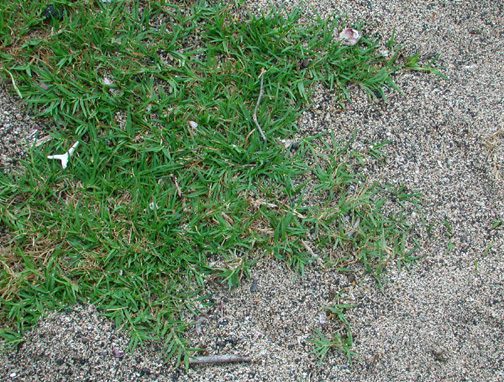
Bermuda grass seed will not germinate until soil temperatures reach 65°F. That is not a suggestion. Below that threshold, the enzymatic activity that triggers germination in bermuda seed does not occur at a rate that produces sprouts. The seed sits, waits, and either germinates slowly once things warm up or rots if overwatered while waiting.
The optimal range is 65°F to 70°F measured at a 2-inch soil depth. Germination speeds up as temperatures climb toward 80°F. Above 95°F, newly germinated seedlings begin to heat stress.
How to actually check soil temperature:
A soil thermometer (available at any hardware store or garden center for $10 to $15) is the right tool. Push it 2 inches into the soil at mid-morning and read the temperature. Do this on three to five consecutive days to confirm the soil is consistently warm, not just warm on a single hot afternoon after a stretch of cool nights.
Air temperature is a poor proxy for soil temperature. Soil warms slowly and cools slowly. A week of 75°F days in early April can still have soil sitting at 55°F because it has been absorbing cold from the weeks before. Conversely, a few cool nights in June will not drop soil temperature significantly if it has been building heat for weeks.
Soil temperature maps from NOAA and cooperative extension services are useful for a regional estimate, but a $12 thermometer gives you the actual reading for your specific site.
A practical rule of thumb: in most of the South, soil temperatures reach 65°F consistently about two to four weeks after daytime highs are regularly in the mid-70s to low 80s. Wait for the thermometer, not the forecast.
What happens when you plant too early:
Seeds planted in 58°F to 62°F soil do not fail immediately. They sit dormant and wait, which means the seedbed is wet for longer than needed, giving weed seeds (which germinate at lower temperatures) a head start. If soil temperatures remain low for two or more weeks after planting, many seeds rot from prolonged moisture exposure before germination begins. The result looks like poor-quality seed when the actual problem was timing.
When to Plant Bermuda Grass Seed by Region
Bermuda grass seed should be planted from late spring through early summer, after frost risk has passed and before intense midsummer heat makes keeping newly germinated seedlings alive difficult.
The specific window depends on climate zone and elevation.
| Region | Typical Planting Window | Soil Temp Reaches 65°F By |
|---|---|---|
| Deep South (south FL, south TX, coastal GA, coastal SC) | Mid-March through May | Mid-to-late March |
| Mid-South (central TX, TN, north AL, MS, NC) | Late April through June | Late April to early May |
| Transition Zone (north GA, VA, KY, south MO, OK) | Mid-May through June | Late May to early June |
| West (CA inland valleys, NV, AZ, NM) | April through June | Varies by elevation |
Bermuda grass grows reliably in USDA hardiness zones 7 through 10. Outside that range, bermuda seed germination is possible, but the grass rarely survives the winter with enough root development to come back the following spring.
Why late summer and fall seeding almost always fails:
Bermuda seed planted in August or September may germinate, but seedlings only have four to six weeks to develop before cooler fall temperatures slow growth to a near stop. They go into winter without the root depth needed to survive dormancy, and most do not recover. University extension programs across the South consistently advise seeding bermuda no later than 90 days before the first expected frost in your area. For most of the region, that puts the hard cutoff at June.
The risk on the early side:
Planting before soil is reliably at 65°F produces erratic results. Seeds may sit dormant for two to three weeks, giving weeds a head start on what should be a clean seedbed. If you plant and see nothing after 21 days, check whether a cool snap dropped soil temperature back below 65°F during that period. That is the most likely explanation.
When to Plant Bermuda Grass Seed in Texas
Texas spans multiple climate zones, which means bermuda grass planting time is not a single date across the state.
South Texas and the Rio Grande Valley have the earliest planting window in the contiguous US for bermuda grass seed. Soil temperatures in the lower Valley typically reach 65°F in March. Planting from late March through April is standard, and some years the coastal areas of South Texas support seeding in early March.
Central Texas (Austin, San Antonio, the Hill Country) typically reaches consistent planting conditions in April, with late April being the most reliable start. In warm years, mid-April works. In cooler springs, early May is safer.
North Texas (Dallas-Fort Worth, Waco, Abilene) usually hits consistent 65°F soil temps in late April to early May. May is the most reliable month for seeding bermuda in this region, though warm April years support earlier seeding.
West Texas and the Panhandle have shorter growing seasons and later soil warming. Seeding in May through early June is more appropriate for Lubbock, Amarillo, and the surrounding region.
For a broader look at grass seed timing across Texas by region and grass type, this guide to when to plant grass seed in Texas covers the full state with city-level guidance.
According to the Texas A&M AgriLife Extension turfgrass program, bermudagrass seeding in Texas is most successful in May and June, when soil temperatures are reliably warm and there is sufficient growing season ahead for the grass to fully establish before fall dormancy.
For lawn care operators in Texas:
On new construction sites across central and north Texas, seeding bermuda in April carries real risk of a cool snap dropping soil temps back below 60°F for a week. Scheduling new lawn seeding jobs for May through mid-June reduces service callbacks from homeowners whose seeding did not take. Always advise clients to check soil temperature at the 2-inch depth before confirming a planting date.
How to Plant Bermuda Grass Seed Step by Step
Bermuda grass seed requires more careful soil preparation than most other warm-season grasses because the seed is small and needs consistent surface contact to germinate reliably. Gaps, clods, and thick thatch layers all reduce germination rates significantly.
Step 1: Test and prepare the soil
Bermuda grass prefers a soil pH between 5.8 and 7.0. Outside that range, nutrient uptake suffers even with proper fertilization. A basic soil test, available through your county extension office or most garden centers, tells you where you stand. If pH is low, incorporate lime. If high, add elemental sulfur. Do this two to four weeks before seeding if possible, so amendments have time to integrate into the soil.
Till or loosen the top 4 to 6 inches, especially in compacted areas. Remove debris, rocks, and existing dead vegetation. Rake the surface to break up clods and create a fine, level seedbed. Smooth, firm soil gives small bermuda seeds better contact with the ground.
Step 2: Apply starter fertilizer before seeding
Apply a starter fertilizer high in phosphorus, such as a 10-20-10 or similar formulation, at label rates before seeding. Phosphorus supports root development in new seedlings during the first 30 days. Do not use a fertilizer that contains a pre-emergent herbicide. Pre-emergents stop seed germination across the board and will prevent your bermuda seed from sprouting.
Step 3: Spread seed evenly using a broadcast spreader
Divide your total seed quantity in half and make two passes at perpendicular angles. The crossing pattern produces more even coverage than a single directional pass. For new lawns from bare soil, apply hulled bermuda seed at 1.5 to 3.5 pounds per 1,000 square feet. For overseeding into existing thin turf, reduce the rate to 0.5 to 1.5 pounds per 1,000 square feet.
Step 4: Improve seed-to-soil contact
This is the step most people skip, and it makes the biggest difference in germination rate. After spreading seed, go over the area with a lawn roller or drag a piece of chain link fence across the seeded surface. The goal is to press seed into the top 1/8 inch of soil without burying it. Bermuda seed germinates best at or near the soil surface. Even a light pass with the back of a leaf rake helps.
Do not apply straw mulch over bermuda seed. Straw can carry weed seeds, reduces soil temperature, and physically obstructs the small seedlings. If erosion is a concern on slopes, use a weed-free erosion control blanket instead.
Step 5: Water immediately and maintain moisture through germination
Water gently right after seeding, using a mist or fan spray setting that does not disturb the seedbed. Keep the top inch of soil consistently moist, not saturated, until germination completes. In hot weather, this typically means watering two to four times per day in small amounts (roughly 1/8 inch per application).
Do not let the seedbed dry out between germination and establishment. A newly germinated bermuda seedling that dries out before its roots anchor is dead. This is the single most common cause of seeding failure after the germination phase has started.
Step 6: Keep traffic off the seedbed
Foot traffic, pets, and mowing equipment should stay off the seeded area until grass reaches 2 inches tall. Do not begin mowing until the stand has reached that threshold.
If you are overseeding an existing bermuda lawn rather than starting from scratch, this guide to how to overseed a lawn covers the additional prep steps for seeding into existing turf, including scalping height and timing.
If you want the prep, seeding, and early establishment handled professionally, LawnGuru connects you with local lawn care pros who offer overseeding as a standalone service across the South. Book online and manage the job through the platform.
How Long Does Bermuda Grass Seed Take to Germinate?
Germination time depends on three things: seed type, soil temperature, and watering consistency. Under ideal conditions, hulled bermuda grass seed germinates in 7 to 14 days. Unhulled seed takes 14 to 28 days, sometimes longer.
Ideal germination conditions:
- Soil temperature consistently at 65°F or above at 2-inch depth
- Top inch of soil kept moist throughout the day without becoming waterlogged
- Six to eight hours of direct sunlight per day
- No herbicide residue from pre-emergent applications in the previous two to three months
What slows germination down:
Cool nights: Soil temperatures that dip below 65°F overnight significantly extend the germination window. Even if days are warm, consistent cool nights slow the process for both hulled and unhulled seed.
Overwatering: Saturated soil creates anaerobic conditions that suppress germination. The soil should be consistently moist, not wet. If water is pooling or the surface feels mushy, cut watering frequency.
Seed buried too deep: Bermuda seed is tiny and does not carry enough stored energy to push a shoot through more than 1/4 inch of soil. Raking seed into the soil rather than pressing it to the surface is a common mistake. If seed is buried, germination will be thin and uneven.
Herbicide residue: Pre-emergent products applied earlier in the season can suppress germination for two to four months depending on the product and application rate. Always check herbicide labels for re-seeding waiting periods before planting.
For a deeper look at how soil temperature, seed depth, and moisture interact across grass types, this guide to grass seed germination covers the full mechanics.
What to expect day by day:
Days 7 to 10 (hulled seed, ideal conditions): A light green fuzz appears across the seeded area. Individual blades are visible but fragile.
Days 14 to 21: Density increases. The stand starts to look like grass rather than scattered sprouts.
Days 21 to 30: Stolons begin spreading. Coverage fills in.
Do not panic if germination is uneven during the first two weeks. Patchy germination is normal. If bare areas persist past 30 days in spots that received the same seed and water, check for soil compaction, shade, or drainage issues in those specific locations. Those are the most common causes of localized germination failure.
Can you just throw bermuda grass seed down?
Not reliably. Bermuda seed thrown on top of hard or unprepared soil without soil contact will germinate at a fraction of the rate of properly prepared seedbeds. The seed needs to touch moist soil to absorb water and begin germination. Broadcasting seed onto packed ground, thatch, or dry soil and watering from above rarely produces a usable stand.
Should you soak bermuda grass seed before planting?
For hulled seed, no soaking is needed. The hull is already removed, and the seed will absorb moisture from the soil within hours of contact. Soaking can actually trigger germination before planting, making the seed fragile. For unhulled seed, some professionals use a 12 to 24-hour soak in water to soften the hull slightly, but results are inconsistent and the practice is not standard in residential seeding.
Bermuda Grass Seed to Full Lawn: The Growth Timeline
Germination is the beginning, not the result. Most homeowners significantly underestimate how long it takes to get from sprouts to a lawn that looks established.
| Stage | Timeframe from Seeding | What It Looks Like |
|---|---|---|
| Germination | Days 7 to 14 (hulled) / 14 to 28 (unhulled) | Light green fuzz, fragile sprouts, no coverage |
| Seedling growth | Days 14 to 30 | Blade development, uneven density, no lateral spread yet |
| Stolon spread begins | Days 30 to 45 | Grass starts filling bare areas through runners |
| First mow ready | Days 21 to 35 (at 2-inch height) | 50 to 70% coverage |
| Moderate establishment | Days 45 to 60 | Recognizable lawn, still thin in spots |
| Full establishment | Days 60 to 90 | Dense, even stand capable of normal foot traffic |
Full establishment means a lawn capable of handling normal residential use and routine mowing without setback. It does not mean the lawn looks like a three-year-old stand. Bermuda fills in aggressively through stolon spread once it gets going, but the first full growing season is still part of the establishment process.
When to mow for the first time:
Mow when blades reach 2 inches tall. This typically happens 21 to 35 days after germination. Set the mower to 1.5 inches for the first cut. This encourages lateral spread rather than upward growth. Do not remove more than one-third of the blade height in a single mowing, especially during the first month.
After the first mow, bermuda grass can be maintained at 1 to 1.5 inches for a tight, dense appearance or up to 2 inches for slightly softer feel underfoot. Lawn mowing heights by grass type and season has the full height reference for bermuda through each phase of the growing season.
When to fertilize:
Apply a nitrogen-based lawn fertilizer about four to six weeks after germination, once the stand has filled in to at least 60 to 70 percent coverage. Using fertilizer too early pushes the grass to grow at a rate the shallow root system cannot support. A 32-0-10 or similar maintenance blend works well once the lawn is past the seedling stage.
Continue fertilizing every six to eight weeks through the active growing season. Stop feeding bermuda six to eight weeks before your region’s first expected frost date. Fertilizing late in the season produces soft growth that does not harden off before dormancy and can increase disease risk over winter.
Understanding winter dormancy:
Bermuda grass goes dormant in fall and winter. In zones 7 and 8, it may brown completely from October through March or April. This is normal. The grass is not dead. It comes back as soon as soil temperatures reach 50 to 55°F in spring.
Bermuda seeded in the current growing season will go dormant in its first winter just like established turf. As long as the grass developed sufficient root depth before dormancy, it returns the following spring with more aggressive spread than in year one.
How to Water Bermuda Grass Seed at Each Stage of Establishment
Watering schedule is the most common point of failure in bermuda grass seeding. The needs change significantly from seed to seedling to established turf, and treating all three stages the same way causes problems.
Stage 1: Germination phase (days 1 through germination)
Goal: keep the top inch of soil consistently moist without saturating it.
In hot weather (soil temps above 80°F), water three to five times per day in light applications. In milder conditions, two to three times per day is usually sufficient. Each application should be about 1/8 inch of water. You are preventing surface drying, not irrigating deeply.
The critical point: once a bermuda seed begins germinating and sends up its first shoot, a single day of drying out kills it. The root has not anchored yet. There is no recovery from complete surface drying during the first week of germination. This is the phase where most seeding failures happen in hot, dry conditions.
Stage 2: Seedling establishment (days 7 through 30)
As seedlings develop their first true roots, begin transitioning from frequent light watering to less frequent, deeper watering.
By days 14 to 21, reduce to two waterings per day at slightly higher volume. By days 21 to 30, move toward once per day, applying 1/4 to 1/3 inch per session. The goal is to push roots downward into the soil rather than keeping them concentrated at the surface.
Stage 3: Established bermuda turf (day 30 onward)
Water deeply and infrequently. This encourages roots to grow downward, making the turf more drought-tolerant and more resistant to heat stress.
Established bermuda typically needs 1 inch of water per week total from rainfall and irrigation combined. In hot, dry stretches without rainfall, this may require two to three irrigation sessions per week depending on your soil type. Sandy soils drain faster and need more frequent watering at lower volumes. Clay soils hold water longer and can go longer between irrigations.
Morning is the best time to water. Water applied early soaks into the root zone before afternoon heat and allows blades to dry before evening, reducing disease pressure from fungal pathogens that thrive in overnight moisture.
Mistakes That Stall Bermuda Grass Seed Before It Can Germinate
Planting too early in cold soil
The most common mistake, and the hardest to diagnose afterward because the failure is invisible. Homeowners see warm days in late March or early April, assume it is planting time, and seed into soil that is still sitting at 55 to 60°F. The seed does not germinate. It sits. Weeds that germinate at lower temperatures get a two- to three-week head start on what should have been a clean seedbed. When seeding finally occurs in warmer soil, it is a catch-up battle.
Check soil temperature before purchasing seed. If the thermometer reads below 60°F, wait. If it reads 62 to 64°F, you are close but not there yet. Wait for three to five consecutive days of 65°F or above before seeding.
Burying the seed
Bermuda seed is tiny. It does not have the stored energy to push through more than 1/4 inch of soil. Raking seed into the surface as if planting a vegetable garden is a reliable way to produce a thin stand. Press the seed to the surface, do not bury it.
Letting the seedbed dry out
New bermuda seed that has started germinating dies within 24 to 48 hours if the soil surface dries out completely. During the germination phase, watering frequency matters more than volume. Three to five light waterings per day beats one heavy soaking that leaves the surface dry all afternoon and evening.
Applying weed control before the lawn is established
Pre-emergent herbicides stop germination. Post-emergent broadleaf herbicides can damage or kill bermuda seedlings before the root system is mature enough to handle chemical stress. If weeds appear in the new lawn during establishment, remove them by hand. Wait until the bermuda lawn has been mowed at least three times before applying any herbicide to the area.
Seeding under too much shade
Bermuda grass needs six to eight hours of direct sunlight daily. In partial shade, bermuda thins progressively through the first summer and struggles to compete with weeds. Germination may look fine initially because seedlings do not discriminate by light level at first. But shade-intolerant bermuda will fail in under-lit areas within the first growing season. Choose a more shade-tolerant grass species for areas with significant tree canopy.
Mowing too early or too short
Mowing before bermuda seedlings reach 2 inches can uproot fragile plants whose roots have not yet anchored into the soil. When the first mow does happen, setting the blade lower than 1.5 inches on a new lawn scalps the young stand and sets back growth significantly. Let the grass reach 2 inches before mowing, and cut to 1.5 inches on the first pass.
Not addressing drainage issues before seeding
Bermuda grass does not tolerate standing water. Low spots that collect water after rain produce poor germination and weak seedling establishment. Grading or improving drainage in these areas before seeding is more efficient than reseeding failed spots later. If water sits in an area for more than 24 hours after rain, that area needs drainage attention before bermuda seed will work reliably.