Dollar spot fungus frustrates many property owners. It often starts as a few pale patches on your lawn and can quickly spread if ignored. These spots are easy to confuse with underwatering, pet damage, or fertilizer issues, which means you might miss the real cause while the disease gains ground.
If you’re dealing with mysterious patches or recurring lawn problems each season, this guide will help you tell dollar spot apart from similar issues and know exactly what to do next. Whether you handle lawn care yourself or want the job handled right the first time, LawnGuru can help, with practical steps, expert oversight, and local pros ready when you need them.
Understanding Dollar Spot Fungus
Dollar spot is a turf disease caused by fungi in the Clarireedia group (previously called Sclerotinia). It’s one of the most persistent issues for North American lawns, showing up on most common cool-season grasses and some warm-season varieties.
Why It’s a Problem
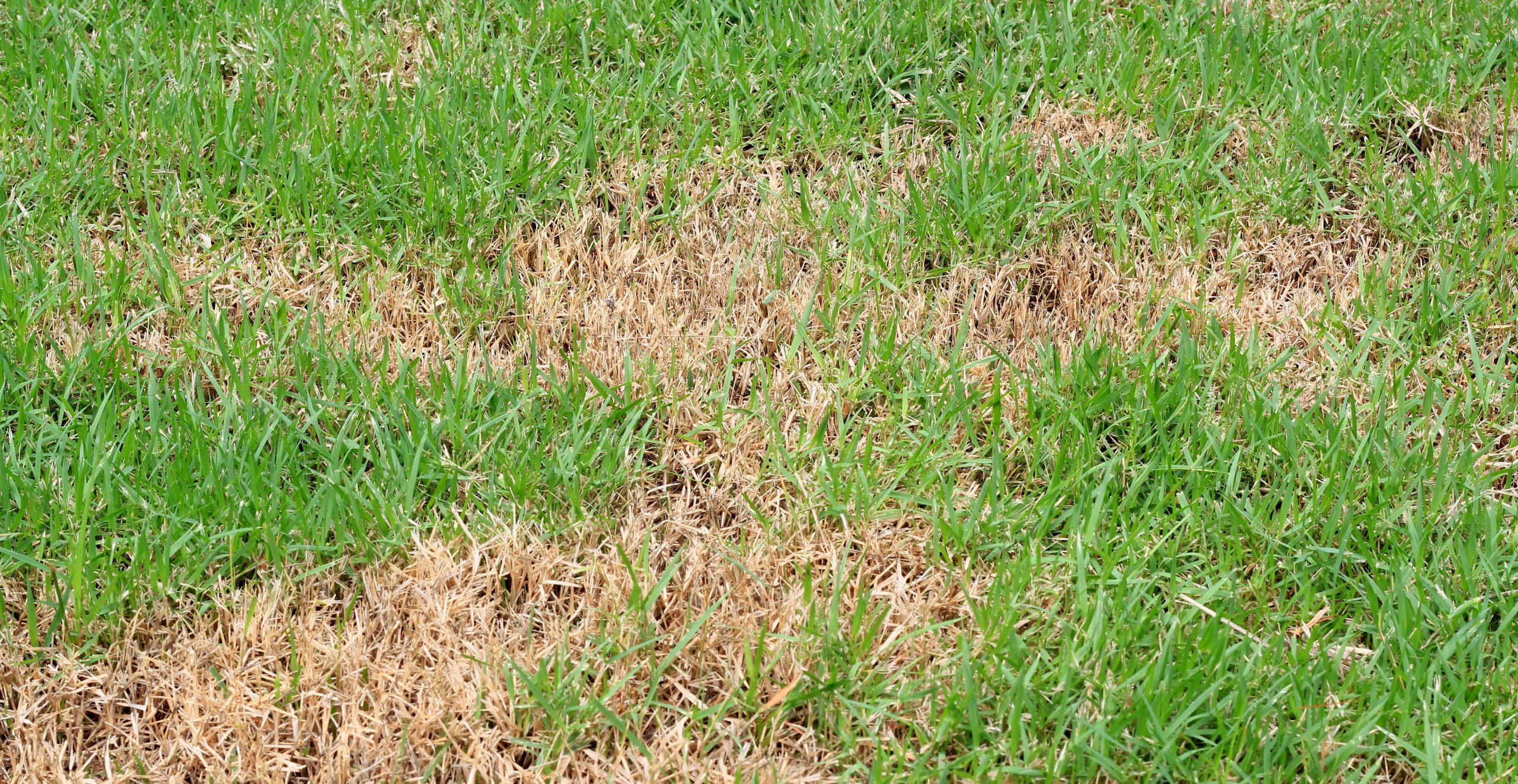
- Lawn appearance: Dollar spot creates small bleached or straw-colored spots, even on well-watered lawns.
- Rapid spread: Under warm, humid conditions, small patches can merge into larger damaged areas within weeks.
- Long-term effects: If it keeps coming back, it thins your grass, encourages weeds, and makes it harder for your lawn to recover.
Spotting the problem early makes clean-up much easier.
Signs of Dollar Spot Fungus
Knowing what to look for early reduces hassle and wasted efforts on the wrong fix.
Visual Clues
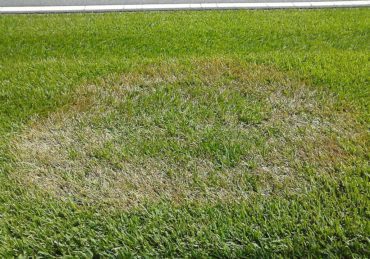
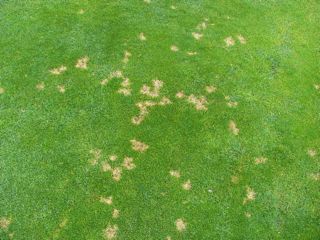
- Patch size: Small, round bleached spots, often 2–6 inches across; larger, irregular patches can develop if not addressed.
- Grass blade lesions: Look for straw-colored spots or bands with reddish edges across the leaf blade. These may have a distinct “hourglass” shape.
- Morning appearance: Early morning dew can reveal faint, cobweb-like growth on the patches.
- Grass types affected: Fescue, perennial ryegrass, Kentucky bluegrass, bentgrass, and zoysiagrass are all commonly affected.
Quick Reference Symptoms
- Round, pale spots ranging from coin to dinner plate size
- Tan lesions with reddish borders on grass blades
- Webby white threads in the morning dew (may appear, then disappear quickly)
- Patches become larger or join in warm, humid conditions
- Turf in spots pulls up easily and may look slightly sunken
Tip:
Fertilizer burn usually affects larger, irregular areas and does not cause narrow, banded lesions on individual blades. Pet spots typically leave a dark green edge around the damaged area.
What Leads to Dollar Spot Fungus?
Certain weather and lawn care habits make dollar spot more likely.
Environmental Conditions
- Temperatures: Most common when highs are 70–85°F with cool nights
- Humidity: Frequent dew or high humidity in the mornings
- Leaf wetness: Lawns that stay damp overnight, even if the soil is not wet
Lawn Care Factors
- Low nitrogen: Lawns that are underfed or stressed are more likely to develop the disease.
- Thatch build-up: Thatch over ½ inch provides a home for fungus and traps moisture at the soil line.
- Soil compaction: Areas with poor drainage or packed soil stay wetter at the surface.
- Mowing: Dull mower blades or cutting too short (scalping) makes it easier for the fungus to enter the turf.
- Watering at night: Evening or overnight watering keeps grass blades wet for longer, favoring disease.
Even well-kept yards can get hit if these conditions line up.
Action Steps to Prevent Dollar Spot Fungus
You can cut the risk by making a few adjustments to your regular lawn care routine.
Prevention Checklist
| Task | What It Helps With | Extra Note |
|---|---|---|
| Fertilize at recommended rates | Maintains healthy, resilient lawn | Use slow-release nitrogen in early spring |
| Water deeply and less often | Avoids prolonged leaf wetness | Water early in the morning, aiming for 1″ a week |
| Cut grass a bit longer with sharp blades | Protects grass, strengthens turf | For most cool-season types, mow at 3–3.5″ |
| Reduce thatch and improve drainage | Makes surface less attractive to fungus | Aerate yearly; dethatch if layer exceeds ½ inch |
| Bag clippings during outbreaks | Lowers chances of spreading disease | Outside of outbreaks, mulching is fine |
| Watch problem spots | Adjust care in shaded or damp lawn corners | Edges near sidewalks, fences, or under trees |
Step-by-Step Guidance:
- Soil test yearly: Know your lawn’s nutrient levels before applying fertilizer.
- Apply fertilizer as needed: For most lawns, 1–2 lbs. nitrogen/1,000 sq.ft. per year, adjust for type and location.
- Set sprinklers to run before sunrise: This dries grass out quickly and shortens the fungus’s window.
- Keep mower blades sharp: Reduces scrapes, makes grass less vulnerable.
- Dethatch if thatch exceeds ½ inch: Use a rake or have a pro handle this.
- Aerate compacted areas: Yearly core aeration makes a big difference, especially with heavy foot traffic or clay soil.
Managing several properties or tight on time? With LawnGuru’s instant pricing and flexible scheduling, you can book aeration, mowing, and lawn treatments through our app in just a few taps. Our trusted local landscape professionals handle the details and send you photo receipts after every job.
How to Treat Active Dollar Spot Fungus
If prevention isn’t enough and symptoms appear, here’s what works.
Practical Treatment Steps
- Adjust fertilization: A light nitrogen boost helps the lawn fill in damaged areas and slows the fungus.
- Improve lawn care basics: Follow the prevention checklist, most cases resolve when you address mowing height, soil health, and watering routines.
- Bag clippings until under control: Reduces spore spread.
- Monitor conditions: Make notes after rainfall, periods of high humidity, or during fertilizer changes.
- Chemical controls: In severe or persistent cases, some choose a targeted fungicide. Check local guidelines before using, and consider professional support for correct application.
Not sure if you’re managing dollar spot or a similar issue? LawnGuru providers are trained to spot, document, and recommend targeted solutions with the transparency and real-time tracking our customers expect. You’ll always have photo-based updates in your app, so you know exactly what’s being done and why.
Stop Dollar Spot from Taking Over Your Lawn
Dollar spot fungus can undo months of lawn care in one season if it goes unchecked. Spotting it early and tackling the basics, proper feeding, watering, and mowing, makes a visible difference and protects your investment in outdoor space, whether you manage one home or many.
If you want professional help or need recurring services across multiple properties, LawnGuru makes scheduling and managing lawn care straightforward. With our instant pricing, easy online booking, clear job tracking, and the Guru Guarantee, you’ll spend less time worrying and more time enjoying a healthier lawn.
Ready to see the difference? Enter your address for an instant price, or download the LawnGuru app to get started.