Brown spots can make even the greenest lawn look neglected, and they tend to show up just when your grass should look its best. Whether it’s midsummer heat, patchy watering, or something eating your roots, fixing the problem starts with knowing what’s behind it.
Here’s how to figure out what’s going wrong, and what actually works to get your lawn green again.
What Brown Spots Mean (and What They Don’t)
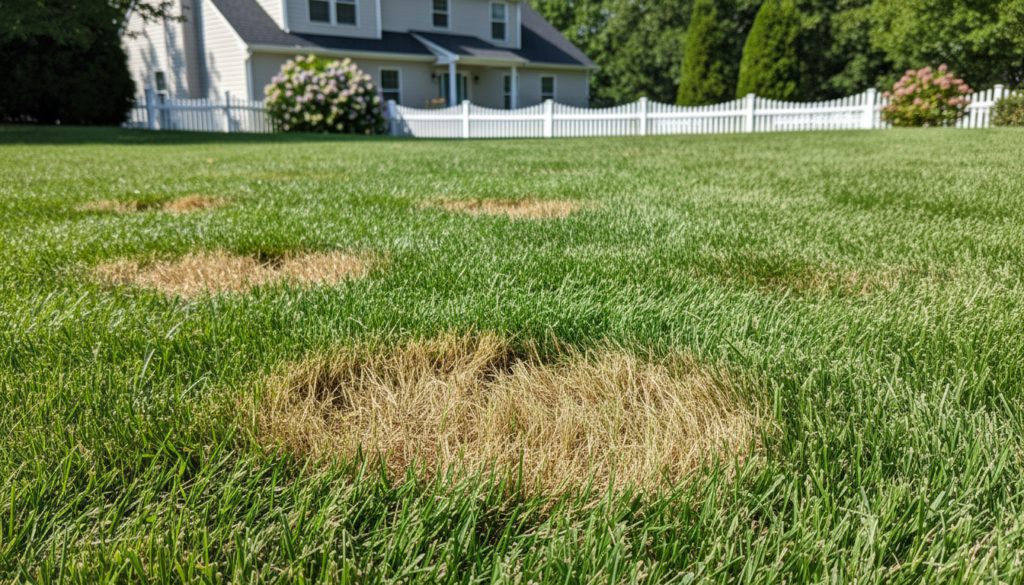
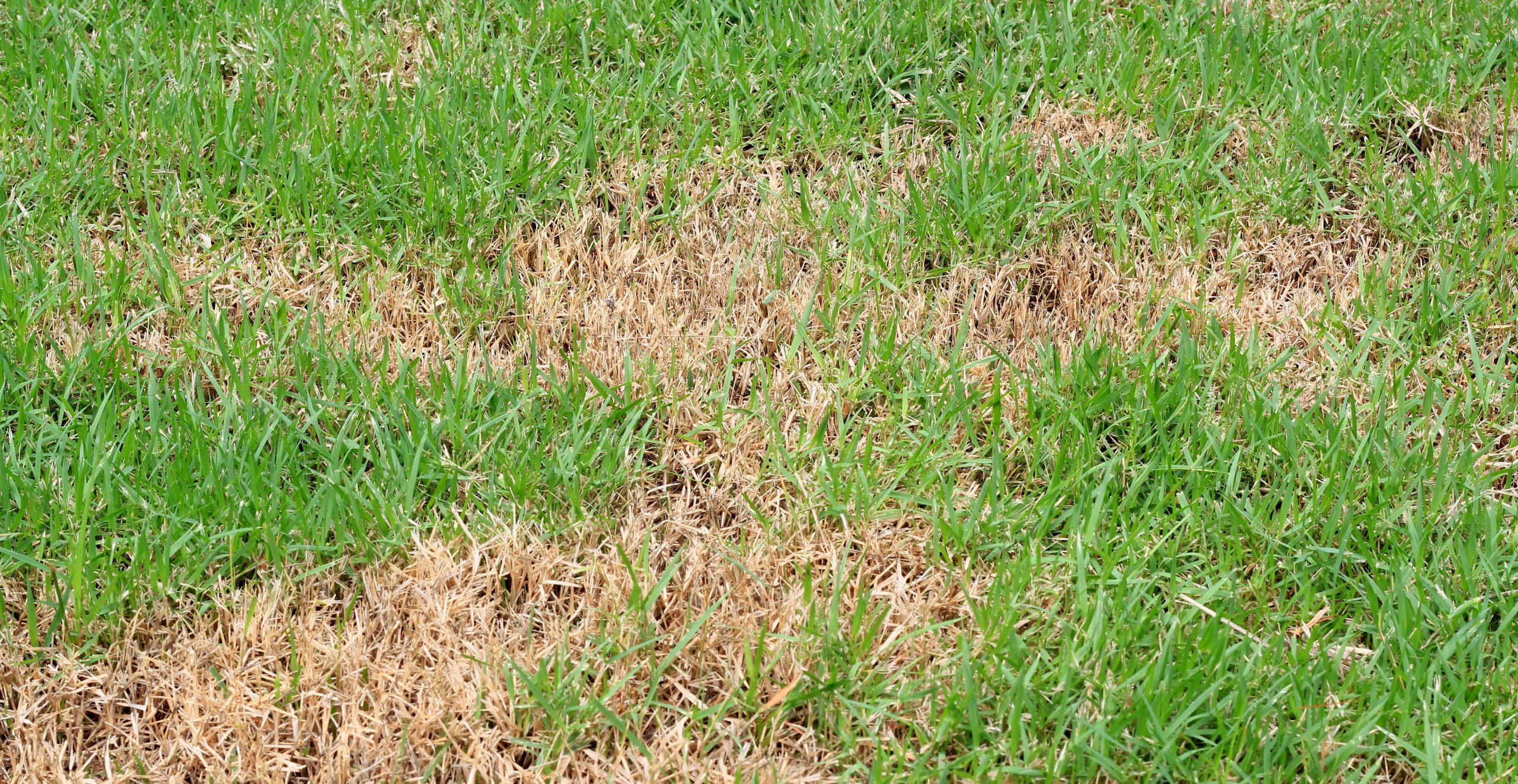
Not every brown spot means you have a fungal disease. In fact, fungus is often misdiagnosed. Brown patches can also come from simple things like dry soil, pet urine, mower damage, or underground pests.
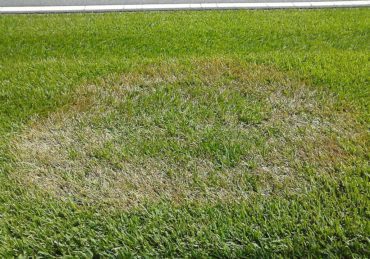
Before treating anything, look at where the spots are, how they behave, and how quickly they spread. Fungal diseases tend to appear suddenly and in consistent shapes (often circles), while drought and traffic damage are usually more irregular.
How to Identify the Cause: Water, Fungus, or Bugs?
Here’s what to look for:
- Watering issues: Dry patches usually match sun exposure or sprinkler patterns. The soil under them will be dry or compacted.
- Fungal spots: Often appear as tan or brown circles with a defined edge. May have a smoky halo in the early morning. They usually spread fast in humid conditions.
- Grubs or bugs: If the grass lifts easily like a carpet and has no roots, that’s likely grubs. You may also notice animals digging for them.
Also check mower height, scalping the grass can cause it to brown quickly, especially in hot weather.

A Step-by-Step Fix for Brown Lawn Spots
Fixing brown patches is about treating the cause, not just the symptom. Here’s the order that works best:
- Inspect the soil: Dig into a brown patch. Is the soil bone-dry? Is the grass rooted or loose? Are there insects visible?
- Check watering habits: Lawns typically need 1 to 1.5 inches of water per week, delivered deeply, not daily sprinkles.
- Adjust mower height: Raise the deck to 3–4 inches depending on grass type. Cutting too short causes stress.
- Test for fungus: If the patch appeared quickly and has a defined edge, consider a lawn-safe fungicide. Water only in the early morning.
- Look for pests: Peel up turf. If grubs or chinch bugs are found, apply an appropriate control product following pesticide safety guidelines.
- Rake and remove dead material: Clear out any thatch or dead grass so the area can recover.
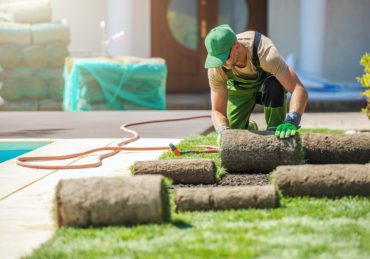
- Reseed or patch: If the spot is bare and the cause is fixed, overseed with matching grass or use a patch mix.
- Water consistently: Keep the area moist (not soaked) until new grass is established.
- Monitor progress: Give it 2–3 weeks. If no change, re-check the original cause.
When Brown Spots Get Worse in Summer
Hot, dry weather stresses grass, and weak spots show first. Even healthy lawns can go dormant in heat, turning yellow-brown, similar to how some species go dormant like Bermuda grass in winter, until cooler weather returns. But true brown spots from disease or pests will continue to worsen unless treated.
Summer also dries out soil fast, especially sandy or compacted areas. Combine that with shallow roots from short mowing, and brown patches are almost guaranteed.
If your lawn was already borderline stressed, summer just brings the problems to the surface faster.
When You Shouldn’t Treat Brown Spots Yet
Sometimes, the best move is to wait a week and watch. Here’s when holding off can help:
- During a heatwave: Treatments like fertilizer, herbicide, or reseeding can backfire in high temps.
- New sod or seed: Give it time to establish. Brown areas might simply be slow starters.
- Dormant grass: If it’s uniformly brown in hot, dry weather, your lawn may just be conserving energy, not dying. Check for green at the base of the blades, a tip often found in a winter grass care guide.
If you’re unsure, water deeply once and monitor for signs of rebound before applying products.
Care Basics That Prevent Brown Patches
Preventing brown spots is easier than fixing them. These habits make a big difference:
- Water deeply, not often: 2–3 times per week encourages deep roots.
- Mow higher: Taller grass shades the soil and holds moisture.
- Avoid cutting when stressed: Never mow during drought or right after heavy rain. Knowing how early is too early to mow the lawn can prevent unnecessary stress to your turf.
- Reduce traffic: Rotate footpaths and move play equipment to prevent soil compaction.
- Aerate yearly: Helps water and nutrients reach roots, especially in clay or compacted soils.
Table: Spot Type vs Likely Cause and Fix
Here’s a quick way to match what you see to what’s going wrong:
| Symptom | Likely Cause | What to Do |
|---|---|---|
| Circular brown patches | Fungus (e.g. brown patch) | Apply fungicide, water early AM only |
| Dry-looking random areas | Drought or poor watering | Water deeply 2–3x per week |
| Grass lifts easily | Grubs | Apply grub control, reseed if needed |
| Brown edges near mower lines | Scalping | Raise mowing height |
| Yellow-green rings | Pet urine | Flush with water, reseed if needed |
| Shaded thinning spots | Lack of light + moisture | Trim trees, switch to shade-tolerant mix |
FAQs
How can I tell if brown spots are from fungus or drought?
Fungal spots usually have sharp edges and appear quickly, often in circles. Drought patches are more irregular and match sun or sprinkler zones. Check the soil moisture to confirm.
Will watering more fix all brown patches?
No. Overwatering can actually make fungal issues worse. Water only if the soil is dry and the spot isn’t pest- or fungus-related.
Is it safe to treat brown spots when it’s really hot out?
Not always. Avoid fungicides, fertilizers, and seed during extreme heat. Wait for a cooler stretch, or focus on watering and mowing adjustments first.
Do I need to reseed every brown spot?
Only if the grass is fully dead and the cause has been fixed. Some areas will regrow on their own once the stress is removed.
How do I know if the problem is grubs?
If the grass peels up easily and there are white, C-shaped insects under the soil, you likely have grubs. Apply treatment in late summer for best control.
What if my dog is causing brown spots?
Dog urine creates high nitrogen burn. Flush the area with water right after your dog urinates, and train them to use one spot if possible.
What’s the biggest mistake people make when trying to fix brown patches?
Jumping to treat without knowing the cause. Fungus, drought, bugs, and mower damage all look similar, guessing wrong just delays recovery.
What to Expect as Your Lawn Recovers
Most healthy lawns bounce back from brown spots within a few weeks, if the cause is handled. Fungus can clear quickly with treatment, while reseeded areas may take 2–3 weeks to fill in. Stay consistent with watering, keep traffic off the spot, and avoid overcorrecting too fast.
If nothing changes after a few weeks, recheck your diagnosis. It’s easy to miss something the first time.
Need Help Fixing Stubborn Brown Spots?
Some brown patches are simple. Others stick around no matter what you try. If you’ve ruled out the basics and your lawn still won’t green up, it might be time for a second opinion. LawnGuru connects homeowners with experienced local pros who can take a closer look and help manage your landscaping cost, so you don’t have to guess.