Planning a new lawn or upgrading an existing space? If you’ve run into the terms turf and artificial grass, you’re not alone if they sound interchangeable. In reality, what’s called turf or artificial grass can have important differences that affect maintenance needs, durability, comfort, and where each makes sense.
If you manage properties, own a home, or handle outdoor projects, understanding these terms in practical terms, not just marketing talk, can save you significant cost and work down the line.
Below, we’ve outlined the clear distinctions, typical scenarios, and what to consider for your specific needs.
What Is Turf? Where and How It’s Used
Turf covers more than one surface, depending on context:
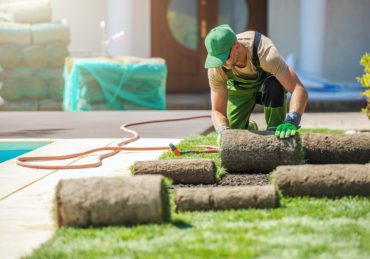
- Landscaping: Sometimes means live grass sod (real grass and soil rolls for quick lawn coverage).
- Sports and Commercial Settings: Typically refers to synthetic turf designed for durability, impact resistance, and consistent play.
Turf for sports or public spaces uses dense, short synthetic fibers. It takes heavy use, think fields, playgrounds, or outdoor tracks. The main intent: withstand traffic and rough play with minimal downtime.
Common characteristics:
- Short, very durable fibers
- Infill (rubber or sand) to hold fibers upright and absorb shocks
- Drains quickly, puddles and mud are rare
- Designed for function and resistance over appearance or softness
What Is Artificial Grass? Where It Fits Best
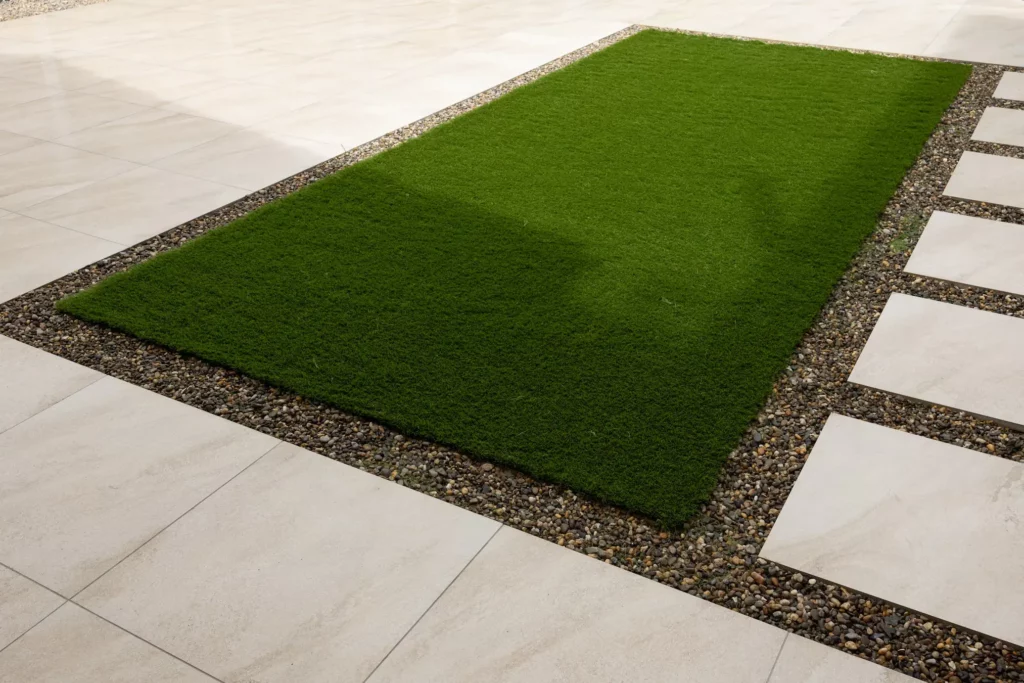
Artificial grass is a type of synthetic turf built to resemble real grass as closely as possible. The fibers are longer and softer, with more color variation for a more natural yard look.
Key features:
- Longer blades for a plush lawn appearance
- Softer and comfortable to sit or walk on
- Most often used with sand infill, or none at all
- Prioritizes curb appeal and low maintenance
Artificial grass typically suits homes, pet runs, and common areas where looks and comfort come first, not rugged sports performance.
Side-by-Side Comparison: Turf vs Artificial Grass
Fiber Length and Texture
- Turf (Sports/Commercial): Short fibers (typically under 1.25” tall), compact and springy. Feels firm underfoot, designed for activity and durability.
- Artificial Grass (Landscaping): Longer fibers (often 1.5” and up), more flexible, and soft to the touch. Developed for appearance and comfort.
In short: Turf handles activity and wear; artificial grass delivers a softer, more natural look.
Durability and Upkeep
- Turf: Meant for constant use. Needs regular brushing and infill replacement where heavily worn. Occasionally needs sanitizing.
- Artificial Grass: Withstands light to moderate foot traffic for years. Maintenance is usually limited to leaf blowing, rinsing, and occasional brushing.
Both options eliminate mowing and watering, but sports turf requires more care to stay playable, while artificial grass is easier for passive spaces.
Installation and Longevity
- Upfront Installation: Both require a substantial initial investment over natural sod, mainly due to materials and site prep.
- Durability: Sports turf may need resurfacing sooner in high-use fields; residential artificial grass often lasts longer, especially if lightly used.
- Repair: Turf in athletic settings sees faster wear and periodic patching; artificial grass in home landscapes can go a decade or more before issues develop.
Environmental Considerations
- No routine irrigation required (drought-friendly)
- No pesticides or fertilizers needed
- Both surfaces, especially turf fields, can get hot in the sun; some artificial grass products now address heat retention
- Neither breaks down like organic grass at end of life; disposal and recycling options are evolving
Which Fits Your Needs: Simple Guidance
Artificial grass works best if you:
- Want a lawn that looks and feels real
- Value soft surfaces for children or pets
- Need a clean, low-maintenance yard or patio
- Are upgrading smaller lawns or specific high-visual areas
Turf makes sense if you:
- Oversee sports fields or facilities
- Manage spaces with heavy, repeated foot traffic
- Need a surface that’s built for activity, not lounging
- Want maximum uptime with predictable maintenance
Quick Reference Table:
| Criteria | Artificial Grass | Turf (Sports/Commercial) |
|---|---|---|
| Appearance | Most natural | Moderate |
| Foot Feel | Soft and flexible | Firm and springy |
| Durability | High (home use) | Higher (athletic use) |
| Maintenance | Low | Moderate |
| Pet/Kid Friendliness | Excellent | Fine (can be rough) |
| Good for Sports | Not designed for it | Purpose-built |
Making the Right Choice – And What Comes Next
At LawnGuru, we field questions about turf vs artificial grass every week. The real issue is matching your surface with the way you’ll use your space. For most homeowners or property managers, artificial grass is the go-to when a clean, realistic, low-touch lawn is the goal. Commercial or athletic applications demand the specialized structure of sports turf.
If you’re still debating, LawnGuru connects you to top-rated local pros experienced with all kinds of lawn transformations, natural or synthetic. Use our instant pricing tool to compare what makes sense on your property. Real-time job tracking, photo receipts, and clear communication make it easy to manage projects large and small.
Ready to see your options based on your actual space? Get an instant price or talk to a pro near you, no obligation.