Quick Answer: Mow first, then cut a vertical line along sidewalks and driveways with a half-moon edger, power edger, or a string trimmer flipped vertical, going about 1 to 2 inches deep for routine maintenance. A first-time cut into an established bed line can run 4 to 5 inches with a half-moon edger. Edge when the grass is dry, keep equipment away from tree trunks, and clean up debris when you’re done.
Most lawns get mowed every week. Far fewer get edged, which is exactly why a mowed-but-unedged yard still looks unfinished. Grass creeping over a sidewalk or blurring into a flower bed reads as neglect even when the lawn itself is healthy and green. Edging fixes that in an afternoon, but the difference between a sharp line and a sloppy one comes down to a few details most guides skip entirely.
Mow Your Lawn Before You Edge

Mow first so you can see where the edge needs to go. An overgrown lawn hides the line between grass and pavement, and edging before mowing means you’re guessing at a border that might shift once the grass is cut down. Our guide on whether to edge or mow first covers the few situations where doing it the other way around makes sense.
The usual advice is to never remove more than a third of the grass blade in one mow. That guideline traces back to a decades-old USDA study on Kentucky bluegrass, and it’s worth knowing the whole story isn’t quite that tidy. Iowa State’s turfgrass extension has pointed out that later research at NC State found tall fescue could actually double in height before being cut without any real damage. So don’t panic if you’re a week behind on mowing before you edge. Just don’t scalp it either, since cutting off too much at once still stresses the roots and stalls regrowth for a week or more.
Which Tool Should You Use to Edge a Lawn?
Professional landscapers generally reach for a wheeled power edger on long, straight runs and a half-moon manual edger for anything curved or detailed. Which one makes sense for you depends more on your yard’s size and shape than on any one tool being objectively best.
| Tool | Best For | Typical Depth |
|---|---|---|
| Half-moon edger | New bed lines, curves, first cuts | 4-5 in. |
| Power/wheeled edger | Long straight runs, sidewalks | 1-2 in. |
| String trimmer (vertical) | Touch-ups, maintenance | 1-2 in. |
| Edging shears | Small detail work, obstacles | Varies |
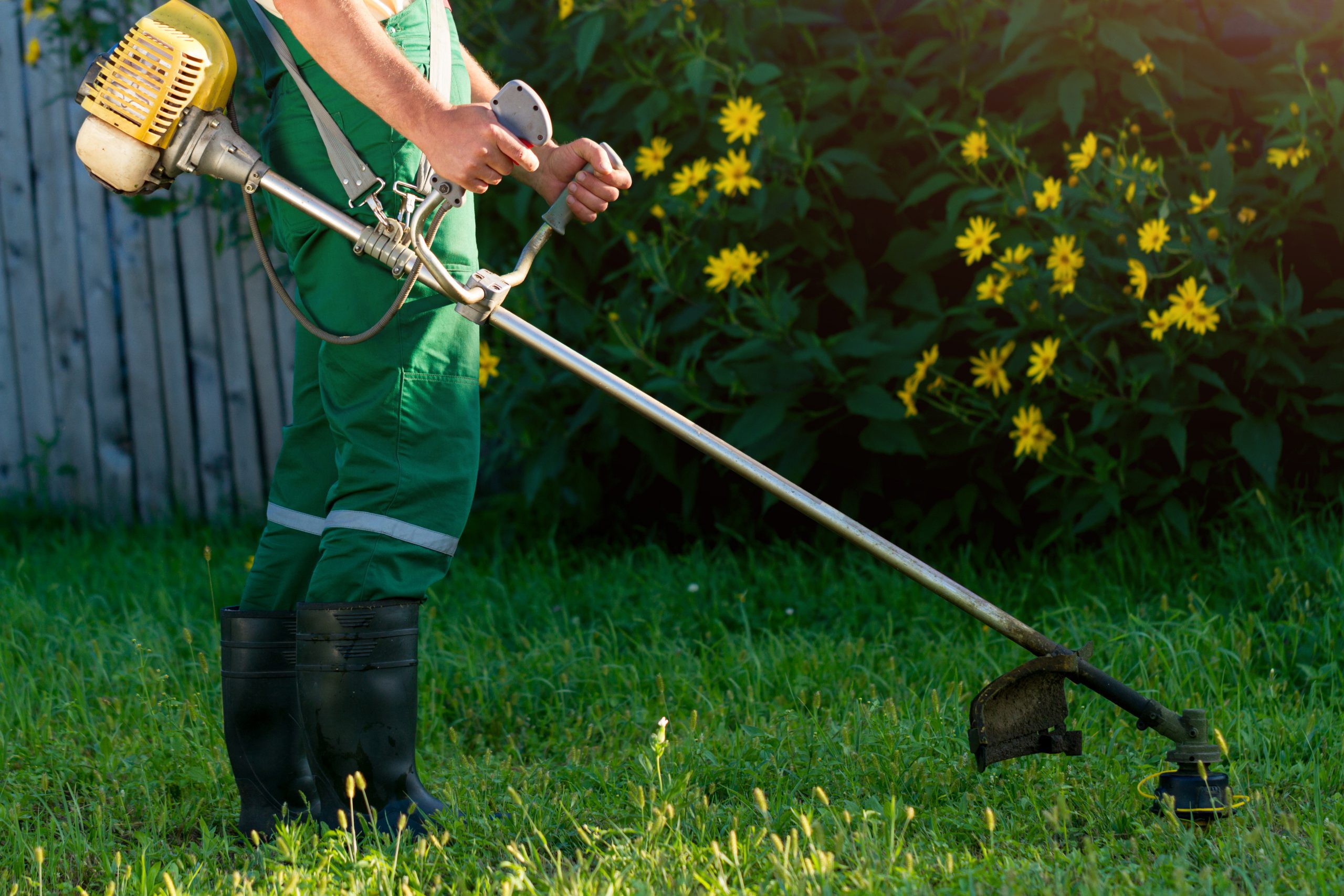
A string trimmer doubles as an edger if you flip the head 180 degrees so the line spins vertically instead of flat. It’s the tool most homeowners already own, which makes it the default for weekly touch-ups even among people who used a real edger to cut the line in the first place. A dedicated power edger with a metal blade cuts a cleaner, more consistent line over a long driveway or sidewalk run, and it’s what most lawn care crews actually carry on the truck for that reason.
How Deep Should You Cut When Edging?
It depends on whether you’re cutting a new line or maintaining an existing one, and most guides don’t make that distinction clear. Establishing a brand-new edge with a half-moon edger, especially around a flower bed, typically goes 4 to 5 inches deep to cut a real trench that turf roots can’t easily cross. Routine maintenance along an already-established line, whether with a power edger or a vertical string trimmer, only needs to go about 1 to 2 inches, just enough to sever the grass roots without turning the job into excavation.
Going deeper than that on a maintenance pass doesn’t buy you anything. It just means more soil disturbance and a better environment for weed seeds to germinate, which is its own problem covered below.
Step-by-Step: How to Cut a Clean Edge Along Sidewalks and Driveways

- Mark the line if there isn’t one already. An existing sidewalk or driveway edge is your guide. For a curved bed with no hard border, lay a garden hose along the shape you want and pin it down, or use stakes and string for straight runs.
- Put on gloves and safety glasses. Debris kicks up fast with a power edger, and a face mask is worth adding if pollen or dust bothers you.
- Cut the line. With a power edger, keep the guide wheel riding on the pavement and move at a steady pace, since speeding up or slowing down mid-cut is what causes the wavy, scalloped lines that give away a rushed job. With a string trimmer, flip the head vertical and walk on the hard surface so your body stays steady and the cut stays level.
- Check for obstacles before you get to them. Sprinkler heads, shallow irrigation lines, and buried cable are all things a spinning blade can hit. If you don’t know where they run, slow down and look before cutting through unfamiliar ground.
- Clear the debris. Sweep or blow loose soil and clippings off the pavement and out of the new groove. Leaving it there hides your work and gives weeds a head start.
Should You Edge When the Grass Is Wet or Dry?
Dry, every time. Wet grass clumps and clogs a string trimmer’s cutting head or a power edger’s blade housing, which turns a clean line into a ragged one and means stopping every few feet to clear the mechanism. It’s the same logic behind not mowing wet grass: a wet lawn cuts unevenly, and wet clippings stick to the blade instead of falling away cleanly. If you edge right after rain or early-morning dew, wait until the grass dries out, even if that pushes the job back a few hours.
Edging Around Trees Without Damaging Them
String trimmer damage to a tree trunk rarely shows up right away, which is exactly why it’s easy to keep doing without noticing the cost. Purdue Extension’s guidance on mechanical tree damage lays out what happens when a trimmer or edger repeatedly nicks the base of a tree: the bark protects a thin layer called the cambium just underneath it, and that layer moves water and nutrients between the roots and the leaves. Damage there doesn’t heal. If the wound wraps all the way around the trunk, a situation called girdling, the tree dies, and thin-barked young trees like maples and birches can lose that protection with far less contact than you’d expect.
Purdue’s fix is simple and cheap: keep a mulch ring 2 to 3 inches deep around the base of any tree instead of edging grass right up against the trunk. It removes the competing turf, and it also gives you (or whoever’s running the trimmer) a visual boundary that says stop here. If a tree already has bark damage, adding a mulch ring now at least stops it from getting worse.
Edging Near Sidewalks Can Increase Weeds If You Time It Wrong
Purdue’s turfgrass weed science program makes a point almost no lawn care guide mentions: the strip of soil right next to concrete and asphalt is already a weed hot spot before you ever touch an edger. It’s shallower than the rest of your yard because of leftover construction debris, it heats up faster from radiant heat off the pavement, and it gets compacted by foot traffic. Crabgrass, goosegrass, and yellow nutsedge all thrive there.
Edging makes it worse in the short term, because it strips away the turf that was shading that strip of soil, and some of those weed seeds need sunlight to germinate. Purdue’s actual recommendation is to time your edging around it: cut sidewalk and driveway edges in fall (September through November) or late winter (around March), when most of these weeds aren’t germinating anyway. Edge in the peak of a hot, sunny summer and you’re rolling out the welcome mat for exactly the weeds you’re trying to keep off your walkway.
Common Mistakes That Ruin a Clean Edge
Changing speed mid-cut is the single biggest reason edges come out wavy instead of straight. Slowing down or speeding up partway through a run is what causes that scalloped look along a sidewalk, so pick a pace and hold it.
Cutting deeper than necessary on a maintenance pass doesn’t improve the line. It just disturbs more soil and, per the weed-timing point above, hands weeds more room to move in.
Mulch volcanoes are worth calling out on their own: piling mulch up against a tree trunk or over a bed edge looks tidy for about a week, then traps moisture against bark and stems in a way that damages the plant underneath.
Using only a string trimmer for a first cut is a shortcut that doesn’t quite work. A trimmer maintains a line well, but it won’t establish a real trench the way a blade edger or half-moon edger does. Use the right tool to cut the line, then maintain it with whatever’s fastest.
Skipping cleanup at the end is the mistake nobody notices until they’ve done it. Soil and clippings left on pavement stain the surface over time and make an otherwise clean edge look unfinished.
How Often Should You Edge Your Lawn?
More often than most people think during peak growing season, then a lot less the rest of the year. Fast-growing grass can need edging twice a month when growth is strongest, typically spring into early summer, while slower growers can stretch to every 6 to 8 weeks. Rain and irrigation push growth faster too, so a lawn on a regular sprinkler schedule needs more frequent touch-ups than one relying on rainfall alone. A practical rule: if you’re mowing weekly, edge every second or third mow during peak growth, and pull back to about once a month once things slow down in late summer and fall.
Permanent Edging Materials Worth Considering
A cut edge alone will grow back out within a few weeks. If you’re tired of re-cutting the same line, a physical barrier holds the shape longer. Steel or aluminum edging stays low-profile and bends into curves without much trouble. Paver or brick restraints work well along patios and walkways where you want a more finished look. Natural stone reads more rustic but needs a properly prepared base or it drifts out of place over a season or two.
None of these replace mowing or trimming entirely, but they cut down on how often you need to re-establish the line itself. Landscape edging costs vary a fair amount by material and how much linear footage you’re covering, so it’s worth pricing out before committing to one over another.
DIY or Hire a Pro for Lawn Edging?
A small yard with mostly straight sidewalk runs is a realistic weekend project with a rented or owned edger. Where it gets harder is curved bed lines, established trees close to the lawn, or a yard that’s gone a season or two without any edging at all, since re-establishing a badly overgrown line takes longer and is easier to get wrong (that scalloped, uneven look is much more likely on a rushed first pass).
If you’d rather skip the tool rental and the trial-and-error, LawnGuru connects you with local lawn care pros who handle power edging as a standalone service or bundled with a regular mow. You can book in minutes and manage the schedule online.
FAQ
How can I edge my lawn without a machine or edger?
Lower your mower’s cutting deck and carefully shave down the grass along the border, or install permanent edging like steel strips or pavers set into a shallow trench. Edging shears also work for small-scale touch-ups, just slower than any powered option.
What’s the difference between edging and trimming?
Edging is a vertical cut that creates an actual line between grass and a hard surface or bed. Trimming is horizontal, cutting grass height in spots a mower can’t reach, like along a fence or around a post. They’re often done with the same tool but aren’t the same job.
Is lawn edging worth the effort?
Yes, for more than looks. Beyond the visual upgrade, a clean edge keeps mulch from washing out of beds, stops grass runners from spreading into plantings, and lets water drain off pavement instead of pooling in a shaggy fringe of overgrown grass.
How deep should a trench be for a flower bed edge?
Deep enough to stop grass runners from crossing, generally 4 to 5 inches with a half-moon edger for a new bed line. A slight inward angle toward the bed helps hold mulch in place once you’re done.