
Search “best time to aerate lawn in Texas” or “when to aerate lawn Texas” homeowners actually rely on, and most answers give you one blanket window: spring or fall. That’s a start, but Texas spans five soil regions and both warm- and cool-season grasses, so the real answer depends on what’s growing in your yard and what kind of dirt it’s growing in.
Quick Answer: For warm-season grasses (Bermuda, St. Augustine, Zoysia, Centipede), aerate from April through August, once the grass has fully greened up and is actively growing. For cool-season grasses (fescue, ryegrass), aerate in early fall, September through October. Clay soils, common in Central and North Texas, benefit from aerating twice a year; sandy and loamy soils usually need it only once.
Why Aeration Matters for Texas Lawns Specifically
Texas soil makes aeration more than a nice-to-have in most parts of the state. According to Texas A&M AgriLife Extension, the state’s soils range from heavy Blackland Prairie clay around Dallas and Waco to loose coastal sand near Houston and Corpus Christi, to shallow, rocky caliche in the Hill Country and West Texas. Compacted soil, whatever the type, blocks air, water, and nutrients from reaching grass roots, which is what aeration is meant to fix: it creates small channels in the soil so those three things can actually get where they need to go.
Core aeration, which pulls small plugs of soil out of the ground, does this more effectively than spike aeration, which just pokes holes and can make compaction worse over time by pressing soil sideways rather than removing it.
Best Time to Aerate Your Lawn in Texas by Grass Type
Timing matters more than the calendar date. Aerate while the grass is actively growing so it can recover quickly; aerate during dormancy or heat stress and you’re just opening wounds the lawn can’t heal.
Warm-Season Grasses (Bermuda, St. Augustine, Zoysia, Centipede)
These are the grasses covering most Texas lawns, and each has a slightly different window:
- Bermudagrass: April through August, with May and June the sweet spot once the grass is fully green and mowing regularly.
- St. Augustinegrass: April through July. St. Augustine recovers more slowly than Bermuda, so avoid pushing into the hottest part of summer.
- Zoysiagrass: May through July. Zoysia greens up later than Bermuda in spring, so wait for full green-up before aerating.
- Centipedegrass: April through June, since it’s slower to establish and more sensitive to stress than the others.
Avoid aerating warm-season grass in early spring while it’s still coming out of winter dormancy, or in the peak of summer when heat stress makes recovery slower.
Cool-Season Grasses (Fescue, Ryegrass)
Cool-season grasses are less common in Texas but do show up in the Panhandle and parts of North Texas. Aerate in early fall, September through October, once temperatures cool but before the ground gets cold. Fall aeration lets the grass build root strength heading into winter without the added stress of summer heat. Avoid spring aeration on cool-season lawns; it disrupts the grass while it’s still recovering from winter.
If you’re overseeding a warm-season lawn with ryegrass for winter color, aerate first, since the holes give overseeded grass seed direct contact with soil.
Aerating by Soil Type: Texas Region Breakdown
Texas soil varies enough by region that a homeowner in Houston and one in El Paso are dealing with almost entirely different ground. How often you need to aerate depends more on soil type than on anything else.
| Soil Type | Where It’s Common in Texas | How Often to Aerate |
|---|---|---|
| Clay | Blackland Prairie (Dallas–Waco–Austin corridor), parts of East Texas | Twice a year (spring and fall) |
| Sandy | Coastal Prairie and Gulf Coast (Houston, Corpus Christi) | Once a year |
| Loamy | East Texas Timberland, parts of Central Texas | Once a year |
| Caliche/Chalky | West Texas, Trans-Pecos (El Paso to Midland) | Once a year, or every 2 to 3 years if soil is rocky rather than compacted |
| Rocky (thin topsoil over limestone) | Edwards Plateau and Hill Country (Austin west to Del Rio) | Every 2 to 3 years |
Clay compacts the most and holds water at the surface rather than letting it soak in, which is why it needs aeration most often. If you’re not sure what you’re working with, the Texas A&M Soil Testing Laboratory or your county AgriLife Extension office can test it directly and tell you what amendments, if any, your soil needs alongside aeration.
Signs Your Texas Lawn Needs Aeration
Don’t just aerate on a fixed schedule, check for these signs first:
- Water pools on the surface after rain or watering instead of soaking in.
- Grass looks thin or patchy despite regular fertilizing and watering.
- Soil feels hard when you try to push a screwdriver or garden stake into it.
- Thatch is thicker than half an inch between the grass blades and the soil surface.
- The lawn gets heavy foot traffic from kids, pets, or regular equipment use.
- The lawn is newly built on a lot where construction equipment compacted the soil before sod or seed went down.
If several of these apply, aerate at the next appropriate window for your grass type rather than waiting for a fixed annual date.
How to Aerate a Lawn in Texas
Water first. Water the lawn a day or two before aerating so the soil is moist, not soaked or bone dry. Moist soil lets the aerator’s tines penetrate cleanly; dry soil resists them and wet, muddy soil just smears rather than pulling clean plugs.
Mow shorter than usual. Cut the grass to about 1 to 1.5 inches before aerating so the aerator can reach the soil surface more easily.
Flag sprinkler heads and shallow utility lines. Mark them with small flags before you start so the aerator doesn’t hit and damage them.
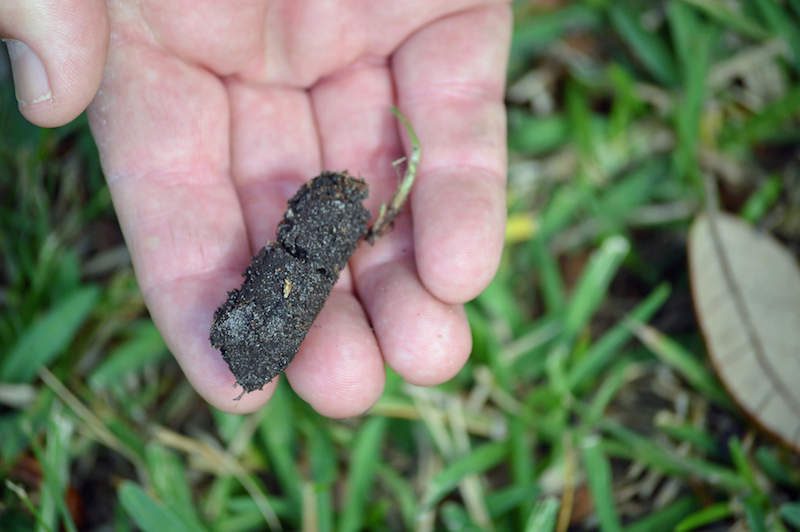
Use a core aerator, not a spike aerator. Core aeration pulls small plugs of soil out of the ground, which actually relieves compaction. Spike aeration just pushes solid tines into the ground, which can compact the soil further around the holes over time. Rent a core aerator from a garden center, or hire a professional if the lawn is large or heavily compacted.
Apply pre-emergent herbicide before aerating, not after. If weed control is part of your routine, put down pre-emergent first. Aerating afterward can pull weed seeds already in the soil up to the surface and spread them around the yard, working against the herbicide barrier instead of with it.
Leave the plugs on the lawn. They look messy for a week or two but break down naturally, returning organic matter and soil bacteria to the surface. Watering and mowing speed up the breakdown.
Fertilize or overseed right after. The holes left by core aeration give fertilizer and grass seed direct access to the soil, which is why aeration and overseeding are usually done together. If you’re overseeding, our seeding guide covers timing and grass selection in more detail.
Water consistently afterward. Keep the soil moist for the first couple of weeks to help roots recover and any overseeded grass germinate.
What Aeration Costs in Texas
Professional aeration typically runs $85 to $250 depending on lawn size, soil compaction, and whether it’s bundled with overseeding or fertilization, with most Texas quarter-acre lots landing around $140. Clay-heavy lawns and properties with heavy irrigation zones or slopes tend to price toward the higher end since they take longer to aerate thoroughly. For a full size-by-size cost breakdown, see our lawn aeration cost guide.
Frequently Asked Questions
How often should I aerate my lawn in Texas?
It depends on soil type. Clay soil, common in Central and North Texas, benefits from aeration twice a year, once in spring and once in fall. Sandy and loamy soils usually only need it once a year, and rocky soils in the Hill Country or caliche in West Texas can often go every 2 to 3 years.
Should I pick up the plugs after aerating?
No. Leave the soil plugs on the lawn. They break down naturally within one to two weeks, returning organic matter and beneficial soil bacteria to the surface. Watering and regular mowing speed up the breakdown.
What’s the most common lawn aeration mistake in Texas?
Aerating at the wrong time for the grass type, most often too early in spring before warm-season grass has fully greened up, or during peak summer heat when the lawn is already stressed. Aerating dry, hard soil instead of watering first is the second most common mistake, since dry soil resists the aerator’s tines and produces uneven results.
What should I do immediately after aerating?
Fertilize or overseed right away, since the holes give nutrients and seed direct access to the soil. Water consistently for the following one to two weeks to help the lawn recover and any new seed germinate. Avoid heavy foot traffic on the lawn during that window.
Is spring or fall better for aerating in Texas?
It depends entirely on grass type, not the calendar. Warm-season grasses (Bermuda, St. Augustine, Zoysia, Centipede) recover fastest when aerated in late spring through summer while actively growing. Cool-season grasses (fescue, ryegrass) do better with fall aeration, since they’re heading into their strongest growth period as temperatures cool.
The Bottom Line
The best time to aerate your lawn in Texas comes down to two things: what grass you have and what soil it’s growing in. Warm-season lawns do best aerated April through August while actively growing; cool-season lawns do best in early fall. Clay soil needs aeration more often than sandy or rocky soil. If figuring out the right timing and technique for your specific yard feels like more than you want to manage, LawnGuru connects you with local lawn care pros who can handle aeration correctly the first time.