
Texas lawns are host to a variety of pervasive weed species, characterized by both grassy and broadleaf attributes. Notable grassy weeds include Digitaria texana (Crabgrass) and Eleusine indica (Goosegrass) which thrive in specific soil conditions. Broadleaf intruders such as Taraxacum officinale (Dandelion) and Lamium amplexicaule (Henbit) possess aggressive reproductive strategies. Distinguishing features like the extensive tuber systems of Cyperus esculentus (Nutsedge) and the dense mats formed by Stellaria media (Chickweed) complicate management. Understanding these taxonomic classifications and their ecological niches can lead to more effective control measures and healthier lawns. Investigate management strategies further to enhance lawn resilience.
Common Lawn Weeds in Texas: Identification & Impact
Although Texas lawns are designed to showcase lush greenery, they are often besieged by a plethora of weeds that challenge their robustness.
Common lawn weeds in Texas, such as Taraxacum officinale (dandelions) and Digitaria spp. (crabgrass), exhibit rapid proliferation, outcompeting desired turf species.
Effective weed control necessitates precise identification and understanding of their ecological niches to mitigate their impact on nutrient interactions and soil health.
Grassy Weeds Common in Texas Lawns
In Texas lawns, several grassy weeds exhibit aggressive growth patterns and ecological adaptations that challenge lawn maintenance, including Digitaria texana, Eleusine indica, and Cyperus esculentus.
These species, alongside Cenchrus spp., demonstrate varied preferences for environmental conditions, such as soil compaction, moisture levels, and temperature.
Understanding their morphological characteristics and reproductive strategies is essential for implementing effective management and control measures.
1. Crabgrass (Digitaria texana)
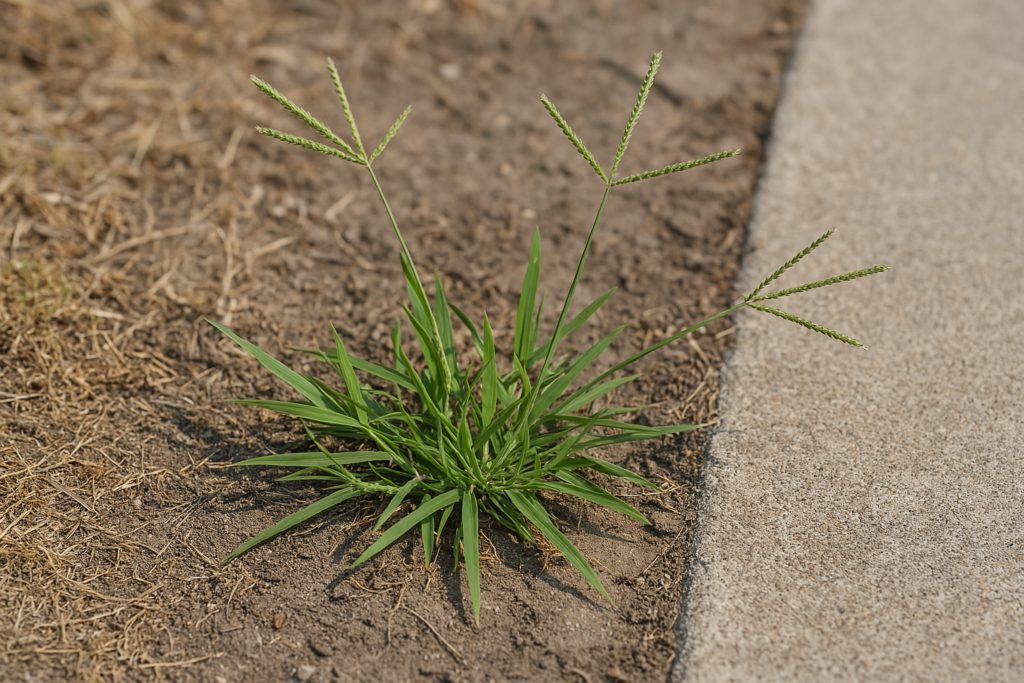
Crabgrass, scientifically known as Digitaria texana, is a pervasive annual grassy weed prevalent in Texas lawns, particularly thriving under hot, arid conditions.
Effective management of crabgrass involves:
- Pre-emergent herbicide application to prevent germination.
- Identification by its long, finger-like flower spikes.
- Frequent mowing to inhibit seed production.
- Promoting dense lawn growth to outcompete crabgrass.
- Addressing soil compaction to reduce favorable conditions.
2. Goosegrass (Eleusine indica)
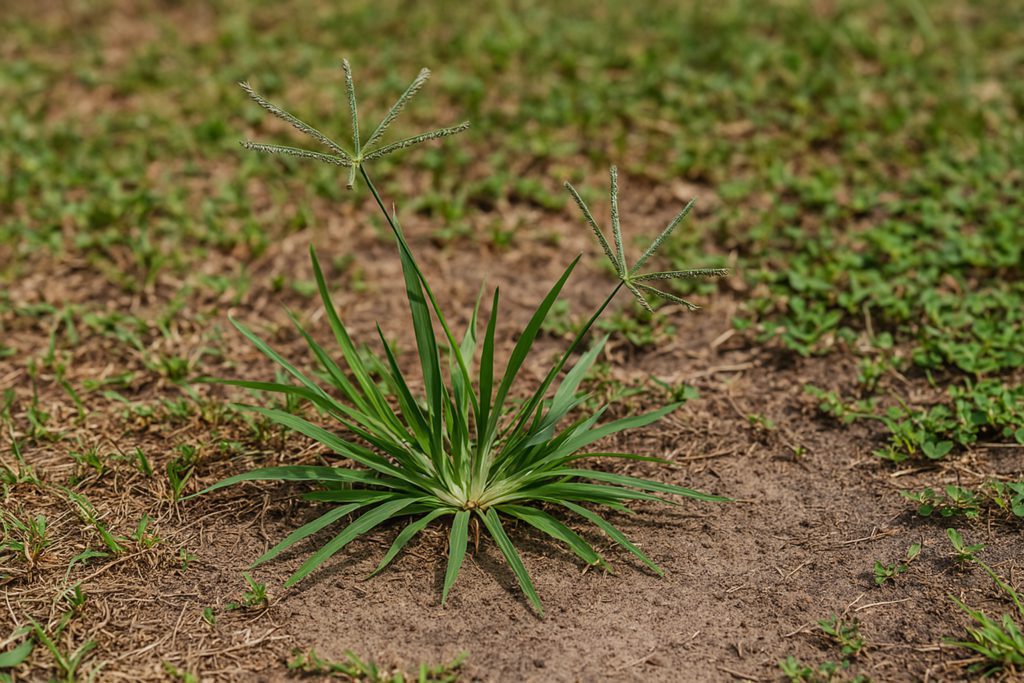
Goosegrass (Eleusine indica) is a common annual grassy weed in Texas lawns, primarily flourishing in compacted soil and areas subjected to substantial foot traffic.
Characterized by its unique flattened leaf blades and zipper-like inflorescence, goosegrass thrives in warm climates and rapidly germinates throughout the growing season.
Effective management includes promoting lawn density and applying pre-emergent herbicides to prevent it from overtaking desirable turf species.
3. Nutsedge (Cyperus esculentus)
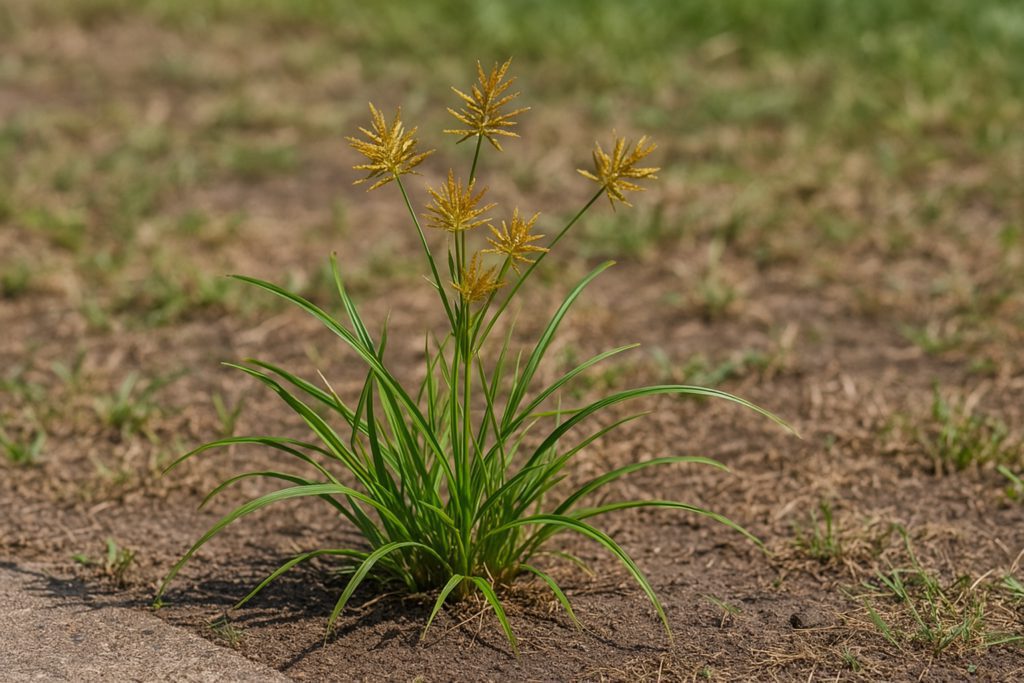
Shifting focus from the compacted soil-loving Goosegrass, another formidable opponent in Texas lawns is Nutsedge (Cyperus esculentus), a perennial species often mistaken for grass due to its similar appearance.
This weed thrives in:
- Wet, poorly drained soils
- Extensive tuber systems for rapid spread
- Clump growth, outcompeting turf
- Challenges in manual removal
- Requiring herbicide and improved drainage
Effective management involves understanding its biology and targeted interventions.
4. Sandbur (Cenchrus spp.)
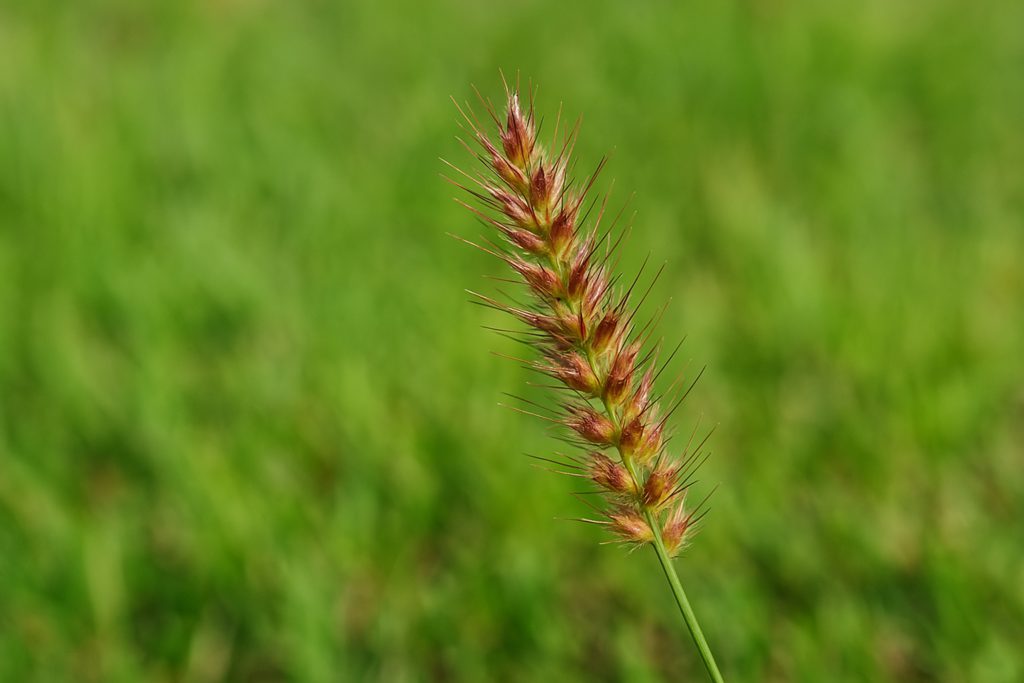
In the diverse landscape of Texas lawns, Sandbur (Cenchrus spp.) emerges as a prominent grassy weed, notorious for its sharp, bur-like seed heads that readily cling to clothing and animal fur.
This annual species thrives in sandy soils, flourishing to heights of up to 2 feet. Rapid germination and growth enable sandbur to surpass desirable grasses, necessitating control through dense turf maintenance and targeted herbicide applications.
Broadleaf Weeds in Texas Lawns
In Texas lawns, broadleaf weeds such as Dandelion (Taraxacum officinale), Henbit (Lamium amplexicaule), Spotted Spurge (Chamaesyce maculata), Chickweed (Stellaria media), and Ground Ivy (Glechoma hederacea) present significant challenges to turfgrass management.
These species exhibit diverse morphological characteristics including deep taproots, prostrate growth habits, and prolific seed production, which facilitate their persistence in various environmental conditions.
Understanding their ecological adaptations and reproductive strategies is essential for developing effective control measures that minimize their competitive advantage over desirable lawn species.
5. Dandelion (Taraxacum officinale)
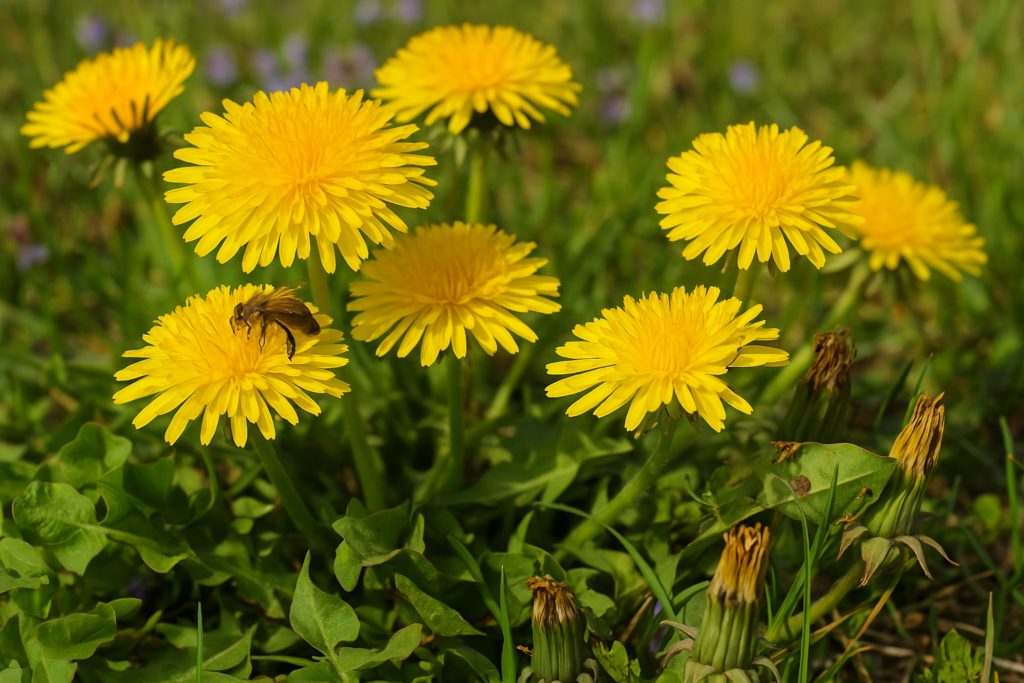
Dandelions, scientifically known as Taraxacum officinale, are a prevalent species of perennial broadleaf weeds found in Texas lawns, distinguished by their bright yellow inflorescences and distinctive puffball seed heads.
These common broadleaf weeds have notable characteristics:
- Deep taproot system
- Serrated leaves forming a central rosette
- Aggressive competition with turf grasses
- Early spring flowering
- Potential to produce up to 15,000 seeds per plant
Effective management requires timely intervention.
6. Henbit (Lamium amplexicaule)

Following the discussion on dandelions, another significant broadleaf weed encountered in Texas lawns is Henbit (Lamium amplexicaule).
This winter annual is identifiable by its square stems and triangular leaves. Henbit thrives in moist, shaded areas, blooming small pink or purple flowers in early spring.
Its rapid seed production enables quick spread, forming dense mats that outcompete grasses.
Timely removal, including hand-pulling before flowering, is essential for management.
7. Spotted Spurge (Chamaesyce maculata)
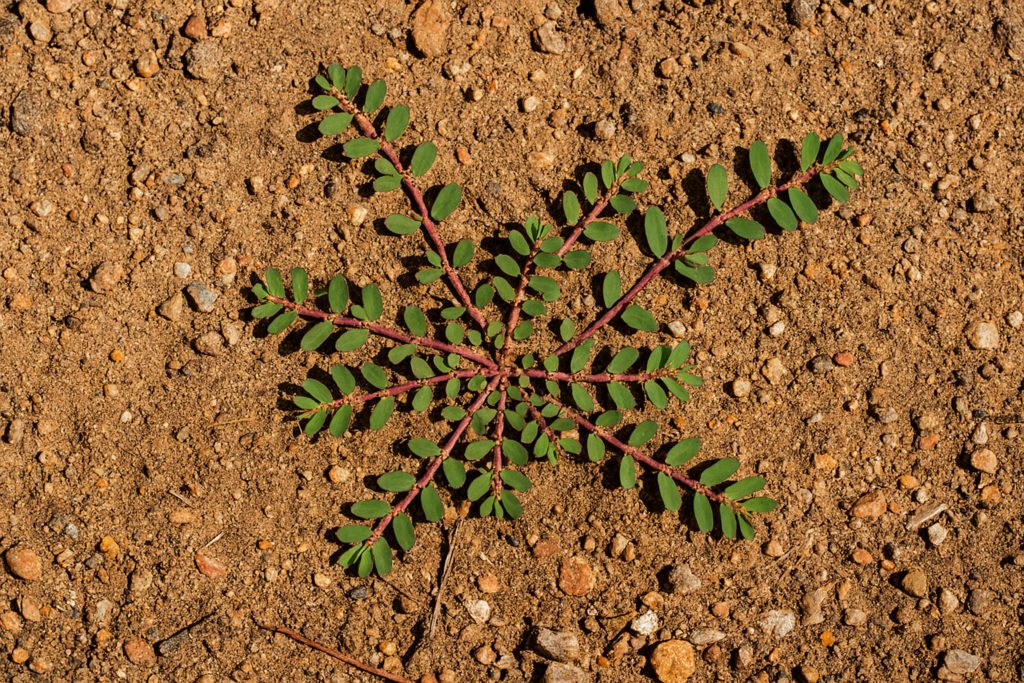
Although often overlooked, Spotted Spurge (Chamaesyce maculata) represents a significant challenge for lawn care in Texas due to its resilient nature and rapid propagation.
Its adaptability to compacted soils and prolific seed production necessitates vigilant management.
- Morphology: Small oval leaves, reddish stems
- Environment: Thrives in warm weather
- Reproduction: Thousands of seeds per plant
- Control: Post-emergent herbicide
- Identification: Distinctive red dot on leaves
8. Chickweed (Stellaria media)

Chickweed (Stellaria media), a widespread annual broadleaf weed in Texas, is easily identifiable by its egg-shaped leaves and diminutive white star-shaped flowers.
Flourishing in cool, moist conditions, chickweed forms dense mats capable of outcompeting turfgrass. Its prolific seed production enables rapid spread, germinating in fall and spring.
Effective management includes maintaining dense lawns and prompt hand-pulling before seed set to suppress chickweed proliferation.
9. Ground Ivy (Glechoma hederacea)

Ground Ivy, scientifically classified as Glechoma hederacea, represents a significant challenge in Texas lawns due to its invasive nature and adaptability.
This perennial broadleaf weed exhibits:
- Heart-shaped leaves and small purple flowers.
- Preference for shady, diverse soil environments.
- Rapid spread via underground rhizomes and seeds.
- Formation of dense mats that smother turfgrass.
- Necessity for meticulous hand-pulling and vigilant monitoring to prevent lawn domination.
Understanding these characteristics aids in effective management.
10. Plantain (Plantago spp.)

Following the discussion of Ground Ivy, another formidable adversary in Texas lawns is Plantain (Plantago spp.), a persistent broadleaf weed known for its resilience and adaptability.
This perennial weed thrives in compacted soils, forming rosettes with ribbed leaves. Capable of prolific reproduction through seeds and vegetative means, it produces 12-inch flower spikes.
Effective control requires regular mowing and complete root removal to prevent re-establishment.
11. Goathead (Tribulus terrestris)
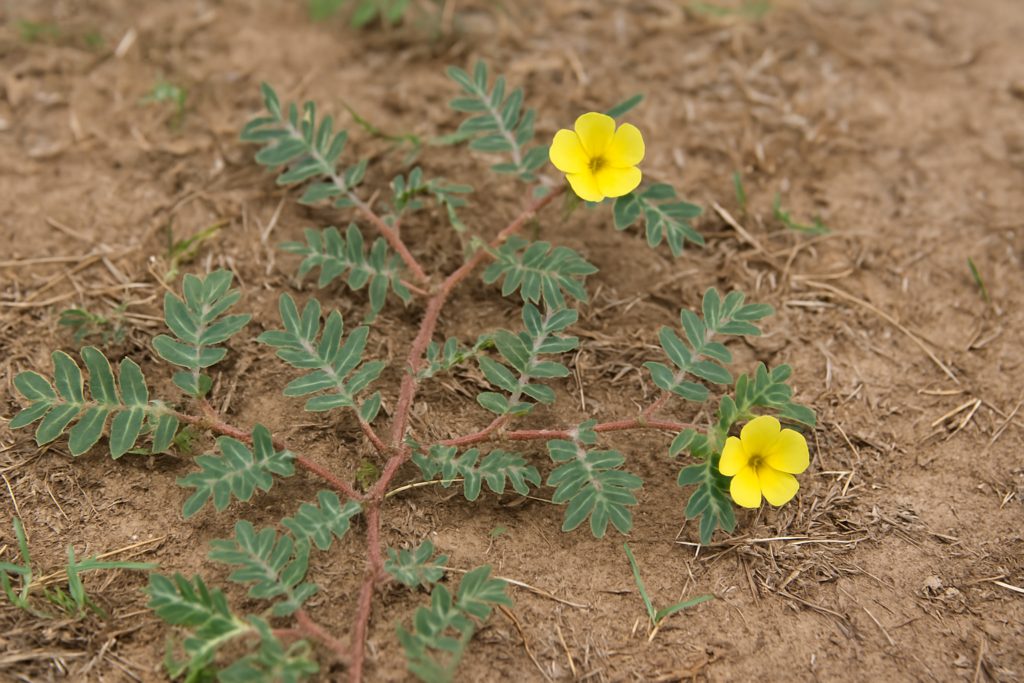
Tribulus terrestris, commonly referred to as Goathead, represents a significant challenge for homeowners managing Texas lawns.
This common weed in Texas is characterized by its resilience and persistence.
Key features include:
- Distinctive spiny seed pods capable of puncturing skin and tires.
- Growth in hot, dry conditions and compacted soils.
- Small yellow flowers that bloom in summer.
- Deep taproot accessing moisture and nutrients.
- Persistent seed viability in soil.
12. Thistle (Cirsium spp.)
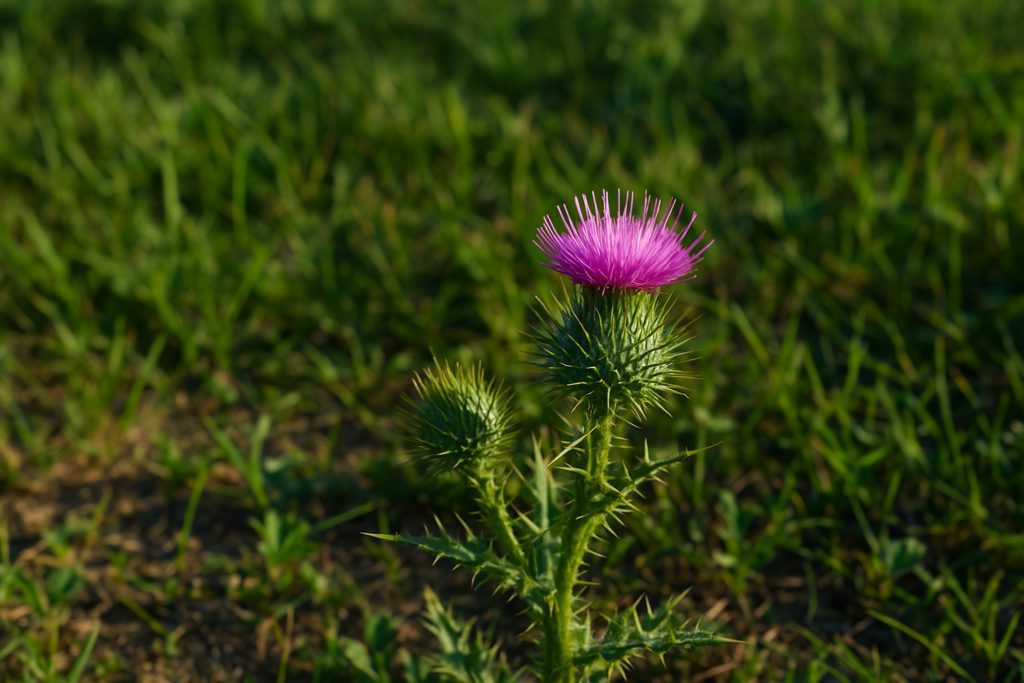
As homeowners contend with the challenges posed by Goathead, another formidable adversary in Texas lawns emerges in the form of Thistle (Cirsium spp.).
This common weed in Texas features spiny leaves and distinctive purple flower heads. Thistles thrive across diverse soil conditions and possess a deep taproot, complicating eradication efforts.
Their invasive nature necessitates early intervention, including manual removal and targeted herbicides, to prevent competitive dominance.
Other Common and Invasive Weeds in Texas
The Texan landscape is frequently challenged by invasive species such as clover (Trifolium spp.), quackgrass (Elymus repens), and purslane (Portulaca oleracea), each presenting unique ecological impacts.
Clover, although beneficial in nitrogen fixation, can outcompete turfgrass due to its aggressive spreading via stolons.
Quackgrass, a rhizomatous perennial, and purslane, a succulent annual, both exhibit rapid proliferation, with quackgrass forming dense mats that disrupt native flora and purslane utilizing its high seed output and resilience in challenging conditions to dominate open spaces.
13. Clover (Trifolium spp.)
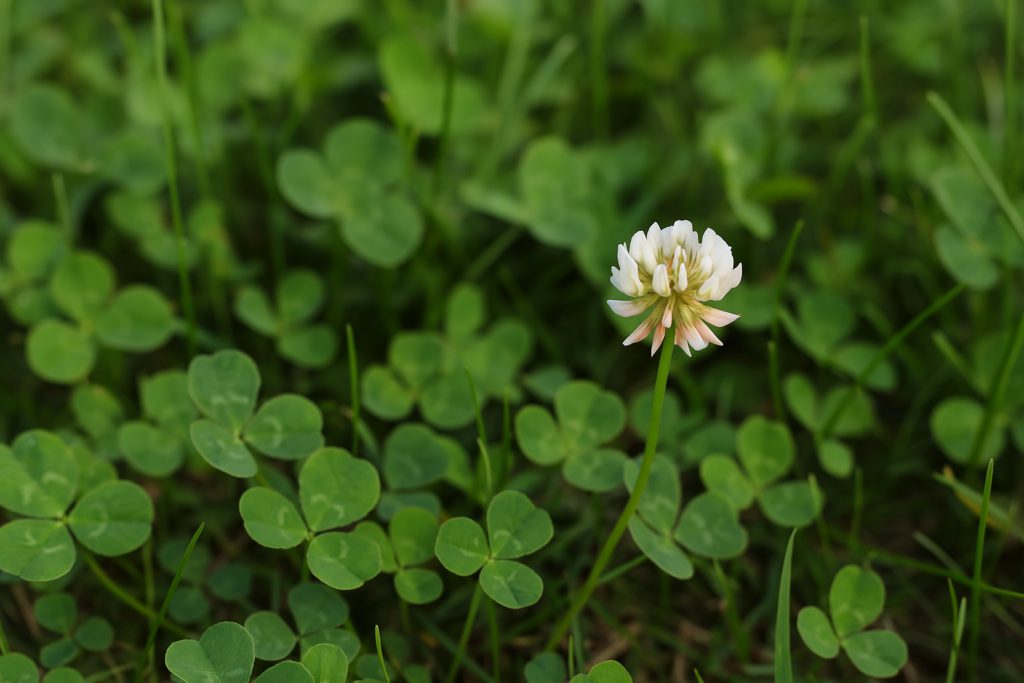
Clover, belonging to the genus Trifolium, represents a prevalent component in Texas lawns, with its presence encompassing over 42 species.
As one of the common weeds in Texas, it plays a dual role: beneficial yet competitive.
- Fixes nitrogen, enhancing soil fertility.
- Features distinctive trifoliate leaves and blooms.
- Attracts pollinators, supporting biodiversity.
- Drought-resistant, thriving in poor soils.
- Requires regular maintenance to manage spread.
14. Quackgrass (Elymus repens)

Quackgrass, scientifically known as Elymus repens, represents a significant challenge in Texas lawns due to its invasive nature and robust growth habits.
This perennial weed features deep rhizomes, enabling rapid spread and dense patch formation. Its flat, narrow leaves, reaching up to 12 inches, complicate differentiation from desired grasses.
Effective management involves healthy turf maintenance and targeted herbicide applications to mitigate quackgrass proliferation.
15. Purslane (Portulaca oleracea)
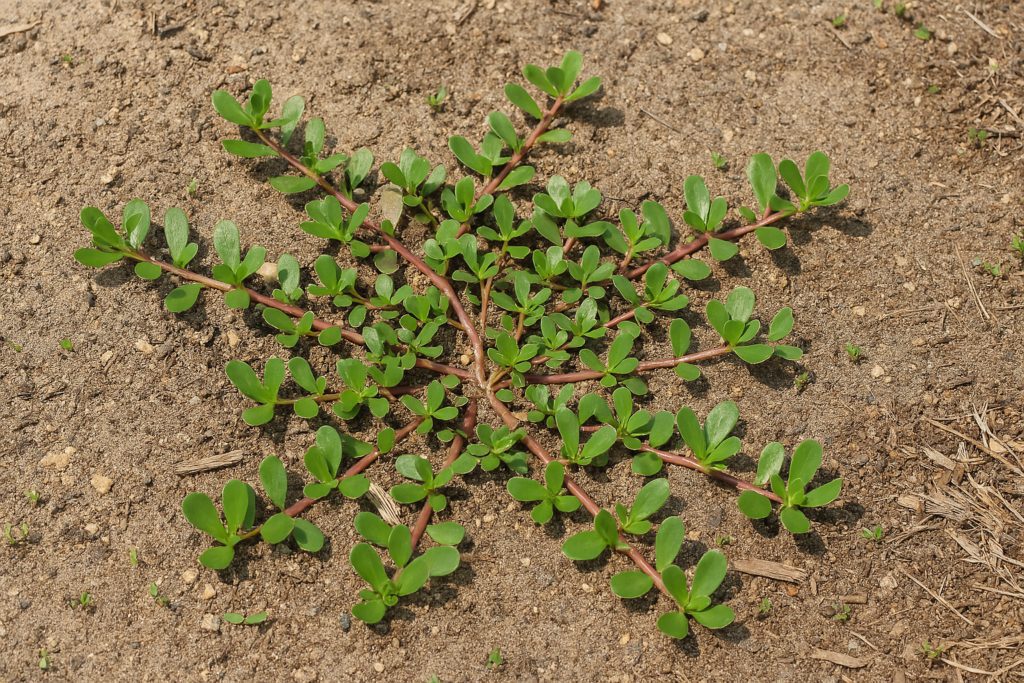
Despite its unassuming appearance, Purslane (Portulaca oleracea) poses a significant threat to Texas lawns due to its hardy nature and rapid propagation abilities.
As a summer annual, this broadleaf weed thrives in harsh conditions, forming dense mats that overshadow desirable species.
Key characteristics include:
- Succulent, fleshy leaves.
- Rapid spread via seeds and fragments.
- Glossy green leaves.
- High resilience in extreme heat.
- Prolific seed production.
Weed Control Strategies for Texas Lawns
Effective weed control strategies for Texas lawns necessitate an integrated approach that combines chemical, cultural, and manual methods to mitigate the proliferation of both annual and perennial weed species.
Implementing pre-emergent herbicides targets annual grassy weeds like crabgrass. Regular mowing and proper soil aeration enhance turf density, limiting light and space for weed establishment.
Hand-pulling broadleaf invaders curtails seed spread, ensuring healthy lawn ecosystems.
When to Call a Pro for Weed Control
Addressing weed control in Texas lawns necessitates a multifaceted approach, integrating various strategies to manage both annual and perennial species effectively.
Consulting professional lawn care can be advantageous when:
- Persistent weed infestations defy routine control.
- Herbicide applications require precision.
- Turfgrass competition weakens lawn health.
- Weed identification challenges arise.
- Seasonal assessments are needed to preempt issues.
These lawn care tips enhance management and maintain ecological balance.