Grass that looks pale or yellow with green veins running through each blade usually isn’t a nitrogen problem. It’s iron chlorosis, and more fertilizer won’t fix it. Knowing when and how to apply iron correctly is what actually brings the color back.
Quick Answer: Apply iron to your lawn in spring (late March to early May) to restore color after dormancy, and again every 6 to 8 weeks through summer and fall if the soil stays deficient. Soil temperatures between 60 and 75°F give the best absorption. Water the lawn after application to help it soak in, and hold off during extreme heat, drought, or on newly planted grass. A soil test first confirms whether iron, not nitrogen, is actually the problem.
How to Tell If Your Lawn Needs Iron
The clearest sign of iron deficiency, called iron chlorosis, is new growth that comes in yellow while the veins running through each blade stay green. That pattern is different from a general nitrogen deficiency, which fades the whole blade evenly instead of leaving the veins green.
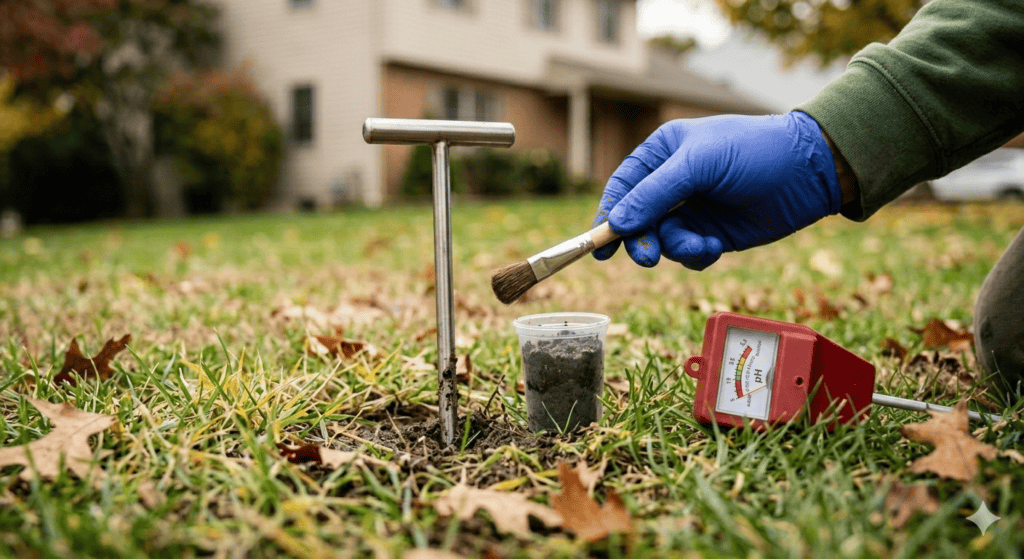
Soil pH is usually the real cause. According to University of Kentucky Extension, iron becomes chemically unstable and largely unavailable to grass roots once soil pH reaches 7.0 or higher, even when there’s plenty of iron already in the ground. A soil test is the only reliable way to confirm this rather than guess, since it shows both your pH and whether iron is actually low.
If the yellowing on your lawn doesn’t match this pattern, iron may not be the cause at all. The full breakdown of why grass turns yellow covers watering, pests, and disease as the other most common culprits.
What Iron Actually Does for Your Lawn
Iron is a key building block for chlorophyll, the pigment responsible for green color and photosynthesis. UF/IFAS Extension notes that even though grass needs iron in much smaller amounts than nitrogen, a shortage still shows up fast as visible yellowing, since chlorophyll production stalls without it.
Correcting an iron deficiency restores color, but it isn’t a substitute for nitrogen. The two nutrients do different jobs: nitrogen drives growth and overall density, while iron drives color and photosynthetic efficiency. A lawn can be well-fed on nitrogen and still look pale if it’s iron-deficient, and dumping on more nitrogen in that situation usually makes the color problem worse, not better.
When to Apply Iron, Season by Season
Spring. Apply in late March through early May, once the lawn is breaking dormancy and soil temperatures reach 60 to 75°F. This is when iron has the biggest visible impact, since it restores color right as the lawn is waking up for the season.
Summer. How soon you reapply depends on which product you used. Liquid iron fades faster and typically needs reapplying every 3 to 4 weeks during peak growth, while granular iron releases more slowly and holds color for 6 to 8 weeks. Apply during cooler parts of the day rather than peak afternoon heat, since iron products can stress grass and even stain concrete or hardscaping if applied when temperatures run hot.
Fall. A fall application helps grass hold color longer into the season and supports the plant heading into winter dormancy. This matters most for cool-season lawns preparing for a slow winter rather than warm-season grass that’s about to go dormant anyway. It’s also the timing worth knowing about if you want a lawn looking sharp for a specific date, a quick liquid iron application 3 to 5 days before an outdoor event or holiday gathering is a common trick for an instant, temporary deep-green look, without committing to a full seasonal program.
Water the lawn after every application. This helps the iron move into the root zone and reduces the risk of surface staining on leaves or nearby concrete. The complete guide to watering your lawn covers how much and how often beyond just this one application.
Liquid vs. Granular Iron

Liquid iron, especially chelated liquid iron, absorbs quickly and shows results within days. It works well for a fast color correction and performs reliably across a range of soil pH levels, since the chelating compound protects the iron from reverting to a plant-unavailable form.
Granular iron, such as iron sulfate or chelated granular blends, releases more slowly for longer-lasting color. A typical application rate is around 25 pounds per 1,000 square feet, applied when soil temperatures are in the same 60 to 75°F range as liquid applications.
Neither form is strictly better. Liquid iron suits a quick fix before an event or after a rough winter, while granular iron suits ongoing seasonal maintenance.
When Not to Apply Iron
Skip iron applications during extreme heat, active drought stress, or right before heavy rain, since all three increase the risk of the grass reacting poorly or the product washing away before it can absorb. Hold off on newly planted grass as well, since young roots aren’t established enough to take up supplemental nutrients efficiently. If you’re not sure whether a deficiency is actually iron, a soil test before buying any product prevents wasted money on the wrong fix.
Frequently Asked Questions
How long does it take for iron to work on a lawn?
Fast, if it was actually an iron problem. Liquid iron shows visible greening within a few days, often peaking around day 4 or 5. Granular iron takes longer to show results since it has to break down in the soil first, expect a week or so before the color shift is obvious.
Can too much iron hurt my lawn?
Yes, in a couple of specific ways. Overapplied iron can stain concrete, siding, and hardscaping a rust-brown color that’s difficult to remove, and applying it during hot weather increases the risk of leaf burn. Sticking to labeled rates and watering afterward avoids both problems.
Does iron replace fertilizer?
No. Iron corrects color and supports photosynthesis, but nitrogen is still what drives growth and density. A lawn needs both, and treating iron as a substitute for a regular fertilization schedule usually leaves the lawn thin even if it looks green.
How is an iron deficiency different from a nitrogen deficiency?
Iron deficiency shows up as yellow new growth with the leaf veins staying green. Nitrogen deficiency fades the whole blade to pale yellow evenly, with no green-vein pattern. A soil test settles it definitively when the visual difference isn’t obvious.
Will iron fix yellow grass that isn’t caused by iron deficiency?
No. Iron only corrects yellowing that’s actually caused by an iron shortage. If the real cause is overwatering, pet urine, pests, or disease, an iron application won’t help and can mask the real problem long enough for it to get worse.
The Bottom Line
Iron applications work fast when iron chlorosis is the actual problem: yellow new growth with green veins, usually tied to soil pH above 7.0. Apply in spring to revive color after dormancy, reapply every 6 to 8 weeks through the growing season if needed, and always confirm with a soil test before assuming iron is the fix. If diagnosing your lawn’s yellowing feels like guesswork, LawnGuru’s local pros can run a proper soil test and apply the right treatment instead of another guess.