
You wake up one crisp December morning, glance out the window, and your once-green lawn has turned a dull tan. No patches, no dead spots, just uniformly brown. It looks like it’s checked out for the season. But don’t panic. That’s bermuda grass doing exactly what it’s designed to do when winter sets in.
Dormancy is part of this grass’s cycle. Understanding what’s happening below the surface helps you prep for greener days ahead, and avoid making costly mistakes.
Bermuda Grass Winter Behavior at a Glance
Bermuda grass goes dormant in late fall when soil temperatures drop below 55°F. It typically turns green again in early to mid-spring once soil consistently warms above 60°F. To keep a green lawn in winter, you’d need to overseed with ryegrass, though that brings its own set of maintenance requirements.
| Seasonal Trigger | What Happens |
|---|---|
| Soil below 55°F (Late Fall) | Bermuda enters dormancy, turns brown |
| First frost | Leaf growth stops completely |
| Soil above 60°F (Spring) | Grass exits dormancy and starts greening |
| Winter appearance | Dry, tan, and brittle-looking blades |
| Year-round green lawn? | Only with cool-season overseeding (e.g. rye) |
What Happens to Bermuda Grass in Winter?
By early December, many homeowners start to assume they’ve done something wrong. “Did I mow too short? Not fertilize enough?” The truth? Your lawn isn’t dying. It’s just resting.
When temperatures dip, bermuda grass naturally slows down. Once soil temps fall into the low-to-mid 50s, it stops growing and shifts into dormancy. Leaf blades lose their green color, turning straw-like. It’s not a disease or damage, it’s protection.
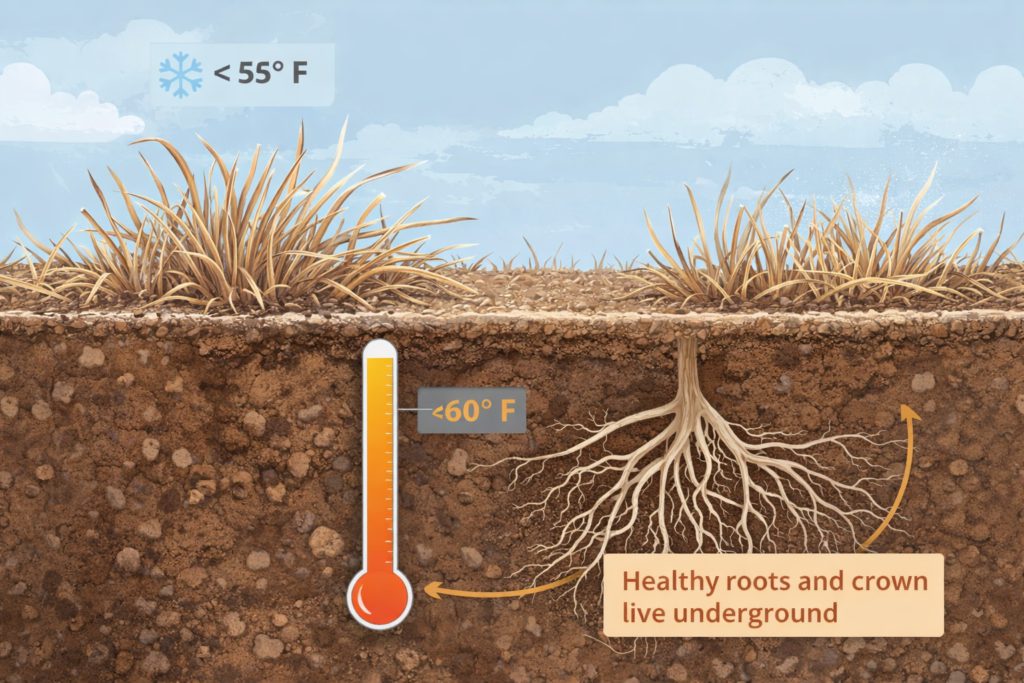
Dormancy reduces the risk of freeze injury to the plant’s crown and root system. Instead of wasting energy trying to grow in bad conditions, bermuda holds tight and waits for spring.
Reality Check: A brown bermuda lawn in winter doesn’t mean it’s unhealthy. In fact, uniform dormancy is often a sign that your lawn entered the season strong.
When Does Bermuda Grass Go Dormant?
It’s not the first frost that sends bermuda into dormancy, it’s the soil temperature that matters most.
Once the soil consistently drops to around 55°F or lower for several days in a row, bermuda shuts down. In much of the South and transition zone, that lines up with mid to late November. Inland areas or higher elevations can see dormancy kick in earlier, even by late October.
You can spot the shift clearly if you use a soil thermometer. Root growth slows first. Then blade growth stops altogether. By the time leaves lose color, the plant has already dialed back activity underground.
When Does Bermuda Come Out of Dormancy?
Spring isn’t just about blooming trees and warmer air, it’s about soil recovery. Bermuda grass starts waking up when the soil temperature reliably climbs above 60°F.
That usually happens sometime between late March and early May, depending on your region. Warm spring days help, but the key is soil warmth over time, not one sunny afternoon.
Nighttime temps matter, too. If your evenings are still dipping into the 40s, that morning green-up you’re hoping for will stay on hold.
Note: South-facing spots in your yard often green up first. They warm quicker during the day and show signs of growth up to a week earlier than shaded areas.
When Does Bermuda Grass Turn Green Again?
Greening up doesn’t happen all at once. Homeowners often see patches of color peeking through first. Those early spots tend to be in full sun or protected from cold winds.
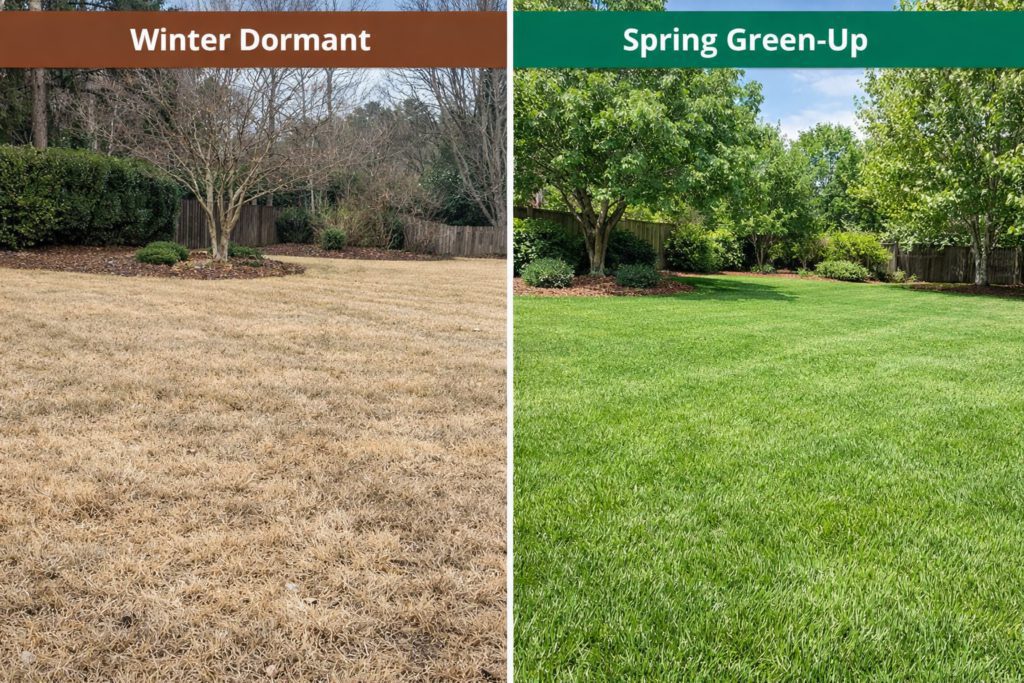
A full lawn of green bermuda means your soil is warm, your roots are active, and your plant is pushing new leaf growth again. Expect that transition to take a couple of weeks, especially if spring weather is inconsistent.
The key takeaway: it’s not about the calendar, it’s about the conditions. Watch your soil, not your neighbors’ lawns.
How to Keep Bermuda Grass Green in Winter
You can’t force bermuda to stay green in cold weather. But you can fake it with a little help.
Most homeowners who want green grass year-round in warm climates overseed with a cool-season grass, usually annual rye. It fills in with bright green blades during the winter months, giving your lawn a fresh look while the bermuda naps beneath.
This method comes with tradeoffs, though.
Warning: Overseeding with ryegrass means extra mowing in winter and added fertilization in spring. It can also delay bermuda’s spring return by shading it out too long.
If you go this route, time the seeding for early fall while the soil is still warm. Cut bermuda shorter than usual, then seed over it and keep it moist. The rye will sprout fast and hold color through the cold.
Should You Water or Fertilize Dormant Bermuda?
Picture this: you’re bundled up inside, but your sprinkler timer is still running twice a week. That’s not doing your lawn any favors.
Dormant bermuda doesn’t need regular irrigation. In fact, watering too often in winter can encourage fungal issues and waste resources. Water only if there’s an extended dry spell, think 3+ weeks without rain.
Fertilizer? Skip it. Applying nitrogen while the grass is dormant won’t trigger growth. It just leaches into the soil or runs off, potentially damaging the environment.
Can Cold Damage Bermuda Grass?
Not unless temperatures get extremely low for extended periods. Bermuda is tough, especially varieties bred for colder transition zones.
That said, lawns with poor drainage, heavy thatch, or compacted soil are more vulnerable. Freezing and thawing can cause stress in these areas.
Pro Tip: Before winter, aerate and remove excessive thatch so moisture drains properly and roots have room to breathe through the colder months.
Don’t Mistake Dormancy for Lawn Failure
A new homeowner might look at their brown bermuda lawn and assume it’s gone for good. But by April, the same yard often looks better than ever, without doing anything at all.
Give the lawn space to rest. Avoid heavy foot traffic on frozen or soggy soil, and hold off on early mowing until you see consistent green growth returning. Once it starts, bermuda usually rebounds fast.
If you’re unsure whether what you’re seeing is dormancy or something else, a simple tug test helps. If blades pull up easily with no resistance, that patch might be dead. But if they stay rooted, it’s just waiting out the cold.
FAQs About Bermuda Grass in Winter
What month does bermuda grass typically go dormant?
In most southern and transition zone areas, bermuda grass enters dormancy in late November. In cooler regions or higher elevations, it may happen by late October.
When does bermuda grass turn green again in spring?
You’ll usually see signs of green between late March and early May, depending on soil warmth and regional climate.
Can I keep bermuda grass green through the winter?
Only by overseeding with a cool-season grass like rye. True bermuda will always go dormant when soil temperatures drop.
Let the Grass Sleep Then Wake Up Right
A dormant bermuda lawn isn’t a problem to solve. It’s a sign that your grass is following nature’s playbook. Give it space, skip the unnecessary watering and feeding, and it’ll return strong when the soil says go.
If you’re short on time or just want a hand figuring out seasonal timing, LawnGuru makes it easy to get local help fast, no contracts, just pro service when you need it.
Bring in Backup This Spring
Once bermuda starts greening up, timing matters. Mow too early, and you scalp it. Fertilize too late, and you miss your window. If your schedule’s tight or you’d rather leave it to someone who knows warm-season turf inside and out, book a local LawnGuru provider to help bring your lawn back strong.