Quick Answer: Most lawn diseases are fungal, and the same three conditions have to line up for one to take hold: a susceptible grass type, an active pathogen, and weather that favors it. That third piece is why brown patch shows up in July and snow mold shows up in March, never the other way around. The fastest way to identify what you’re looking at is to start with the season, then match the patch shape and color against the disease list below. Common culprits include brown patch, dollar spot, red thread, rust, and snow mold, but a dozen others show up regularly depending on your grass type and region.
Not every brown or discolored patch on your lawn is a disease. Drought stress, dog urine, grub damage, and a dull mower blade can all fake the early symptoms of a fungal infection, and guessing wrong means treating the wrong problem while the real one keeps spreading. The University of California’s IPM program calls this the “disease triangle”: a pathogen, a susceptible plant, and the right environmental conditions all have to be present at once, and removing any one of the three stops the disease cold. That’s also why the same lawn can host dollar spot every August and never see it in May.
This guide walks through the diseases that actually show up in home lawns, organized by when you’re likely to see them and what they look like, so you can narrow things down before reaching for a fungicide.
Why Correct Identification Matters Before You Treat Anything
A fungicide labeled for brown patch does very little against dollar spot, and neither one does anything for a lawn that’s just thirsty. UC IPM puts it plainly: irrigation problems are the single most common cause of a discolored lawn, and no amount of fungicide fixes a broken sprinkler head. Before you treat for disease, rule out the easier explanations first.
If the patches are irregular, match your sprinkler pattern, or show up as a sharp yellow-green ring rather than a circle, you’re probably looking at something other than a pathogen. Our guide to diagnosing brown spots walks through drought, pet damage, and mower scalping in more detail, and it’s worth ruling those out first since they’re free to fix and a fungicide won’t touch them.
Start With the Season, Then Narrow by Symptoms
Because environment is one leg of the disease triangle, timing alone eliminates most of the guesswork. A patch that shows up in late July is not snow mold, and a matted gray patch under melting snow is not brown patch, no matter how similar they look at a glance.
| Season | Diseases Most Likely |
|---|---|
| Early spring, after snowmelt | Snow mold |
| Spring through fall | Red thread, necrotic ring spot |
| Summer | Brown patch, dollar spot, summer patch, rust, Pythium blight |
| Anytime with heavy thatch | Fairy ring |
Once you know the season, the next filter is shape and color, covered disease by disease below.
Common Lawn Diseases and How to Identify Each One
Brown Patch

Large, irregular circles of brown or gray grass, sometimes with a darker “smoke ring” edge visible in humid morning light. The fungus behind it, Rhizoctonia solani, needs hot, humid summer weather and grass that stays wet overnight, and it’s especially common in tall fescue, ryegrass, and bentgrass. UC IPM puts the ideal range at 80 to 95°F daytime temperatures with high humidity, and excess nitrogen makes it worse by pushing soft, disease-prone growth.
Dollar Spot

Small, silver-dollar-sized bleached spots, often merging into larger irregular patches as the infection spreads. Look closely at individual blades for a tan lesion with a reddish-brown border, sometimes described as an hourglass shape. Dollar spot (Clarireedia jacksonii, formerly classified as Sclerotinia homoeocarpa) favors moderate temperatures with heavy dew and shows up more aggressively on lawns running low on nitrogen. Wisconsin Horticulture Extension lists it as a summer disease affecting Kentucky bluegrass, perennial ryegrass, and fine fescues.
Red Thread

Irregular pink or beige patches with thin, coral-colored thread-like growths extending from the grass tips, visible without a hand lens once you know what to look for. Laetisaria fuciformis is the fungus responsible, and unlike most diseases on this list, it shows up in cool, wet stretches of spring and fall rather than peak summer, almost always on a lawn running short on nitrogen. The threads themselves are the giveaway, since no other common lawn disease produces them.
Rust
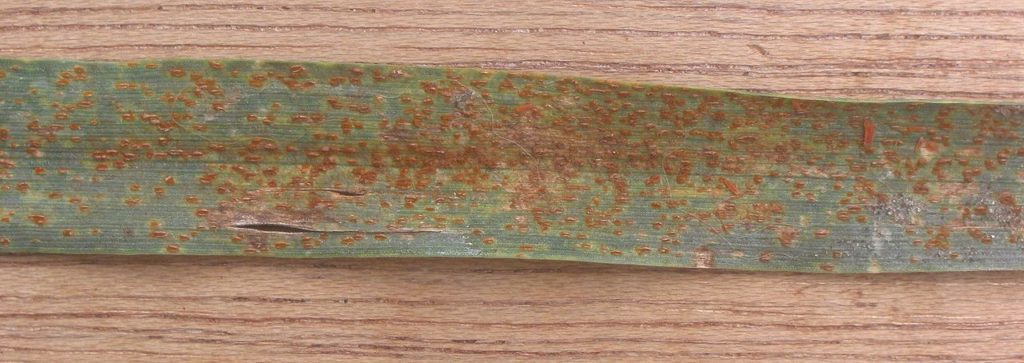
A powdery, orange-to-reddish coating on grass blades that rubs off on your shoes, mower, or hands. Puccinia species are behind it, favoring warm, humid conditions on nitrogen-deficient turf, and it tends to show up on lawns that are already growing slowly for other reasons. Rust rarely kills grass outright, but a heavily rusted lawn is under enough stress that other problems can follow.
Snow Mold
Circular, matted patches of gray or pink grass that appear as snow melts in late winter or early spring, sometimes with a faint webby texture. There are two versions: gray snow mold (Typhula species) and pink snow mold (Microdochium nivale), and both develop under prolonged snow cover or cold, wet conditions rather than an active pathogen invasion in the way summer diseases work. Kentucky bluegrass, tall fescue, and perennial ryegrass are the most commonly affected.
Fairy Ring
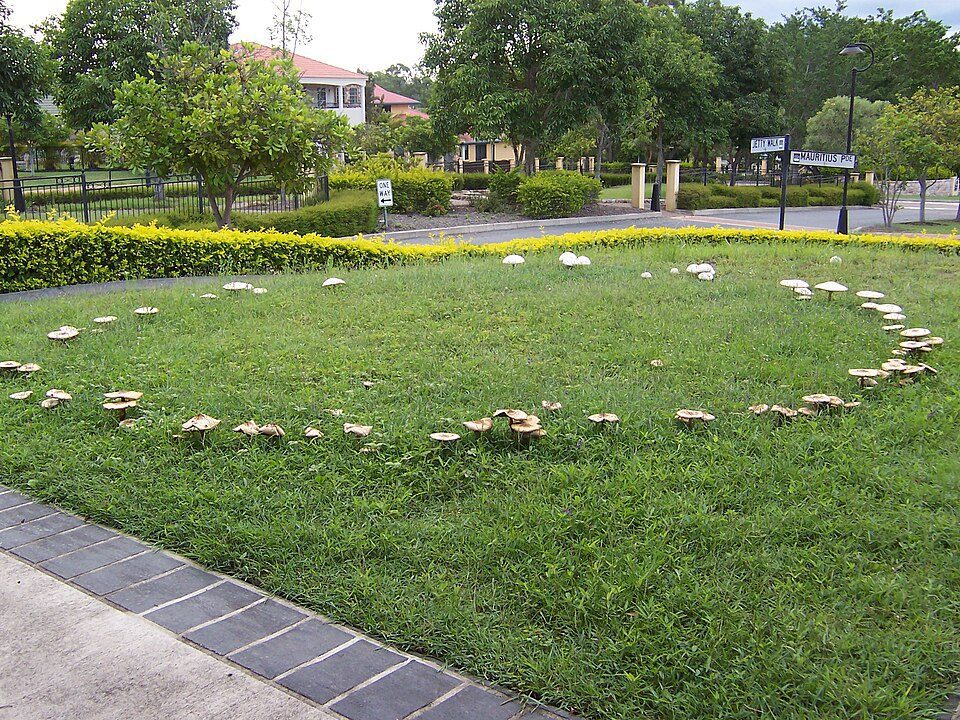
A ring or arc of unusually dark green, fast-growing grass, sometimes with mushrooms along the band and sometimes with a strip of dead or thinned grass just inside or outside it. Fairy ring isn’t one fungus but a category of mushroom-forming fungi (Marasmius oreades is a common one) that break down buried organic matter, wood, old tree stumps, construction debris, and release nitrogen as they do, which is what makes the ring so green. Heavy thatch accumulation makes lawns more prone to it.
Necrotic Ring Spot
Circular, straw-colored patches typically under a foot across, often with green regrowth in the center that creates a “frog-eye” appearance similar to summer patch. The pathogen, Ophiosphaerella korrae, infects during cool, wet conditions, but the visible damage doesn’t show up until heat and drought stress hit weeks later, which makes it easy to misdiagnose as a summer-only problem. Kentucky bluegrass lawns, especially newly sodded ones, are the most susceptible.
Summer Patch
Ring-like patches of wilted, tan turf that look almost identical to necrotic ring spot, and in fact both are caused by closely related fungi in the same genus (Magnaporthiopsis poae). The practical difference is timing: summer patch symptoms appear during the heat itself rather than weeks after the triggering conditions, and it favors lawns with alkaline soil or thatch pH.
Leaf Spot and Melting Out
Small, oval brown or purple-bordered spots directly on individual grass blades, which can progress to a general thinning called “melting out” if left unchecked. Bipolaris and Helminthosporium species cause it, and low mowing heights along with either too much or too little nitrogen make it worse. It tends to hit Kentucky bluegrass lawns that are already stressed from other causes.
Pythium Blight
Small, greasy-looking circular spots that expand and merge quickly, sometimes visibly matting together in humid conditions with a cottony fungal growth. Pythium species need standing water or consistently saturated soil to establish, so it shows up first in low spots and drainage-poor areas during hot, humid weather. It’s one of the fastest-spreading lawn diseases once conditions are right, sometimes visibly worsening within a day.
Look-Alikes That Aren’t Disease at All
Grubs feeding on grass roots cause patches that lift up like loose carpet, with no roots holding the turf down, which is a mechanical symptom rather than a disease one. Our guide to identifying grub damage covers the tug test that separates grub damage from anything fungal in about thirty seconds.
Dog urine spots usually show a dead center ring surrounded by a band of dark green, overly lush grass fed by the extra nitrogen, a pattern no fungal disease produces. Mower scalping shows up as brown tips or streaks that follow your mowing pattern in straight lines rather than organic circles. Drought stress tends to hit high spots, slopes, and areas near pavement first, following sun exposure rather than the randomly circular shape most fungal diseases produce.
What Makes a Lawn Disease-Prone
Since environment is one full side of the disease triangle, the conditions you control matter as much as the pathogen itself. Overwatering, watering in the evening instead of the morning, mowing too short, heavy thatch, and compacted soil all tip the balance toward disease, and UC IPM notes that over-fertilized lawns are actually more prone to brown patch and Pythium blight, while under-fertilized lawns run a higher risk of dollar spot, rust, and red thread. There’s no single “correct” nitrogen level that prevents everything, since different diseases respond to opposite ends of that spectrum.
Our full breakdown of lawn disease causes, signs, and treatment goes deeper into the specific watering, mowing, and fertilization adjustments that reduce risk for each disease category.
Once You Know What You’re Looking At
Identification is half the job. For step-by-step fungicide selection, timing, and application rates, our guide to treating lawn fungus safely and effectively covers products and schedules by disease type. If dollar spot specifically is what you’re dealing with, our dedicated dollar spot guide covers prevention and treatment in more depth than fits here.
Some diseases genuinely look alike even with a description in hand, and confusing necrotic ring spot for summer patch or brown patch for a large dollar spot outbreak means the wrong fungicide gets applied. If you’ve gone through the list above and you’re still not confident, LawnGuru connects you with local lawn care pros who can confirm the diagnosis in person rather than from a photo.
FAQ
What is the most common lawn disease?
Brown patch and dollar spot are the two most frequently reported lawn diseases in home lawns across the country, largely because both thrive in the same hot, humid summer conditions that stress cool-season grasses. Which one you’re more likely to see depends heavily on your grass type and regional climate.
How do I tell if my lawn has a disease or just needs water?
Check the shape and the soil underneath. Disease patches tend to be more geometrically circular or ring-shaped and appear somewhat suddenly, while drought patches are irregular, follow sun exposure or sprinkler coverage, and the soil beneath them is dry rather than damp. Digging a small plug and checking soil moisture takes under a minute and rules out half the possible causes immediately.
Can one lawn have more than one disease at a time?
Yes, and it’s more common than most homeowners expect, especially on a stressed lawn where multiple diseases each find a foothold in different areas. A lawn with poor drainage in one section and low nitrogen overall could show Pythium blight near a low spot and dollar spot everywhere else in the same season.
Do lawn diseases spread to other plants in the yard?
Almost all turfgrass pathogens are host-specific to grass and don’t cross over into shrubs, trees, or garden beds, since they’ve evolved to infect grass tissue specifically. The one thing that can spread between areas is the fungal spores themselves on mower blades or shoes, so cleaning equipment after mowing an infected section is worth doing.
Will a lawn disease go away on its own?
Sometimes, if the weather conditions that triggered it change before serious damage sets in. A cool, dry stretch after a bout of brown patch often lets the lawn recover without any fungicide at all, which is part of why UC IPM notes that fungicides are rarely needed when the right grass is planted and cultural practices are followed correctly.