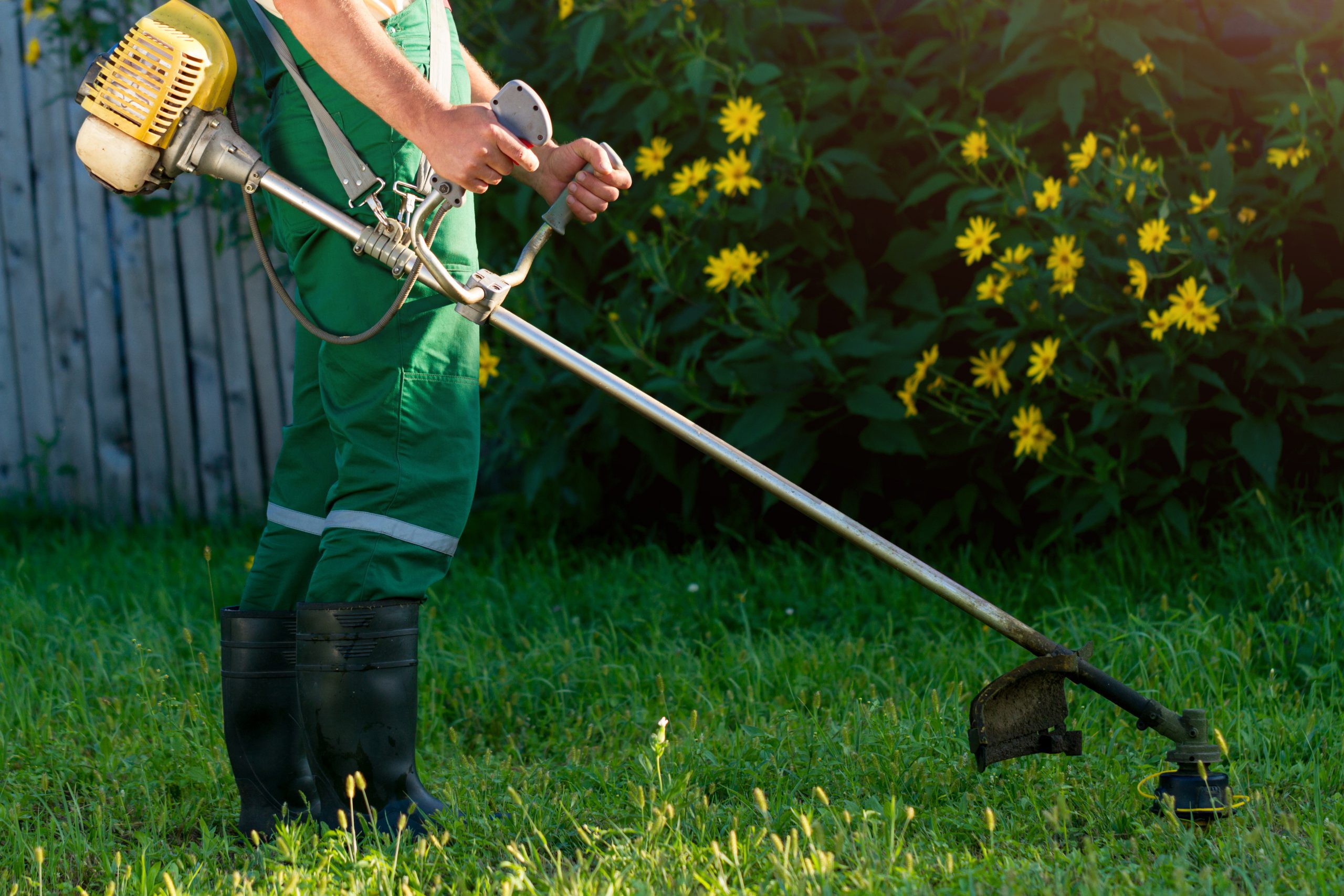

Search “grass type houston texas” and you’ll get a dozen lists of the same five warm-season grasses. What’s harder to find in one place: when to actually plant them, how often to water them once they’re in, and when it’s normal for them to brown out for the winter. This covers all of it.
Quick Answer: Houston’s hot, humid climate and clay soil favor warm-season grasses: St. Augustine (most shade-tolerant), Bermuda (most durable, needs full sun), and Zoysia (premium, moderate shade tolerance), with Centipede and Seashore Paspalum as lower-maintenance or salt-tolerant alternatives. Plant in spring (March to May) or fall, water about 1 to 1.25 inches per week split across 2 to 3 sessions, and expect dormancy (brown, not dead) roughly late November through February once temperatures consistently drop below 50 to 55°F.
What Grass Grows in Houston? The Warm-Season Options
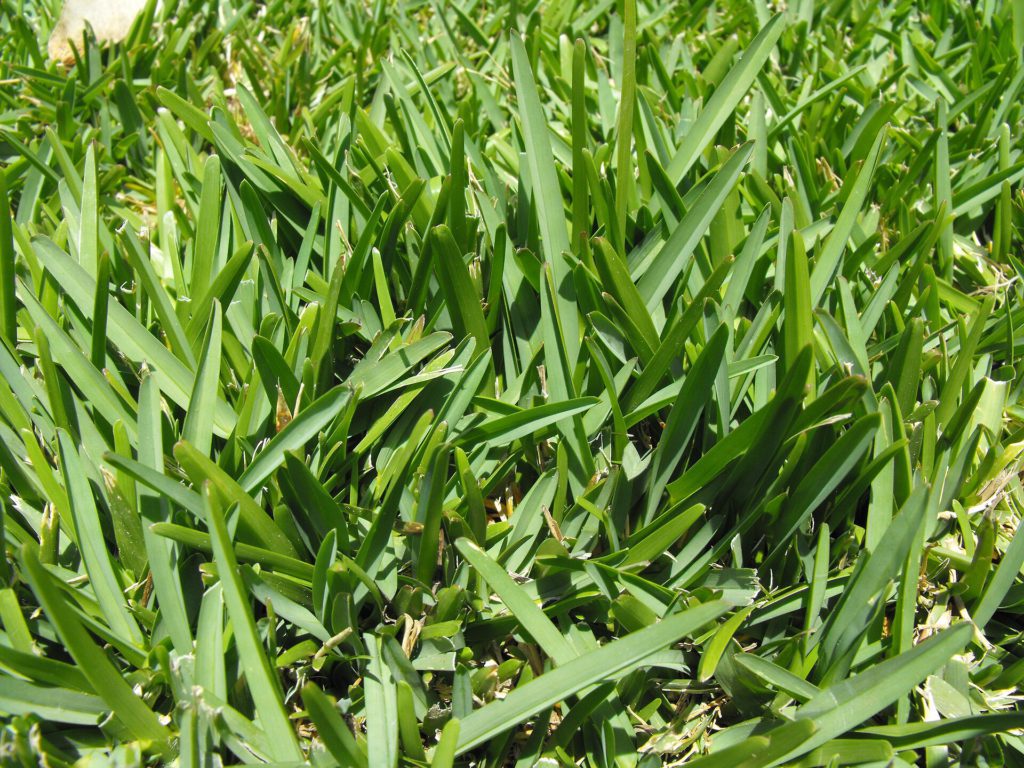
Houston’s climate rules out cool-season grasses almost entirely; the summer heat and humidity that stress cool-season lawns are exactly what warm-season grasses are built for. According to Texas A&M AgriLife Extension, the region’s warm, humid conditions combined with heavy clay soil call for grasses that tolerate both heat stress and slow drainage.
St. Augustinegrass is the most widely planted lawn grass in Houston, mainly because it’s the most shade-tolerant warm-season option available, thriving with as little as four hours of direct sun. Raleigh is the standard variety, coarse-textured and reliable in Houston’s humidity. Palmetto is a softer, dwarf variety that holds up slightly better in shade. The tradeoff is disease susceptibility and lower foot-traffic tolerance than Bermuda.
Bermudagrass is Houston’s workhorse: fast-growing, highly drought-tolerant, and the most traffic-resistant option, but it needs full sun and won’t hold up in shaded yards. TifTuf and Celebration are common improved varieties chosen for density and faster recovery from stress or wear.
Zoysiagrass sits between the two: denser and softer underfoot than Bermuda, with better shade tolerance, though it’s slower to establish and generally costs more. Palisades is a coarser, traffic-tolerant variety; Emerald and Cavalier are finer-bladed, more ornamental options that need slightly more upkeep.
Centipedegrass is a genuine low-maintenance option, sometimes called “lazy man’s grass,” that does well in the acidic, sandy soil pockets found in parts of east Houston, though it’s fragile under heavy foot traffic and slower to establish than the others.
Seashore Paspalum is a specialty grass worth knowing about if you’re closer to the coast: it tolerates salt spray and brackish irrigation water far better than any of the others, at the cost of needing full sun and a bit more care overall.
| Grass Type | Shade Tolerance | Foot Traffic | Best For |
|---|---|---|---|
| St. Augustine (Raleigh, Palmetto) | High | Low-Moderate | Shaded yards, lush appearance |
| Bermuda (TifTuf, Celebration) | Low | High | Full-sun yards, active households |
| Zoysia (Palisades, Emerald, Cavalier) | Moderate-High | Moderate-High | Premium look, moderate shade |
| Centipede | Low-Moderate | Low | Low-maintenance, sandy/acidic soil |
| Seashore Paspalum | Low | Moderate | Coastal, salt-affected areas |
Not recommended for Houston: Buffalograss struggles with the region’s higher rainfall, and cool-season grasses like Kentucky bluegrass and tall fescue aren’t suited to the heat and humidity at all, regardless of how they perform elsewhere in the state.
A note on ryegrass: If you want green grass through winter dormancy rather than the standard tan, overseeding a warm-season lawn with perennial ryegrass each fall is the common Houston approach. It’s strictly temporary, ryegrass dies out on its own once summer heat returns, and needs reseeding every year, but it fills the gap while Bermuda, St. Augustine, or Zoysia are dormant.
When to Plant Grass Seed in Houston
Timing matters more in Houston than the “spring and fall” advice you’ll see everywhere suggests, and so does the planting method. According to GreenGate Turf & Pest, St. Augustine and Zoysia are typically established from sod in this region rather than seed, since reliable seed for either isn’t widely available to homeowners. Bermuda is the one common Houston lawn grass that’s realistically seedable, and even then, choosing a pure, weed-free hulled seed matters more here than in most regions given how quickly weeds establish in Houston’s climate.
For whichever method you use, the windows that actually work are March through May, after the last real cold snap but before peak summer heat stresses new roots, or early-to-mid fall, once the worst of summer heat has broken but with enough warm weeks left for roots to establish before winter dormancy. Planting in the dead of summer risks heat and drought stress on unestablished roots; planting too late in fall risks the grass going dormant before it’s rooted in.
If you’re sodding instead of seeding, the window is more forgiving, sod can generally go down anytime the ground isn’t frozen, though spring through early summer still gives the fastest establishment.
How Often to Water Grass in Houston
Most Houston lawns need about 1 to 1.25 inches of water per week, including rainfall, not a daily light sprinkle, though the exact number varies a bit by grass type. The WaterMyYard program, run by Texas A&M AgriLife Extension specifically for this region, uses local evapotranspiration data to calculate exactly how much your lawn needs week to week rather than relying on a flat rule of thumb. The Texas Water Development Board recommends watering deeply enough to wet the soil 4 to 6 inches down, which builds deeper, more drought-resistant roots than frequent shallow watering.
| Grass Type | Weekly Water (average) |
|---|---|
| St. Augustine | 1 to 1.5 inches |
| Bermuda | 1 to 1.25 inches |
| Zoysia | 1 inch |
| Centipede | 1 inch |
| Seashore Paspalum | 1 to 1.5 inches |
Seasonal watering guide for Houston:
- Spring (March-May): 1 to 2 times per week, increasing as temperatures climb.
- Summer (June-August): 2 to 3 times per week during peak heat and dry stretches.
- Fall (September-November): About once a week; overwatering in fall raises the risk of brown patch fungus.
- Winter (December-February): Rarely needed at all, water only during extended dry spells with no rain for 3 to 4 weeks.
Houston’s dense clay soil absorbs water slowly, so a long single watering session often just runs off instead of soaking in. The cycle-and-soak method, splitting a watering session into two or three shorter runs with a 30-minute gap between them, gives the water time to actually penetrate instead of pooling and running down the driveway.
Does your lawn actually need water? Rather than watering on a fixed schedule, check for these signs first:
- Grass blades curl or fold lengthwise instead of lying flat, a stress response that shows up before the lawn visibly browns.
- Color dulls from bright green to a grayish or blue-green tint across a section of the yard.
- Footprints stay visible in the grass for more than a few seconds after you walk across it, instead of springing back.
- Soil feels dry to the touch 3 to 4 inches down, checked with a screwdriver or soil probe pushed into the ground.
If none of these show up, skip that watering cycle, Houston’s clay soil holds moisture longer than sandy soil does, and overwatering invites fungus more often than underwatering kills grass.
One Houston-specific rule worth knowing: City of Houston Public Works recommends turning off automated sprinkler systems entirely from November 1 through February 28, since dormant lawns need essentially no supplemental water during that stretch and running sprinklers anyway just wastes water and money.
When Does Grass Go Dormant in Houston?

Warm-season grasses go dormant once soil and air temperatures consistently drop below roughly 50 to 55°F, which in Houston typically lands somewhere in late November to December, with the lawn staying brown through February and sometimes into early March depending on how mild or harsh the winter runs. Bermuda is usually the first grass to brown going into winter and the first to green up coming out of it; St. Augustine and Zoysia tend to hold color a bit longer into fall and green up slightly later in spring.
Dormant is not dead. A dormant lawn goes tan or straw-colored but the crown and root system stay alive underground, ready to resume growth once temperatures warm back up. The distinction matters practically: dormant grass needs little to no water or fertilizer and shouldn’t be treated as a lawn problem to fix. If large patches stay brown well after the rest of the yard has greened up in spring, that’s a sign of an actual dead spot rather than normal dormancy, and worth investigating separately.
Houston Lawn Care by Season
| Season | Watering | Key Task |
|---|---|---|
| Spring (Mar-May) | 1-2x/week | Best planting window; first mow of the season |
| Summer (Jun-Aug) | 2-3x/week | Watch for drought and heat stress, especially on St. Augustine |
| Fall (Sep-Nov) | ~1x/week | Second planting window; reduce watering to avoid fungus |
| Winter (Dec-Feb) | Rarely | Sprinklers off per city guidance; lawn is dormant, not dead |
Frequently Asked Questions
What grass grows in Houston shade the best?
St. Augustine, particularly the Palmetto variety, is the most shade-tolerant warm-season grass commonly grown in Houston, holding color and density with as little as four hours of direct sun daily. Zoysia is a distant second; Bermuda needs full sun and struggles noticeably in shaded yards.
When to plant grass seed in Houston if I missed the spring window?
Early-to-mid fall is the second-best option, once summer heat has broken but with enough warm weeks left before winter dormancy for roots to establish. Avoid planting in the height of summer heat or too late in fall, both stress new grass before it has a real root system.
How often to water grass in Houston during a drought or watering restriction?
Follow whatever restriction schedule the city or your municipal utility district has in place first; those override general guidance. Within that schedule, prioritize deep, infrequent watering (1 to 1.25 inches total per week) over frequent shallow watering, which encourages shallow roots that handle drought worse.
Is brown grass in winter normal in Houston?
Yes, for warm-season lawns. Once temperatures consistently drop below about 50 to 55°F, Bermuda, St. Augustine, and Zoysia all go dormant and turn tan or straw-colored, typically from late November into February. This is normal dormancy, not dead grass, and doesn’t need extra water or fertilizer to fix.
What is the best all-around grass type for Houston?
There isn’t a single best option, it depends on sun and use. St. Augustine wins for shaded yards, Bermuda wins for full-sun, high-traffic yards, and Zoysia splits the difference for homeowners wanting a premium look with moderate shade tolerance.
The Bottom Line
Grass type Houston Texas homeowners choose should come down to how much sun and foot traffic the yard actually gets, not just which grass looks best in photos. Match the grass to your yard’s real conditions, plant in spring or fall rather than summer, water deeply but infrequently using the cycle-and-soak method on Houston’s clay soil, and don’t panic when the lawn browns out each winter, that’s dormancy, not death. If choosing, planting, or maintaining the right grass for your specific yard feels like more than you want to manage, LawnGuru connects you with local lawn care pros who know Houston’s conditions firsthand.