Quick Answer: “Double cutting” covers two different techniques. The first is a cross-cut: mowing your lawn twice at the same or nearly the same height, changing direction on the second pass, mainly for a striped look and better clipping distribution. The second is a rescue cut for overgrown grass: mowing once at a higher deck setting, then again at your normal height, so you never remove more than a third of the blade in one pass. Confusing the two is exactly why so much advice on this topic contradicts itself.
Look up “double cutting a lawn” and you’ll get answers that flatly disagree with each other. One source tells you to mow low first, then higher. The next says the opposite. A lawn care forum thread from 2005 that still gets cited today describes something else entirely: mowing north to south, then east to west, at the same height both times. They’re not all wrong. They’re describing different things using the same two words.
What “Double Cutting” Means, Depending on Who You Ask
Two passes over the same lawn, close together in time. That’s the only part everyone agrees on. Past that, the term splits into two distinct practices depending on why you’re doing it.
Cross-cutting for looks: mow once, then mow again at roughly the same height but in a different direction, usually perpendicular to the first pass. This is what working crews describe in a long-running lawn care forum thread on the practice: mow the lawn once, then go over it again from a different direction, sometimes at the exact same deck height, sometimes bumped up a fraction of an inch just to clear clippings without touching the grass itself. One contractor in that thread put his second pass at 3-5/8 inches after a 3-inch first pass, a difference too small to count as a real height drop.
The two-height rescue cut: mow once at a higher deck setting, drop the deck, then mow again at your target height. Gravely, the mower manufacturer, describes this directly: “mow once with your mower at a high deck height, probably the tallest or second-tallest setting, then set the mower to a lower height and mow again.” This version exists to solve a real problem, not just to look nice.
Cross-Cutting: Same Height, Different Direction
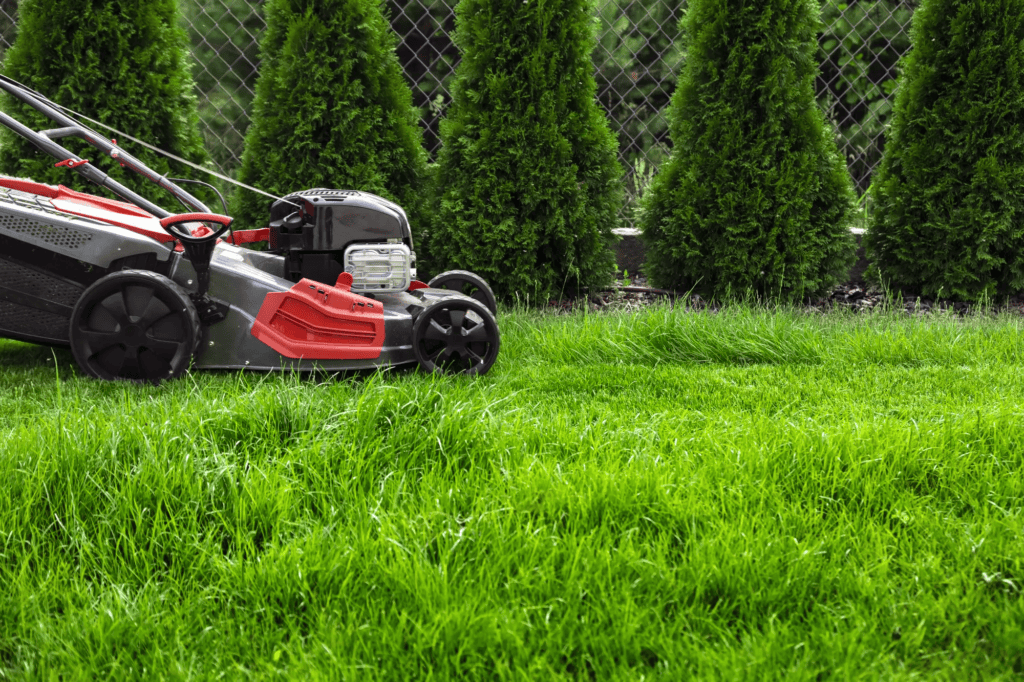
If your grass is already at a reasonable height and you just want a cleaner finish, this is the version you want. Mow your normal pattern, then go over the lawn again at 45 to 90 degrees to your first pass.
The stripes you see on ballparks and golf courses come from this. Grass blades bend toward or away from the mower depending on which way you push them, and light reflects differently off bent-forward versus bent-back blades. University of Minnesota Extension recommends changing mowing direction regularly for a reason that has nothing to do with looks, though: mowing the same direction every time compacts soil along the same wheel tracks and encourages grass to lean instead of grow upright. Alternating direction, whether or not you’re chasing a striped look, keeps growth more upright and spreads wear evenly.
Cross-cutting also redistributes clippings. The second pass lifts clippings the first pass left lying flat and scatters them back across the lawn, which returns nitrogen to the soil as they break down. You’re not adding a step so much as making the step you already do more useful.
Cool-season grasses like Kentucky bluegrass and tall fescue hold a stripe longer than most warm-season grasses, since their blades are softer and bend more easily. If you’ve tried this on Bermuda or Zoysia and wondered why the effect barely shows, that’s why, not a mistake on your part.
The Rescue Cut: When Grass Gets Away From You
This is the version that matters if you skipped a week, came back from vacation, or inherited an overgrown lawn. The rule that makes it necessary is simple and well established: never remove more than a third of the grass blade in a single mow. UMN Extension states this directly, and puts a number on it for a typical Midwest lawn kept at 3 inches: mow again before the grass reaches 4.5 inches, since that’s the point where a single cut would exceed the one-third limit.
Skip that rule and the plant pays for it. Scalping a lawn that’s grown too tall stresses the grass badly enough that it can stop growing altogether while it recovers, and it opens up bare soil that weeds are more than happy to fill. If your lawn is already at 7 or 8 inches, there’s no way to get back to 3 inches in one pass without breaking that rule.
The fix is the same math split into two mows. Set the deck to your highest setting, or one notch down from it, and take the height down partway. Wait a day if you can, though same-day works if you’re not pushing the mower through thick, wet clippings. Then mow again at your actual target height. Each individual pass stays under the one-third ceiling even though the total reduction, top to bottom, is more than that.
Gravely’s blog on the technique makes a point worth repeating: this two-step approach lets you cut a lawn shorter overall than you could safely reach in one pass, without scalping it or risking dead patches. That’s the real payoff, not just tidiness.
Do You Need to Double Cut Every Time?
No, and treating it as a routine step is the most common way people waste time on this. Cross-cutting for stripes is worth doing when you want the look, a lawn you’re showing off, a specific event, nothing more urgent than that. The rescue cut is only necessary when a single pass would remove more than a third of the blade height. If you’re mowing on a normal weekly schedule and staying ahead of growth, you’ll rarely need either one.
Our guide to how often you should mow covers how to set that schedule so you’re not regularly facing overgrown grass in the first place, which is the actual fix for needing rescue cuts often.
Getting the Rescue Cut Right
A few details separate a clean rescue cut from one that still stresses the lawn:
Sharpen the blade first if it’s been a while. A dull blade tears grass tips instead of cutting them cleanly, and tearing damage compounds when you’re already asking the lawn to recover from a bigger-than-normal height reduction.
Don’t mow wet, overgrown grass if you can help it. Wet clippings clump, clog the deck, and leave uneven patches that a second pass won’t fully fix. If you can wait for the lawn to dry, do.
Bag the first pass if the clippings are heavy. A lawn that’s grown well past 4.5 inches produces enough clipping volume that mulching it back in can smother the grass underneath rather than feeding it. Our breakdown of when to bag versus mulch covers how to judge that by clipping length rather than guessing.
Check your mowing height against your grass type before setting the deck for either pass. Our guide to mowing heights by grass type and season has the specific ranges, since “target height” isn’t the same number for Bermuda and tall fescue.
When a Rescue Cut Isn’t Enough
If a lawn has gone untouched long enough that even the first pass at your mower’s highest setting would still exceed the one-third rule, two passes won’t solve it safely in one day. At that point, spacing the reduction across two or three mows over a week or two, letting the grass recover a little between each one, is the safer route than forcing it down fast. Our guide to lawn scalping covers the cases where cutting low in one shot is appropriate, which is a narrower list than most people assume.
Double Cutting vs. Verticutting
These get confused because both involve a second pass over the lawn, but they do different jobs. Double cutting, either version, is still a standard mow with a rotary blade. Verticutting uses vertical blades that slice into the thatch layer and soil surface, and it’s a maintenance task done a few times a season at most, not something you’d do as part of a routine mow. Our full comparison of verticutting and vertical mowing explains when that heavier tool is the right call instead.
FAQ
Is double cutting bad for your lawn?
Not if you’re using it for the right reason. Cross-cutting for stripes adds essentially no extra stress since the height doesn’t change. The rescue cut is specifically designed to reduce stress compared to taking an overgrown lawn down in one pass. What harms a lawn is scalping it in a single mow past the one-third rule, which is the exact outcome both versions of double cutting are meant to prevent.
Do professional lawn crews double cut every lawn?
Some do it as a standard finishing step on properties where a striped, manicured look is part of the service, golf courses and high-end residential accounts especially. It’s far from universal. Plenty of crews reserve it for specific requests or for grass that’s grown past a normal cutting window.
What height should I set my mower for a double cut?
For a cross-cut, keep both passes at your grass type’s recommended height, no change needed between passes. For a rescue cut, set the first pass at your mower’s highest or second-highest setting, then drop to your normal target height for the second pass, keeping each individual pass under a third of the blade’s total height.
Can I double cut with any mower?
Yes. Both versions work with rotary push mowers, riding mowers, and zero-turns. A lawn striping kit or roller attachment makes the cross-cut version more pronounced, but it’s not required to get the effect.
If an overgrown lawn has gotten past the point where a careful two-pass cut feels manageable, LawnGuru connects you with a local mowing pro who can bring it back down safely and get you on a regular schedule that keeps it from happening again.