A homeowners walks across the yard in late summer, noticing new patches of thinning, brown grass and noting the summer heat at the cause. What they don’t realize is that these spots often reveal early signs of grubs in lawn by revealing damage that stays hidden until the roots are already chewed through. Many homeowners don’t suspect grubs until the grass lifts like a loose carpet or wildlife starts tearing up the yard. Understanding why grubs target healthy lawns and how to stop them is the first step toward saving your lawn before the damage spreads.
What Are Grubs and Why They Target Your Lawn
Common Lawn Grub Types You’ll See
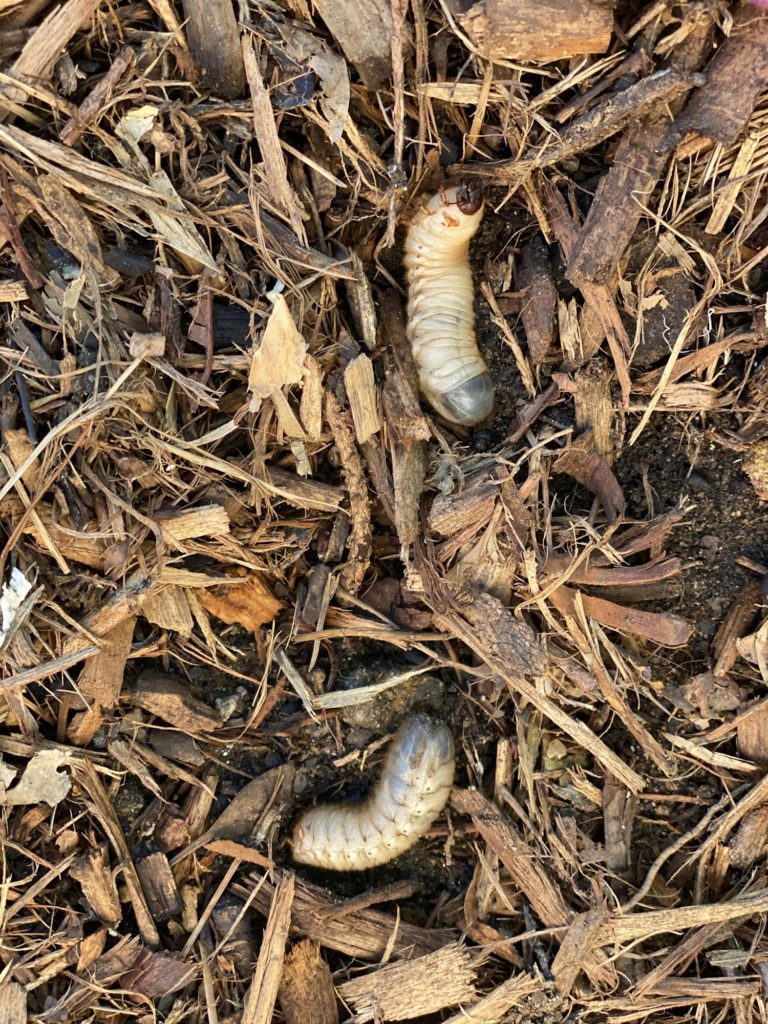
Most lawns face three main grub culprits: Japanese beetles, June bugs, and European chafers. Determining what grubs are in your lawn can be tricky because their larvae all look similar, white, C-shaped, and hungry, but each feeds on grassroots the same way. Japanese beetle grubs are especially common in sunny yards, June bug grubs grow larger and cause wider patches of damage, and European chafer grubs thrive even without much moisture. All of them prefer healthy, well-watered lawns because strong roots make and easy, nutrient-rich meal. When these pests settle in, even the best-kept lawn can start thinning fast.
Their Life Cycle – and Why Timing Matters
As grubs develop, they move through a simple cycle, egg, larvae, pupa, adult, but the larval stage is when lawns take the biggest hit. Eggs hatch in late summer, and the young larvae immediately start feeding on grassroots while the soil is warm and moist. By fall, they’re larger and even more destructive, chewing through entire sections of grass. Once they pupate and emerge as adults, the damage pauses, but the cycle resets soon after. Getting the timing right for treatment is crucial because treatments work best when grubs are small and near the surface, long before they’ve weakened the lawn beyond easy repair.
Note: Grubs do their worst damage before you see the surface signs, their feeding happens under the radar in late summer.
Signs You’ve Got Grubs Tearing Up the Lawn
Grass Damage vs. Other Issues (Fungus, Drought, etc.)
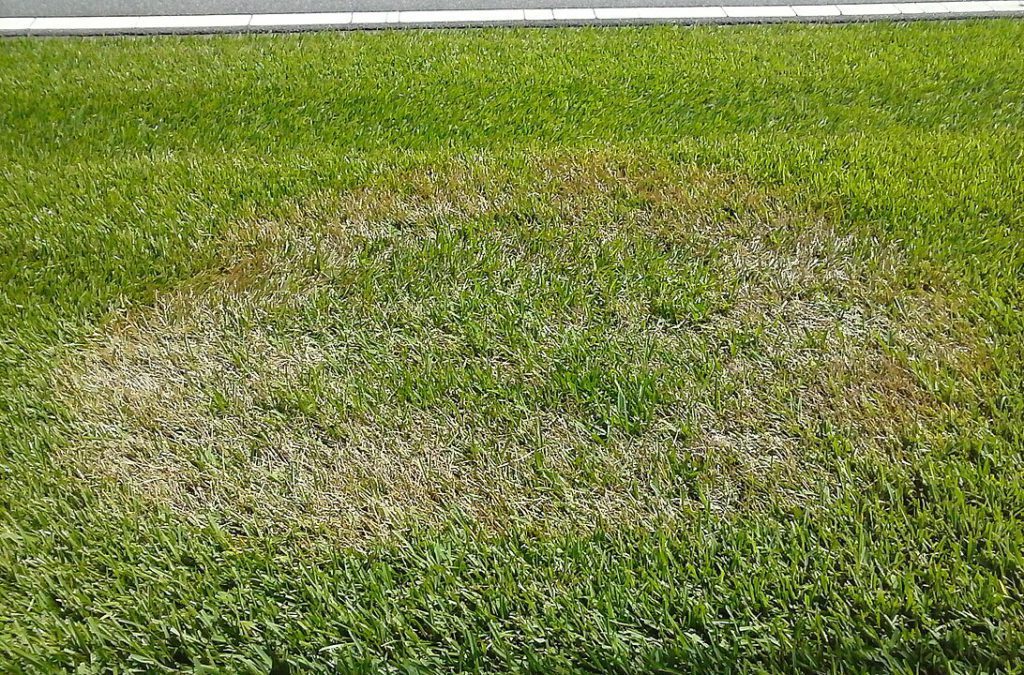
Early grub damage shows up as small, irregular yellow patches that don’t recover after watering, unlike drought or fungus. Mid-stage damage becomes more obvious as spots widen and grass things. Late-stage damage is unmistakeable, the turf lifts like a loose carpet because the roots are gone, and animals may start digging. To check, do a simple tug test: grab a handful of grass and pull; if it lifts up easily, inspect the top few inches of soil for white C-shaped larvae. Unlike fungal issues, which leave spotting or fuzz, or drought, which affects larger uniform areas, grub damage feels loose and patchy.
Warning: Birds or raccoons digging up your yard isn’t always random, they might be chasing a grub buffet under your grass.
Best Treatments for Grubs – Natural and Chemical Options
Timing Your Treatment for Real Results
Effective timing ensures the best treatment fir grubs in lawn. For chemical control, preventative products are applied in late spring to early summer, right before eggs hatch. Curative treatments work best in late summer or early fall when young larvae are feeding near the surface. Natural options, like beneficial nematodes or milky spore, also need warm soil and should be applied in late summer for the strongest results. DIY methods suit small yards or light infestations, while heavy damage or repeated outbreaks often call for a professional. Matching the treatment to the grub’s life stage ensures you hit them when they’re most vulnerable.
Tips for Applying Products Effectively
For the best results, apply grub treatments on calm, dry days and always follow the product label closely. Water the lawn right after applying most granular products so they dissolve into the soil where grubs feed. Keep pets and kids off the yard until everything has dried or absorbed. If you’re using natural treatments like nematodes, apply them in the evening and keep the soil moist for several days to allow the them to settle into the soil. Reapply only as directed, too soon can waste product, but skipping follow-up treatments can let surviving grubs bound back.
Pro Tip: Watering right after applying grub treatment isn’t optional, it helps pull the product into the soil where the grubs live.
After Treatment – Helping Your Lawn Recover
Monitoring for Reinvasion
After treatment, monitor your lawn for reinfestation by monitoring new growth, specifically looking for the reversal of thin or damaged spots. If thin spots linger or fresh yellow patches appear a few weeks later, dig a small section and look for remaining larvae, more than a couple per square foot signals you may need another round of treatment. As the lawn recovers, overseed bare areas, keep the soil lightly moist, and avoid heavy foot traffic. Healthy, dense turf is your best defense. Expect gradual improvement over several weeks; if damage worsens, act quickly before grubs rebuild their numbers.
When to Call in a Lawn Pro
You’ll know it’s time to call a lawn professional when DIY treatments stop effectively treating your grub problem. If patches keep expanding, animals continue digging, or you still find several grubs per square foot after treating, the infestation is likely deeper or more widespread than home products can handle. Professionals can apply stronger, precisely timed controls and check for other issues, like soil compaction, fungus, or thatch, that may be hiding beneath the damage. If the lawn isn’t recovering after a few weeks, or you’re stuck repeating treatments with little improvement, a professional can step in before the lawn declines beyond easy repair.
Reality Check: If a third of your lawn has turned brown and lifts like a carpet, you’re beyond spot treatment, time to bring in a pro.
FAQ
1. How do I check for grubs without tearing up my whole lawn?
Check for grubs by spot-checking small areas. Use a shovel to life one square foot section of grass about 2-3 inches deep. Look for white, C-shaped larvae curled in the soil. Finding five or more grubs in that area signals a problem.
2. Can I treat grubs in the fall or is it too late?
Yes, fall treatment can still be effective if timed right. Early fall works best, when grubs are young and feeding near the surface; treatments are less effective once cold weather drives grubs deeper or they mature into adults.
3. Are grub treatments safe for pets and kids?
Most grub treatments are safe for kids and pets when used as directed. Organic options (like beneficial nematodes) are low-risk and usually safe once watered and absorbed into the soil. Synthetic products may require keeping people and pets off the lawn until dry, typically 24 hours.
4. Do I need to treat every year for grubs?
As a default, you don’t need to treat for grubs every year. Healthy soil, proper watering, and thick turf reduce risk. Monitor annually with spot checks and watch for damage. Apply preventative treatments only if you’ve had past infestations or adult beetle acitivity rather than automatic yearly applications.
5. Will LawnGuru help with grub control?
Yes, LawnGuru can help with grub control and damage recovery. Our lawn care and yard cleanup services help maintain a healthy lawn to prevent grub infestation and assist with damage recovery. These services include professional assessments, overseeding, soil repair, and patch restoration after grub infestations.
Conclusion
What started as a few scattered and stressed-looking patches now makes sense. The homeowner lifts the grass, spots the culprits below, and realizes the lawn wasn’t failing from heat alone. By learning the signs, understanding the grub life cycle, and acting at the right time, they’ve stopped the damage before it could spread further. How to get rid of grubs in your lawn isn’t about panic treatments, it’s about timing, observation, and smart recovery. With proper care, thin areas fill back in a roots regain strength. Need a hand with lawn recovery or prevention? Book a LawnGuru lawn care professional today and get your grass back on track.