Quick Answer: Most lawns need 1 to 1.5 inches of water total per week, from rain and irrigation combined, split into 2 to 3 sessions rather than a daily light sprinkle. That usually works out to 20 to 40 minutes per session depending on your sprinkler type, though the only way to know your exact number is to test your own system’s output. Water early in the morning, and adjust the total down for clay soil or up for sandy soil.
Type this question into Google and you’ll find guides that state three different numbers in three different sections, an inch a week here, an inch and a half every three days there, three to four sessions a week somewhere else. Do the math on some of those and they don’t agree with themselves, let alone with each other. The actual number, backed by university extension research and confirmed by the current search consensus, is simpler than the conflicting advice makes it look.
How Much Water Your Lawn Needs Per Week
One to 1.5 inches per week, total, counting whatever rain provides. Illinois Extension puts it plainly: about one to 1.5 inches of water per week is needed to maintain green color and active growth in cool-season lawns. That’s the whole week’s allotment, not the amount per watering session.
Where a lot of advice gets muddled is treating “1 to 1.5 inches” as a per-session number and then telling you to water two or three times a week on top of that. Do that and you’re delivering two to four times what the grass actually needs, which wastes water and, worse, encourages the shallow root systems that make a lawn less drought-tolerant, not more.
How Often to Water
Two to three times a week, watered deeply, beats a light daily sprinkle every time. Illinois Extension is direct about why: frequent shallow watering promotes shallower root systems and weeds like crabgrass, while infrequent deep watering pushes roots down to chase the moisture, which is exactly the drought resilience you’re trying to build.
The exception that trips people up is newly seeded grass, which needs the opposite approach, light and frequent, until it’s established. If you’ve just overseeded or put down new sod, this every-few-days schedule doesn’t apply yet.
How Long to Run the Sprinkler
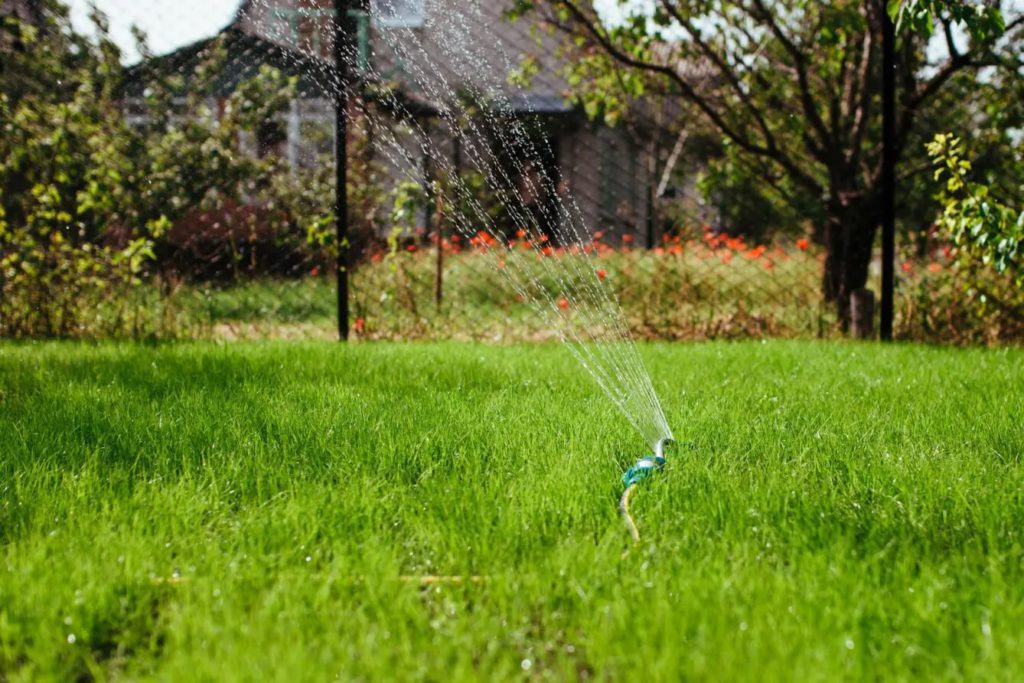
This depends entirely on your sprinkler’s output, which varies enough between systems that a single universal number will be wrong for a lot of yards. Spray heads typically need 15 to 20 minutes per session to deliver their share of that weekly 1 to 1.5 inches; rotor or rotating heads put out water more slowly and usually need 20 to 30 minutes. Weed Man’s own guidance runs a bit longer, 35 to 40 minutes twice a week, which is a reasonable illustration of just how much sprinkler output varies system to system.
The only way to know your actual number is to test it. Set a few empty cans or a rain gauge around the lawn, run the sprinkler for 30 minutes, then measure what collected. If you got half an inch in 30 minutes, two 30-minute sessions gets you to a full inch for the week. If you only got a quarter inch, you’ll need closer to four sessions, or longer ones. Our breakdown of how long to water grass with a sprinkler walks through this test step by step if you want more detail than fits here.
Adjust for Your Soil Type
Most advice says “adjust for soil type” without saying by how much. NC DEQ gets specific: to moisten the root zone 4 to 6 inches deep, clay soil needs about 1 inch of water, while sandy soil needs only about half an inch to reach the same depth, since sandy soil holds less water per inch applied and drains faster.
That doesn’t mean sandy lawns need less water overall. It usually means more frequent, lighter sessions instead of the same two deep soakings, since sandy soil can’t hold a full inch without a lot of it draining straight past the root zone. Clay holds water longer, which is why clay-soil lawns can often stretch toward the lower end of the every-two-to-three-day range.
The Best Time of Day to Water
Early morning, generally before 10 a.m., beats every other option. Watering then gives grass blades time to dry out before evening, which matters because wet grass overnight is one of the more reliable ways to invite fungal disease. Midday watering loses a meaningful share of the water to evaporation before it reaches the roots.
Evening watering isn’t quite as bad as its reputation, but it’s still the second choice at best, and only worth using if morning genuinely isn’t an option on your schedule.
Signs of Overwatering and Underwatering
A lawn tells you when the schedule is off, if you know what to look for.
Underwatered grass takes on a dull, grayish-blue cast instead of its normal green, and footprints or mower tracks stay visible for minutes instead of springing back. Push a screwdriver into the soil: if it’s difficult to get 6 inches down, the root zone is dry.
Overwatered grass shows up differently, standing water or runoff after you’d expect the soil to have absorbed it, a spongy or squishy feel underfoot hours later, and often more weeds and occasional mushrooms, since consistently wet soil favors both. If you’re seeing yellow patches alongside any of this, our guide to diagnosing yellow grass covers the other common causes worth ruling out first.
Why Letting Your Lawn Go Dormant Can Be the Right Call
This is the part most watering guides skip entirely, and it’s genuinely useful: for cool-season lawns, choosing not to water through a hot, dry stretch is a legitimate option, not a failure to keep up. NC DEQ notes that a lawn managed this way, going properly dormant rather than being watered on and off, often needs watering only about once every three weeks with no rain, and greens back up on its own once cooler, wetter weather returns in fall.
The mistake is the in-between approach: watering just enough to keep the lawn from fully browning, then letting it dry out again. Illinois Extension calls this out specifically, breaking dormancy and then forcing the plant back into it drains food reserves and adds stress the lawn wouldn’t otherwise face. Pick a lane for the season, either water consistently enough to keep it green and growing, or let it go dormant and leave it alone until temperatures drop.
When the Standard Schedule Doesn’t Apply
A few situations call for a different approach than the weekly 1 to 1.5 inch baseline. Newly seeded lawns need light, frequent watering during germination, several short sessions a day rather than two deep ones a week, until the grass is established enough to handle the standard schedule.
Peak summer heat is its own case. Our guide to watering in summer covers how the numbers shift when temperatures push past 90 degrees for extended stretches. Grass type matters here too, since warm-season and cool-season grasses have different growth cycles and different drought tolerance, which changes how much slack you have before watering becomes urgent rather than optional.
FAQ
Is it better to water once a week or a little every day?
Once or twice a week, deeply, beats daily light watering for an established lawn. Daily shallow watering trains roots to stay near the surface, which makes the lawn more vulnerable during an actual dry spell, not less.
How do I know my sprinkler’s actual output?
Set out a few flat-bottomed containers, run the sprinkler for a set time like 30 minutes, then measure what collected with a ruler. That tells you your system’s real rate, which varies enough between sprinkler types and water pressure that guessing usually gets it wrong.
Can I water my lawn two days in a row?
It’s not ideal for an established lawn, since the point of deep, infrequent watering is giving roots a reason to grow down between sessions. Two days in a row is fine occasionally, during a heat wave or right after seeding, but shouldn’t be the default pattern.
Should sprinklers run every day?
No, for an established lawn. Daily automatic irrigation is one of the most common overwatering mistakes homeowners make with in-ground systems, and it’s worth checking your controller’s schedule if it was set up without accounting for rainfall.
Every number above depends on your sprinkler system actually delivering what you think it is, and an uncalibrated or poorly adjusted system throws all of it off before you even start testing output. LawnGuru connects you with a local pro for sprinkler start-up and adjustment, so the schedule you build on top of it is based on real numbers instead of a guess.