
Pine straw and mulch do the same basic job, covering bare soil to hold in moisture and choke out weeds, but they’re not interchangeable. Which one actually makes sense for your yard depends less on personal taste and more on where you’re putting it: a slope, a flower bed, or right up against your house.
Quick Answer: Mulch is better for garden beds, moisture retention, and areas close to your home, since it’s heavier, stays in place, and isn’t a fire hazard. Pine straw is better for slopes and budget-conscious large areas, since it’s cheaper, lighter to spread, and interlocks to resist erosion. Keep pine straw at least 10 feet from your house’s exterior, since research and municipal fire codes both confirm it’s considerably more flammable than wood mulch.
Pine Straw vs. Mulch: What’s Actually Different

Pine straw is simply fallen needles from longleaf, slash, or loblolly pine trees, baled and sold as ground cover. It’s common across the Southeast, where pine trees are abundant. Fresh pine needles do test acidic, but that’s a widely repeated myth worth correcting: according to Oregon State University Extension, once pine needles are on the ground and start decomposing, soil microbes neutralize that acidity, and studies show garden soil pH shifts by less than 0.3 units even after years of pine straw mulch. If you’re choosing pine straw specifically to acidify soil for azaleas or blueberries, it won’t do much on its own.
Mulch is a broader category. Organic wood mulch, shredded bark, wood chips, is the most common type and gradually decomposes into the soil, adding organic matter as it goes. Inorganic mulch, like rubber mulch or gravel, doesn’t decompose at all and trades soil benefits for near-zero maintenance.
Both materials do the same core jobs: block sunlight from weed seeds, slow moisture evaporation from the soil, and moderate soil temperature. Where they diverge is weight, cost, longevity, and how they behave in specific situations.
Pine Straw or Mulch: Head-to-Head Comparison
| Pine Straw | Mulch | |
|---|---|---|
| Cost | Cheaper upfront, roughly $20 to $55 per cubic yard | Higher upfront, roughly $30 to $110 per cubic yard depending on type |
| Coverage per unit | A 40 lb bale covers about 100 sq ft at 2 in deep | About 160 sq ft per cubic yard at 2 in depth |
| Lifespan before replacing | 6 to 12 months | 12 to 18 months |
| Weight and effort to spread | Very light, no tools needed | Heavier, often needs a wheelbarrow or pitchfork |
| Weed control | Good when applied thick enough; interlocking needles help, but a thin layer lets more light through than mulch | Better, denser barrier blocks more sunlight |
| Moisture retention | Good, allows more airflow | Better, blocks evaporation more effectively |
| Erosion control on slopes | Excellent, interlocks in place | Weaker, can wash away in heavy rain |
| Fire risk near structures | High, fastest-igniting common mulch type | Lower, though still combustible when dry |
| Soil effect | Adds organic matter; does not meaningfully change soil pH | Adds organic matter and nutrients as it breaks down |
Coverage figure per Texas A&M AgriLife Extension. For a full cost breakdown by project size, see our mulch cost guide.
Which Is Better for Slopes and Erosion Control?
Pine straw wins here without much competition. Its needles naturally interlock as they settle, forming a loose mat that stays put on inclines where loose mulch would slide or wash downhill in heavy rain. That’s why pine straw shows up so often on sloped beds, hillside plantings, and areas along drainage paths in southern landscapes.
Which Is Better for Garden Beds and Decorative Areas?
Mulch generally takes this one. According to Michigan State University Extension, a 2 to 3 inch layer of organic mulch around garden beds retains moisture more effectively and provides denser weed suppression than lighter materials, while also enriching the soil as it decomposes. Mulch also comes in multiple colors and textures, letting you match a specific design rather than accepting pine straw’s single rustic look. If you want a clean, uniform bed edge, mulch holds that line better over time since it doesn’t blow around as easily.
So is mulch or pine straw better for the average front-yard flower bed? For most homeowners outside pine-straw-heavy regions of the Southeast, mulch is the more practical default, and pine straw earns its place specifically on slopes or where upfront cost matters more than longevity.
Mulch or Pine Straw Around House Foundations: The Fire Safety Question
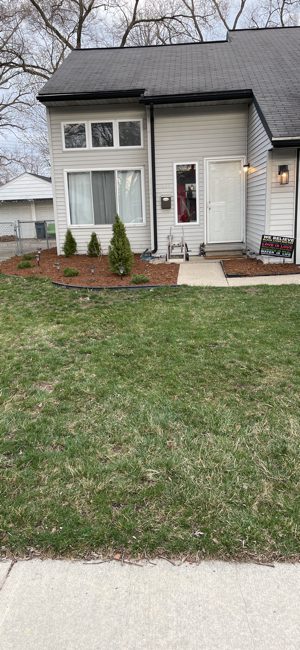
This is the one place where the decision isn’t really about aesthetics or moisture, it’s about safety. Pine straw is significantly more flammable than wood mulch, and dry pine needles close to a structure can catch from an errant ember, a dropped cigarette, or even a grill spark.
The research backs this up specifically. A field and lab study by the USDA Forest Service, testing pine straw against pine bark and shredded cypress mulch, found pine straw ignited fastest, burned hottest, and spread more than six times faster across the ground than the next-fastest material tested. The researchers’ own recommendation: use only non-flammable material like gravel or stone in the 2 to 5 meters (roughly 6 to 16 feet) immediately next to a home, and keep flammable mulches, pine straw included, further out than that.
Some cities regulate this directly. Raleigh, North Carolina’s fire ordinance bans pine straw ground cover within 10 feet of multi-family buildings with combustible exterior construction, and the city’s Fire Marshal’s Office explicitly recommends the same 10-foot buffer for single-family homes as well, even though the ordinance doesn’t legally require it for them. Between the research and the local code, the practical takeaway is consistent: keep pine straw at least 10 feet back from your home’s exterior walls, decking, and any combustible siding, and check whether your own city or HOA has a stricter rule.
Wood mulch isn’t fireproof either, dry mulch can still smolder and ignite, but the same USDA testing found it burns slower and cooler than pine straw, making it the more common choice for the bed immediately bordering a house. Many landscapers go a step further and use an inorganic buffer, like gravel or river rock, for the first few feet directly against the foundation, then switch to mulch or pine straw further out in the bed.
Beyond fire risk, both organic materials can create the damp, sheltered conditions pests like termites prefer if piled directly against siding or a foundation. Keeping either material a few inches back from direct wall contact, regardless of which one you choose, reduces that risk too.
Which Lasts Longer, and What That Means for Cost Over Time
Mulch generally lasts 12 to 18 months before it needs replacing, while pine straw typically needs refreshing every 6 to 12 months since it decomposes and compacts faster. That difference partly offsets pine straw’s lower upfront cost: over two or three years, you may end up replacing pine straw two or three times for every one mulch application, narrowing the total cost gap between the two materials.
Frequently Asked Questions
Which is better pine straw or mulch for erosion control on a slope?
Pine straw. Its needles interlock as they settle, forming a mat that resists washing away in heavy rain, which is why it’s the more common choice for sloped beds and hillside plantings.
Does pine straw attract termites more than mulch?
Not particularly. Pine straw doesn’t contain cellulose, the primary food source for termites, so it’s actually somewhat less attractive to them than wood-based mulch. Both materials can still shelter pests if piled directly against a foundation, so keeping either a few inches back from the wall matters more than which one you choose.
Which is better mulch or pine straw for acid-loving plants like azaleas?
Neither, if you’re counting on it to actually acidify the soil, that’s a common myth. Fresh pine needles test acidic, but soil microbes neutralize that acidity as the needles decompose, so pine straw doesn’t meaningfully lower soil pH over time. Both materials work fine around azaleas and camellias; if you need to actually adjust soil pH, use a soil amendment made for that rather than relying on pine straw.
How close can pine straw be to my house?
At least several feet, and ideally more. Raleigh, North Carolina’s fire code requires a 10-foot buffer between pine straw and multi-family buildings with combustible exterior walls, and the city’s Fire Marshal’s Office recommends the same distance for single-family homes even though it isn’t legally required. Check your local fire code or HOA rules, since some jurisdictions and communities restrict pine straw near structures more strictly than others.
Does pine straw attract more snakes than mulch?
Not directly. According to Walter Reeves, a former University of Georgia Extension horticulturist, snakes show up where they find food and shelter, crickets, toads, worms, or a woodpile, not because of the ground cover material itself. A thick layer of pine straw can offer slightly more of both than a thinner layer of chip mulch simply because it’s looser and provides more cover, but eliminating food sources and hiding spots near the house matters far more than which material you choose.
Can I mix pine straw and mulch in the same yard?
Yes, and many landscapes do. A common approach is pine straw on slopes or under acid-loving shrubs, mulch in decorative front beds and anywhere close to the house, and gravel or river rock in the buffer zone directly against the foundation.
The Bottom Line
Pine straw or mulch isn’t really a universal contest, it comes down to where in the yard you’re covering and what you need that spot to do. Pine straw wins on slopes and upfront cost; mulch wins on moisture retention, weed density, and decorative flexibility, and it’s the safer choice anywhere near your home’s exterior. If you’d rather not source, haul, and spread either one yourself, LawnGuru connects you with local landscaping pros who can handle the application for you.