When the weather starts changing, so do your lawn’s needs. Wait too long in spring or fall, and your grass ends up stressed, patchy, or weed-covered. Most homeowners don’t need a complicated plan, just a practical, seasonal rhythm that lines up with soil temperature, turf type, and weather.
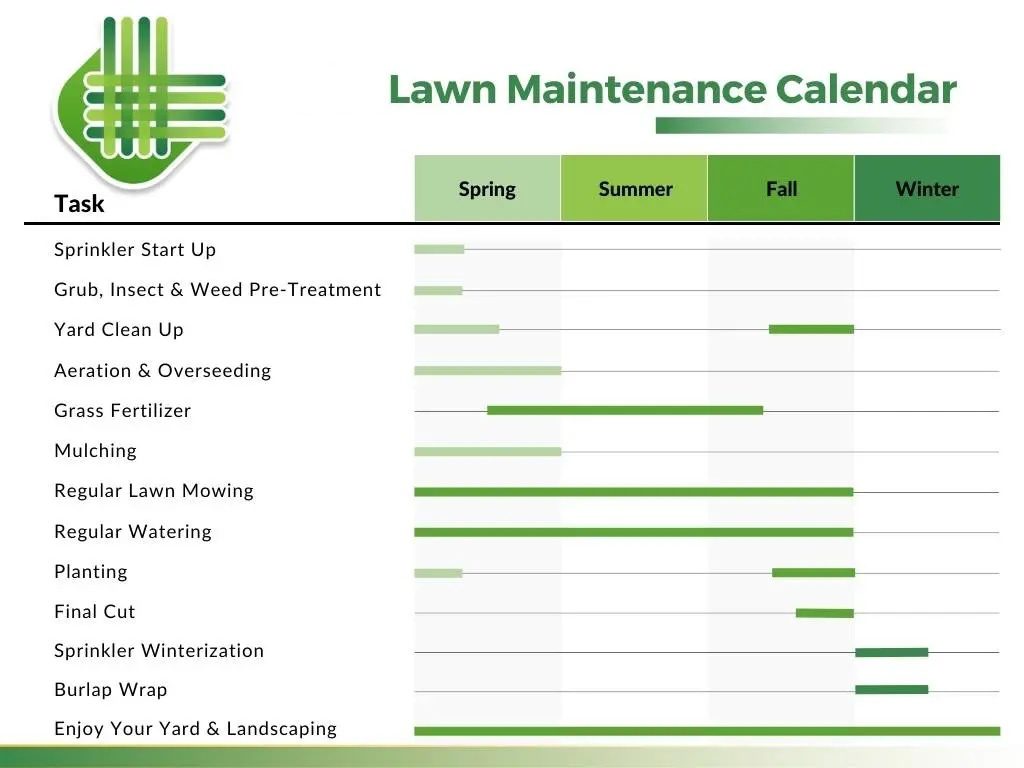
A good lawn care schedule gives your turf exactly what it needs based on season: early prevention in spring, growth support through summer, and recovery-focused steps in fall. It includes five key windows for action, not just mowing, but cleanup, feeding, seeding, and prep. Miss a step at the wrong time and you’ll notice it within a few weeks.
| Season | Focus Tasks | Frequency |
|---|---|---|
| Early Spring | Cleanup, mower prep, pre-emergent | Once (Mar–Apr) |
| Mid Spring | Mowing, fertilizing, spot weed control | Weekly |
| Summer | Mowing, watering, insect checks | Weekly |
| Early Fall | Aeration, overseeding, fertilizing | Once or twice |
| Late Fall | Final mow, leaf cleanup, winterization prep | Once (Oct–Nov) |
This schedule assumes cool-season or transition-zone turf (bluegrass, rye, or fescue), average-sized yards, and basic homeowner tools like a rotary mower and broadcast spreader. Warm-season lawns (like Bermuda or Zoysia) follow similar steps but shifted 4–6 weeks later. Most guidance here avoids specialized equipment.
Most of the timing suggestions apply to areas in USDA Hardiness Zones 4 through 7, where cool-season grasses are most common.
Spring Lawn Care Schedule: Clear Debris and Set the Stage
Grass starts growing again before most people expect. If you wait until everything’s lush, you’ve already missed the weed prevention window. Spring work is about prep, not just mowing, but waking up the soil and avoiding early lawn stress.
Early Spring: Pre-Emergent, Dethatching, and Tool Checks
Start when the soil reaches about 50°F. That’s usually when early weeds germinate.
You can check local soil temperatures using this regional soil temperature map for lawn care timing to make sure you’re applying pre-emergent at the right window.
Apply a pre-emergent to stop crabgrass before it takes root. Clear winter debris and check for matted areas that could block air or water.
- Dethatching: Light raking helps reduce mold or rot in compacted zones.
- Pre-emergent timing: Apply before forsythia blooms drop, a reliable signal for soil temp.
- Mower prep: Sharpen blades and set cutting height between 2.5 and 3 inches.
Field note: A sharp mower blade reduces tearing by up to 25%, leading to cleaner edges and fewer brown tips on new growth.
Mid Spring: Support Growth, Manage Weeds, and Mow Right
Once mowing starts, it’s about consistency. Don’t fertilize too early, wait until the first mow. Spot-treat dandelions or clover before they mature.
- Fertilize: Use a slow-release blend with balanced nitrogen.
- Mowing rhythm: Cut weekly using the one-third rule to avoid scalping.
- Spot control: Broadleaf weed sprays work best on young weeds in active growth.
The EPA recommends slow-release nitrogen fertilizers to help minimize runoff and protect local waterways during seasonal feedings.
Summer Lawn Maintenance: Avoid Stress and Spot Trouble Early
During hot months, your lawn isn’t trying to grow fast, it’s just trying to stay alive. Homeowners often overdo it in summer with fertilizer or low mowing, which leads to burn or thin spots.
Midsummer: Raise Blades and Watch Watering
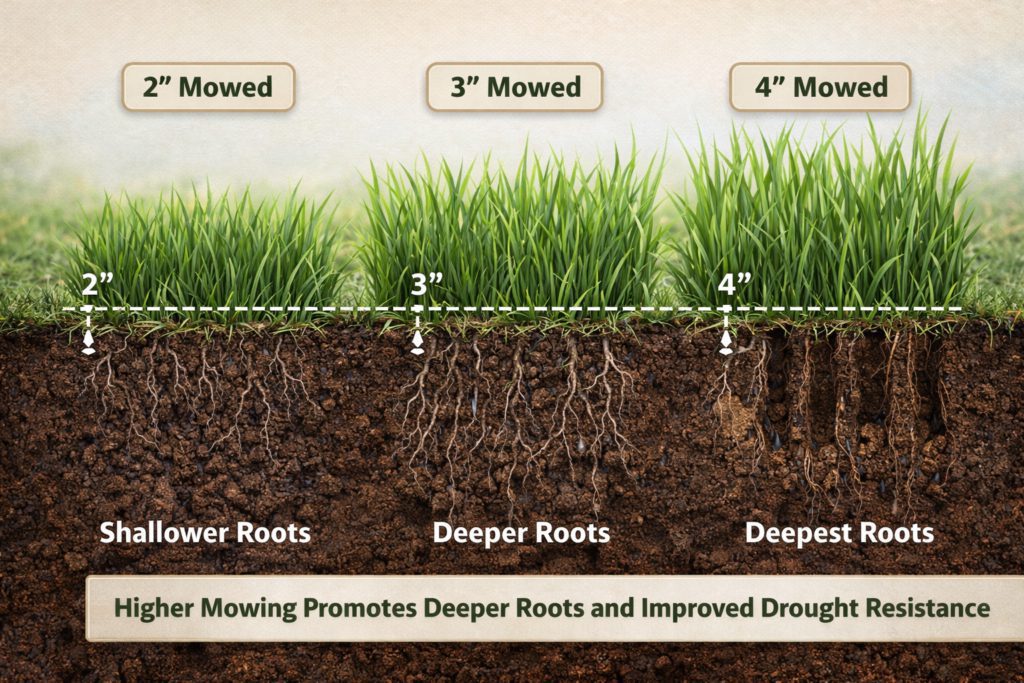
Letting grass grow taller in summer shades the roots and reduces moisture loss. Stick to morning watering if needed and avoid feeding unless your lawn is irrigated.
- Mowing height: Raise deck to 3.5 to 4 inches to shade the soil.
- Watering schedule: Apply 1 inch per week in the early morning, not evenings.
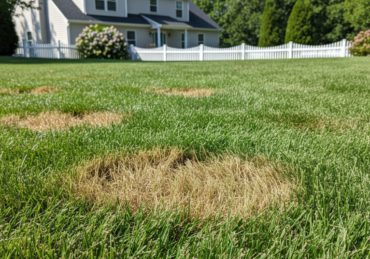
- Pest check: Look for signs of grub damage or brown patches near sidewalks and driveways.
Avoid midseason dethatching or aeration, the risk of drying out the root zone outweighs any benefits.
Fall Lawn Care Schedule: Repair Damage and Thicken Turf
By the end of summer, most lawns are tired. Fall is your best window to fix patchy zones, fight weeds, and improve soil structure before winter sets in.
Early Fall: Aerate, Overseed, and Fertilize for Recovery
Once temps drop into the 60s consistently, it’s time to rebuild turf density and fix compaction.
- Core aeration: Improves oxygen and water penetration. Use a plug-style aerator.
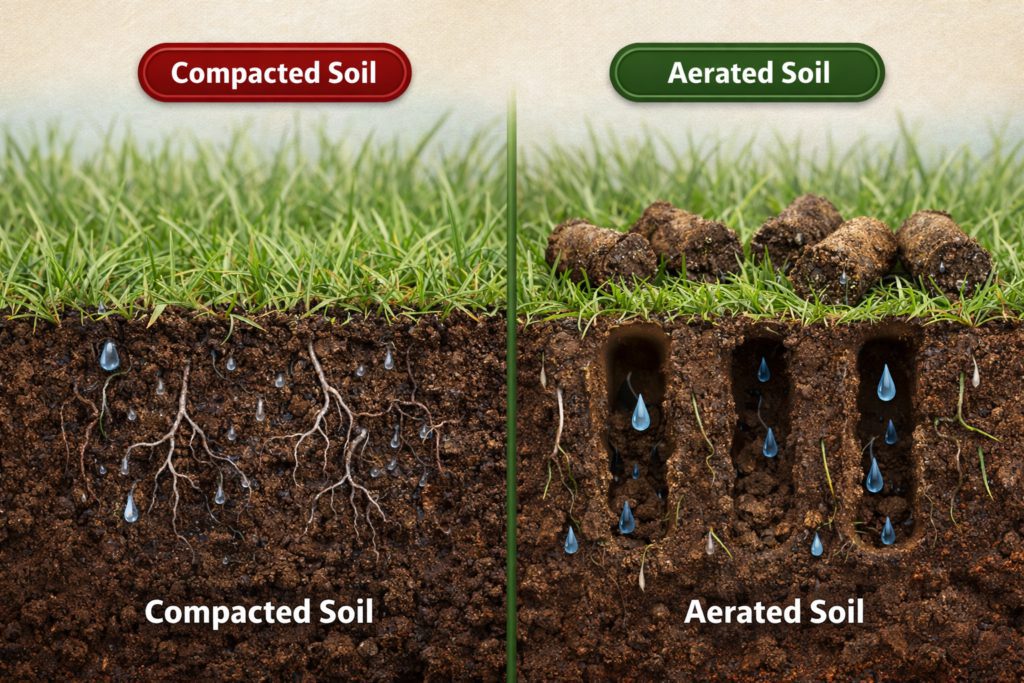
- Overseeding: Spread seed right after aerating, it settles better in loosened soil.
- Fertilizing: Choose a high-nitrogen blend to boost root strength.
Shortcut: If you skip aeration, seed with a slit-seeder for better contact and quicker germination.
Late Fall: Leaf Cleanup and Winterization Prep
Don’t let leaves sit. They block light and trap moisture. One final mow in November, plus optional potassium-based winter fertilizer, keeps your lawn cleaner going into dormancy.
- Mowing height: Final cut should be 2.5–3 inches to reduce snow mold risk.
- Leaf management: Mulch small amounts weekly or rake full coverage off.
- Winterizer: Only apply if grass is still growing and the ground isn’t frozen.
Adjusting for Property and Schedule: When to Shift or Skip
Not all lawns need the same effort. Use these rules to adapt based on your yard setup or time limits.
Decision-Check: Lawn Care Adjustments by Condition
- If your lawn is shady: Reduce fertilizer and skip overseeding, thin turf avoids fungal issues.
- If your soil stays wet: Aerate every fall to prevent compaction and moss buildup.
- If you only mow weekends: Prioritize mowing and pre-emergent. Defer dethatching to fall.
- If you don’t irrigate: Avoid midsummer fertilizer and raise mowing height early.
- If your turf browns every summer: Try fall overseeding with tall fescue for better drought resilience.
- If your mower scalps in places: Raise the deck and cut with the grain of the slope.
- If weeds bounce back fast: Reapply pre-emergent in split doses 6 weeks apart in spring.
Stop rule: If your lawn still looks thin two weeks after fall overseeding, verify watering depth or seed-to-soil contact before reapplying. Don’t reseed blindly.
FAQ
What’s the best fall lawn care schedule?
Start with core aeration and overseeding in early fall, followed by a nitrogen-rich fertilizer. Keep mowing weekly until growth slows and clean up leaves regularly.
How often should I mow in spring?
Once a week is the standard. Don’t cut more than one-third of the grass blade each time. Frequent mowing builds stronger roots and keeps clumps down.
Can I fertilize and seed on the same day?
Yes, as long as the seed and fertilizer aren’t mixed in the same spreader. Apply seed first, then fertilize gently over the top. Water both in together.
Want a Clean, Well-Timed Lawn Without All the Guesswork?
If your schedule doesn’t leave much room for timing products or handling tool prep, LawnGuru offers on-demand services with real-time updates and fixed pricing. You’ll still get the seasonal benefits, without tracking every weather window.