Quick Answer: For most of the country, yes. Water left in irrigation lines expands when it freezes, and that pressure cracks pipes, valves, and backflow preventers. But how much winterizing you need depends on your climate. Texas A&M’s irrigation program notes that most of Texas only needs a simple shutoff and insulation, not the full compressed-air blowout that’s standard in the Northern U.S. If you’re in a zone with no real frost risk at all, you can skip it entirely.
Search “should I winterize my sprinkler system” and you’ll find two very different answers depending on where the advice is coming from. Northern lawn care sites treat it as non-negotiable, something to schedule every single fall without a second thought. Homeowners in places like Texas and Oklahoma post in forums asking whether any of this applies to them at all, since their winters barely dip below freezing some years. Both groups are right, just about different climates, which is the part most generic “always winterize” advice skips over entirely. This is one piece of a bigger seasonal checklist, our guide to winterizing your lawn covers the rest of it if you’re prepping the whole yard at once.
Do You Need to Winterize Your Sprinkler System?
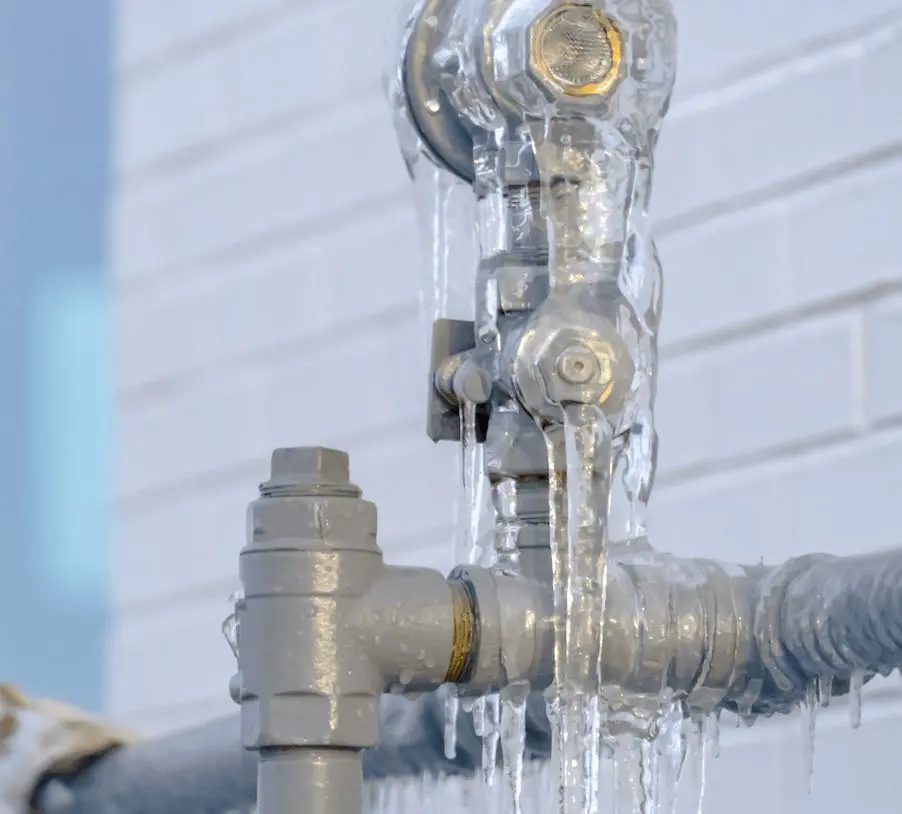
If your area gets nights consistently below freezing at any point in the year, the answer is yes in some form. Water expands as it turns to ice, and irrigation systems are full of narrow pipes, valves, and fittings with no room to absorb that expansion. Texas A&M’s School of Irrigation is direct about the mechanism: when there’s no room for the expansion to occur, the force is strong enough to crack or burst pipes, valves, fittings, and other irrigation components.
The part that gets lost is that “winterizing” isn’t one fixed procedure. It’s a spectrum, from a simple water shutoff on the mild end to a full compressed-air blowout on the extreme end, and where your system needs to fall on that spectrum depends entirely on how cold and how long your ground freezes. A single overnight dip to 30°F in a climate that’s normally mild is a different problem than a Minnesota winter where the ground stays frozen solid for months, even though both technically qualify as “freezing weather.”
What Happens If You Skip It
Skipping winterization in a climate that needs it doesn’t guarantee disaster, but it stacks the odds against you every time temperatures drop. A hard freeze can crack PVC or polyethylene pipe, often invisibly, so the damage doesn’t show up until you turn the system back on in spring and find a soggy patch of lawn or a valve that won’t hold pressure. Backflow preventers, frequently made of brass or other metal components, are especially vulnerable since a single freeze can split the housing or rupture an internal seal.
The repair cost is what makes this worth taking seriously even for a system that’s never given you trouble. A cracked backflow preventer or a burst zone valve is a straightforward fix, but it usually means digging up buried components, not just replacing a part you can reach by hand.
Freeze damage also has a habit of staying hidden until you actually need the system again. A cracked fitting underground doesn’t leak while the water’s off, so the first sign is often a soaked patch of lawn, a hissing sound near a valve box, or a zone that won’t build pressure the first time you run it in spring. If any of that shows up on startup, shut the system off again before you keep testing zones, since running water through a cracked line just turns a repair into a bigger one.
It Depends on Your Climate: Blow-Out vs. Simple Shutoff
This is where most consumer advice oversimplifies things. The full blow-out method, using an air compressor to force remaining water out of every zone, is standard practice in the Northern U.S. and anywhere the ground freezes deep enough to reach buried pipelines. Texas A&M’s irrigation program is specific about this: most landscape irrigation systems in Texas are not designed for a blowout at all, and for most of the state, a much simpler process handles the job, turning off the irrigation controller, shutting off the water supply at the isolation valve, insulating any exposed above-ground PVC, and draining water from above-ground components like the backflow preventer.
That’s a meaningfully different, and much less involved, process than what a homeowner in Minnesota or Michigan needs to do. If you’re not sure which category your climate falls into, the practical test is how deep your winters freeze the ground: light-to-moderate freezes that don’t penetrate deep are a shutoff-and-insulate situation, while sustained hard freezes that reach buried pipe depth call for a real blowout. If your area sees more than the occasional overnight dip, several consecutive nights below freezing, or a ground freeze that lasts weeks rather than hours, treat that as a signal to plan for the fuller method rather than assuming a simple shutoff will hold up all winter. Our full guide to winterizing a sprinkler system walks through both methods step by step.
When You Can Reasonably Skip Winterizing Entirely
If you’re in a zone with essentially no frost risk, southern Florida, the southern Texas coast, or the low desert regions of Arizona and Southern California, there’s no expanding ice to protect against in the first place. This isn’t just a lighter version of winterizing, it’s a different situation entirely: the core risk the whole procedure exists to prevent simply isn’t present in your climate. Even here, it’s worth draining above-ground components before an unusual cold snap, since a rare hard freeze in a warm climate can still catch an unprotected system off guard.
Does Skipping It Void Your Warranty?
Some irrigation manufacturers do require proof of winterization to honor a warranty claim on freeze-related damage, particularly for backflow preventers and valves. This isn’t universal, and it’s not the primary reason to winterize in a climate that actually needs it, but it’s worth checking your system’s documentation before you decide skipping it this year is a low-stakes gamble. If a spring claim depends on being able to show you shut the system down properly, that’s a detail you want to know before the freeze, not after the repair estimate.
DIY or Hire a Pro?
A simple shutoff-and-insulate job is realistic to do yourself with no special equipment. A full compressed-air blowout is a different story: it requires a compressor that delivers consistent pressure without a spike that can rupture lines, which is not what most homeowners have sitting in the garage. Renting the right equipment for a one-time job often costs close to what hiring the work out costs, without the risk of getting the pressure wrong on a system you’re not familiar with.
There’s also a timing factor that favors hiring out if your schedule is tight. A rented compressor is only useful for the day or two you have it, and if that window lands before your ground has frozen, you’ve paid for equipment you didn’t strictly need yet. A pro handling multiple properties in your area is more likely to time the job against the actual forecast rather than whatever weekend the rental counter had availability.
If you’d rather not gamble on getting the blowout pressure right, LawnGuru connects you with local pros who handle sprinkler winterization with the right equipment for your specific system. Our sprinkler winterization cost guide covers what typically affects pricing by region and system size, and our roundup of top-rated winterization providers is a good starting point if you want to compare options before booking.
FAQ
At what temperature will sprinkler pipes freeze?
Sustained temperatures at or below 32°F are enough to freeze standing water in exposed or shallow-buried lines. How much of a threat that is to your system depends on how deep your pipes are buried and how long the cold snap lasts, a brief overnight dip is a smaller risk than several consecutive nights below freezing.
What month should I stop running my sprinklers?
This tracks your first hard freeze more than a fixed date. In much of the Midwest and Northeast, that typically falls somewhere between late September and mid-October. In milder climates, you may not need to stop at all, or only need to shut down once a real cold snap is forecast.
Can I winterize my sprinkler system myself?
The simple shutoff-and-insulate method is a realistic DIY job with no special tools. A full compressed-air blowout is doable yourself, but requires the right compressor and a real understanding of safe operating pressure for your pipe material, get this wrong and you risk damaging the same lines you’re trying to protect.
What if my sprinkler system doesn’t have a backflow preventer?
Older or simpler systems sometimes lack a dedicated backflow preventer, but they still have valves and exposed piping that can freeze and crack. Skipping this component doesn’t mean skipping winterization altogether, it just means one less part to specifically protect.