
Voles get blamed for a lot of lawn damage that’s actually caused by moles, and vice versa. That mix-up matters, because the fix for one does almost nothing for the other. Here’s how to tell what you’re actually dealing with, and what to do about it either way.
Quick Answer: Vole damage looks like narrow, 1 to 2 inch wide surface runways through the grass, golf-ball sized holes, and patches of chewed or missing grass, most visible right after snow melts. Voles damage lawns by eating grass, roots, and bark; moles damage lawns by tunneling underneath it and almost never eat grass. To repair vole damage, rake out the runways, fill and level the soil, then overseed or patch bare spots and keep the area consistently moist until new grass establishes, typically 2 to 3 weeks to sprout and 6 to 8 weeks to fully recover.
What Does Vole Damage Look Like?
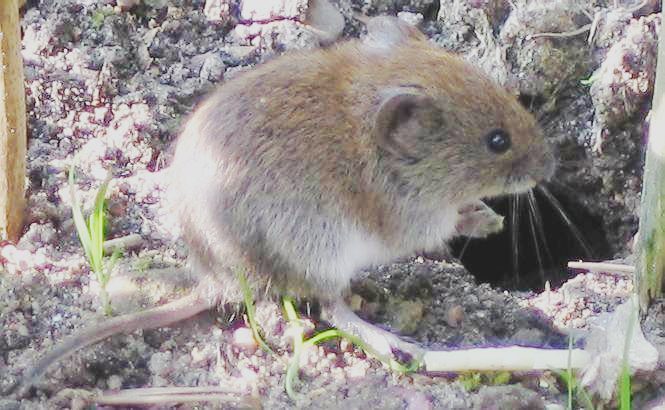
Vole damage shows up mostly as surface-level marks rather than the mounded dirt piles most homeowners associate with lawn pests. The clearest sign is a network of narrow runways, about 1 to 2 inches wide, winding through the grass in irregular, crisscrossing patterns. These look like shallow ditches or worn paths and often become most visible in early spring, right after snow melts and reveals the tunnel network voles built underneath it over winter.
Golf-ball sized holes mark the entrances to their underground burrows, usually at the ends of runways, flush with the ground rather than surrounded by a mound.
Chewed, clipped grass along the runways is a feeding sign. Voles eat grass blades, roots, and bulbs, and the cuts look clean and angled rather than torn.
Gnaw marks near the base of trees and shrubs show up as small, irregular grooves in the bark within a few inches of the soil line, a sign voles have been feeding on bark when other food is scarce, most common in winter.
Small, rice-grain-shaped droppings near runways and burrow entrances confirm active use.
Sudden wilting or collapse of plants happens when voles chew through roots underground, cutting off water and nutrients before any above-ground damage is visible.
Vole vs Mole Damage: How to Tell Them Apart
If you’re trying to sort out lawn vole vs mole damage in your own yard, the fastest tell is what’s on the surface. Voles leave flat runways and small flush holes. Moles leave raised ridges and volcano-shaped mounds. Beyond that, the two animals differ in nearly every way that matters for choosing a fix.
| Voles | Moles | |
|---|---|---|
| Surface sign | Shallow runways, 1 to 2 in wide, flush with ground | Raised ridges and volcano-shaped mounds |
| Entry holes | Golf-ball sized, flush with soil | Hidden inside mounds |
| Diet | Grass, roots, bulbs, bark | Grubs, earthworms, insects |
| Grass damage | Direct: chews and eats grass and roots | Indirect: uproots grass while tunneling for food |
| Most active | Year-round; worst in winter under snow cover | Spring and fall, when grubs are near the surface |
| Population | Live in groups, can reach hundreds per acre | Solitary; usually just one or two per lawn |
According to University of Minnesota Extension, voles cause the most turf damage over winter, when snow cover hides their runway network and lets it expand undisturbed, while moles are typically most active in spring and fall when soil-dwelling insects sit closest to the surface. That timing difference is often as useful for identification as the visual signs themselves: fresh damage discovered right after snowmelt is more likely vole activity, while new mounding in October is more likely a mole.
Since moles feed on insects rather than grass, treating a mole problem calls for grub control and trapping rather than the habitat modification and baiting that works on voles. If raised ridges and mounds are what you’re actually seeing, our guide on how to get rid of moles in your yard covers that separately.
What about mice? A third mix-up worth ruling out: house mice can turn up in yards too, but they don’t create the lawn damage voles do. According to Purdue Extension, voles stay outdoors and build the shallow surface runways described above, while house mice have proportionally longer tails, tend to move indoors, and don’t create lawn runway networks at all. If you’re seeing actual chewed grass trails, it’s a vole problem, not a mouse one.
How to Repair Vole Damage in Your Lawn
Once the voles are gone, or their population is under control, the runways and bare patches they left behind won’t fill in on their own. Here’s how to repair vole damage lawn areas need, step by step.
Clear debris first. Rake out dead grass, thatch, and droppings from the runways. This isn’t just cosmetic, leaving debris in place blocks new grass seed from making contact with soil.
Fill and level the runways. Use topsoil or a soil-compost mix to fill in the shallow trenches, tamping it down gently to remove air pockets without over-compacting it. Level the repaired area so it sits even with the surrounding lawn.
Aerate if the soil feels compacted. Vole tunnels can compact the soil underneath them, making it harder for new roots to establish. If the ground feels dense or spongy where the damage was, aerate before seeding.
Overseed or patch, depending on the extent of damage. Light, scattered damage usually just needs overseeding. Larger bare patches do better with a full reseed of that section, matched to your existing grass type and the amount of sun the area gets.
Fertilize with a starter blend. A starter fertilizer, higher in phosphorus, supports the root development new seedlings need. Apply it evenly and water it in.
Water consistently until established. Keep the area moist, not soggy, with light daily watering for the first two to three weeks. Cutting back too soon is one of the most common reasons reseeded patches fail.
What it costs. A few isolated vole runways is realistically a DIY afternoon with a bag of grass seed, some topsoil, and starter fertilizer. If you’d rather hire it out, Angi’s cost data puts professional overseeding for a patch-sized area at roughly $0.04 to $0.18 per square foot, with a typical minimum service visit running $250 to $350 regardless of how small the damaged area is, since most of that cost is the visit itself rather than materials.
What to Expect During Recovery
New grass typically sprouts within 2 to 3 weeks of seeding, though the exact timeline depends on grass type. Fast-germinating species like perennial ryegrass can show growth in as little as a week, while Kentucky bluegrass takes closer to three to four weeks. Full recovery, meaning the area is dense enough to handle regular foot traffic, generally takes 6 to 8 weeks. Avoid walking on the repaired area until then.
If grass still isn’t filling in after three or four weeks, the most common causes are seed washed away by heavy rain, soil that’s re-compacted since the repair, or a seed type that doesn’t match the site’s sun exposure. Voles still being active in the area is also worth ruling out before reseeding again.
How to Prevent Voles From Coming Back
Voles need cover to feel safe, which means the most effective prevention is removing the conditions that provide it. Keep grass mowed at a reasonable height rather than letting it grow long and dense heading into fall; our guide on how short to cut grass before winter covers this in more detail, since mowing height affects both vole habitat and winter lawn health generally. Clear fallen leaves, thick mulch, and brush piles, particularly within a few feet of trees, shrubs, and garden beds, since voles use that debris as both cover and nesting material. For high-value plants and young trees, a physical barrier, like hardware cloth buried a few inches into the soil, keeps voles from reaching roots and bark even when the surrounding lawn is otherwise well maintained.
Frequently Asked Questions
What does vole damage look like compared to other lawn pests?
Vole damage looks like narrow surface runways and golf-ball sized holes, with visibly chewed grass and, near trees, small gnaw marks close to the soil line. That’s different from grub damage (spongy turf that pulls up like carpet) and mole damage (raised ridges and mounded dirt), which don’t involve chewed vegetation at all.
How to fix vole damage lawn problems fast?
There’s no way to fully repair a damaged lawn overnight, but the fastest path is clearing debris and filling runways immediately after the voles are controlled, then overseeding right away rather than waiting. Fast-germinating grass types like perennial ryegrass will show visible improvement within about a week.
Can I have voles and moles at the same time?
Yes. They’re unrelated animals with different diets, and one doesn’t repel the other. A lawn with both tall grass cover and moist, insect-rich soil can support both at once, which is part of why checking the actual damage pattern matters more than assuming it’s one or the other.
Do voles come back after you repair the damage?
They can, if the conditions that attracted them in the first place haven’t changed. Keeping grass mowed, clearing debris, and maintaining a barrier around vulnerable plants meaningfully reduces the odds of a repeat infestation in the same spot.
Is vole damage worse in winter?
Yes. Snow cover hides vole runways from predators and lets them expand their tunnel network undisturbed, which is why the most extensive damage is often discovered all at once in early spring, right after snowmelt, rather than gradually noticed over the season.
The Bottom Line
Vole damage is identifiable once you know what to look for: narrow surface runways, small flush holes, and chewed rather than uprooted grass, all different from the mounded, raised-ridge damage moles leave behind. Confirm which one you’re dealing with before choosing a fix, then clear debris, fill the runways, and overseed to get the lawn back to full density within a couple of months. If reseeding and repairing damaged patches isn’t something you want to take on yourself, LawnGuru connects you with local lawn care pros who can handle the repair for you.