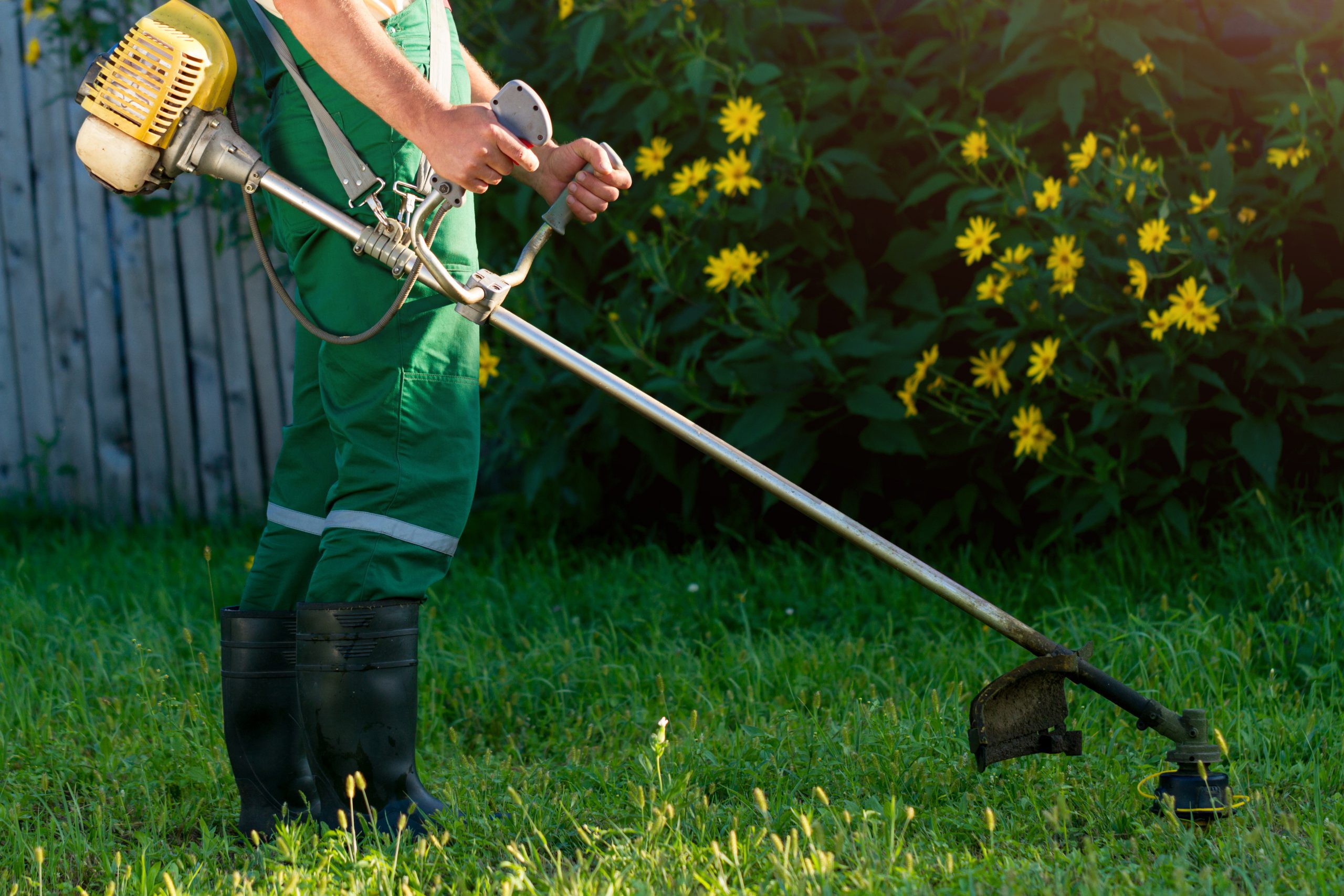
You can weed whack wet grass. The question is whether it is worth it, and the answer depends on your trimmer type, how wet the grass actually is, and how much you value your equipment. Most guides give you a blanket yes or no. The real answer is more specific: wet conditions affect different trimmers in different ways, the risks range from a bad cut to a genuine safety hazard, and there is a practical set of field tests that tells you when the grass is actually ready. This guide covers all of it, drawn from equipment manufacturer documentation and professional lawn care practice.
Quick Answer: You can weed whack wet grass, but it is not recommended. Wet grass bends instead of standing upright, clumps in the trimmer head, and stresses the motor. Corded electric trimmers pose an electric shock hazard in wet conditions and should not be used at all. Battery trimmers carry meaningful risk in active rain. Gas-powered trimmers are the only type appropriate for wet or damp conditions. After heavy rain, wait at least 24 hours. After a light shower, 2 to 4 hours of drying time is the practical minimum.
What Actually Happens to Your Trimmer When Grass Is Wet
Wet grass causes three specific problems for a weed trimmer: clogging, motor strain, and accelerated line wear. When grass blades are coated in water they mat together and wrap around the cutting head instead of being struck cleanly by the line. This forces the motor to work harder to rotate the head, generating heat and shortening its lifespan over repeated wet-grass sessions.
The trimmer line itself degrades faster when cutting wet grass. Moisture adds weight to each grass blade, so every impact transfers more force back into the line. Line that lasts a full dry session may need two or three replacements mid-session on saturated grass. The clippings compound the problem. Wet clippings that would disperse in dry conditions instead stick to the trimmer head, guard, and shaft. Left to dry on the equipment, they harden and adhere like a paste, block the line-feed mechanism, and accelerate rust on metal components.
Cleaning the trimmer immediately after any wet-grass session is not a suggestion; it is the only way to prevent that buildup from becoming a maintenance issue.
Electric, Battery, and Gas Trimmers in Wet Conditions: Which Is Safe
Trimmer type determines the actual risk level in wet conditions more than any other factor.
| Trimmer Type | Safe on Wet Grass? | Safe in Active Rain? | Key Risk |
|---|---|---|---|
| Corded electric | No | No | Electric shock hazard |
| Battery-powered | Caution | No | Water ingress into motor or battery housing |
| Gas-powered | Yes (with precautions) | Light rain only | Mechanical performance only; no shock risk |
Corded electric trimmers carry the highest risk. Water conducts electricity, and any moisture reaching the motor housing, the power cord connection, or an extension cord creates a genuine shock hazard. Husqvarna’s product documentation for the 320iL model explicitly states that the trimmer should not be used on wet grass, citing motor placement at the base where wet clippings accumulate. This is not a performance concern alone; it is a personal safety issue.
Battery-powered trimmers occupy a middle tier. Most current battery platforms are rated for outdoor use, but few are fully waterproof. Water ingress into the battery pack or motor housing causes short circuits and, in some cases, complete battery failure. They are generally safer than corded electric models because there is no live power cord, but active rain still represents a meaningful risk.
Gas-powered trimmers carry no electrical shock risk. The carburetor and ignition system tolerate moisture better than electric motors, and the risk in wet conditions is mechanical rather than safety-related. Professional lawn care crews who cannot delay trimming after rain consistently reach for gas-powered equipment. If you are selecting a trimmer type and want to understand how line, head, and engine configuration affect performance in various conditions, the string weed eater guide covers the differences in how these machines are built and what they are designed to handle.
When Wet Conditions Are Too Risky to Trim
Not all wet conditions are equal. There is a meaningful difference between damp morning grass and saturated turf after a storm.
Active rain: Do not trim in active rain with any trimmer type unless it is a gas-powered model with a high water resistance rating, you are on flat stable ground, and visibility is adequate. Wet turf is slippery, footing is unreliable, and the grass is too waterlogged to stand upright for a clean cut. The result is poor-quality work combined with fall risk. This is the one scenario where waiting is always the right call.
Heavy rain within the past 24 hours: Saturated soil is soft and compresses underfoot, making slopes particularly dangerous. Grass blades lie nearly horizontal when fully waterlogged, which means the trimmer line strikes them at an angle rather than cleanly and produces a ragged, uneven cut regardless of technique. Waiting until the grass has had time to dry out and stand back up is more efficient than fighting wet conditions.
Morning dew: This is the most manageable scenario. Dew is a surface coating rather than full saturation and evaporates quickly once the sun is out. Light dew typically clears within 30 to 60 minutes of direct morning sun on most grass types. This is the condition where proceeding with a gas trimmer mid-morning is most defensible.
How Long After Rain Should You Wait Before Weed Whacking?
The wait time depends on how much rain fell and how long it lasted.
| Rain Intensity | Recommended Wait Time |
|---|---|
| Light drizzle or mist (under 30 minutes) | 1 to 2 hours |
| Moderate rain (30 min to 1 hour) | 2 to 4 hours |
| Heavy rain or extended storm | 24 hours minimum |
| Overnight rain with morning sun | Wait until late morning, at least 2 to 3 hours of sun exposure |
Wait time is a guideline, not a guarantee. Before picking up the trimmer, walk the area and check whether the grass blades are standing upright on their own. Wet grass lies flat or at an angle. If the blades have not returned to a vertical position, they cannot be struck cleanly by the trimmer line, and the cut will be ragged regardless of how long you waited. The timing table above assumes average drying conditions; humidity, cloud cover, and wind speed all affect how quickly a lawn dries after rain.
For the technique to produce clean, consistent results when you do trim, grass needs to be both upright and dry enough that clippings disperse rather than clump. The how to weed whack your lawn guide covers the proper angles and motion patterns that make the most difference in cut quality.
If You Must Trim Wet Grass: Seven-Step Safety Protocol

Professional crews sometimes have no choice. If the schedule cannot be moved, this approach reduces risk and improves results.
- Use a gas-powered trimmer only. Battery and corded electric trimmers should not be used in actively wet conditions.
- Wear non-slip boots with ankle support. Wet turf on slopes creates significant fall risk. Smooth-soled footwear is not adequate.
- Put on safety glasses or a face shield. Wet clippings are heavier than dry ones and travel farther when expelled from the trimmer head.
- Start with the top third of the grass only. Wet blades bend rather than stand. Cutting only the tips on the first pass prevents motor strain and reduces clogging. Make a second pass after the initial debris clears if needed.
- Use a wide sweeping motion. Horizontal arcs prevent clumps from accumulating on the cutting head. Tight or vertical movements cause faster buildup in wet conditions.
- Stop and clear the head every 10 to 15 minutes. Wet clippings build up faster than dry ones. Pausing to remove buildup maintains cutting efficiency and prevents the line from binding.
- Clean the equipment immediately afterward. Remove all wet clippings from the head, guard, and shaft before they dry. For a full breakdown of how to use and maintain a string trimmer to protect its lifespan, the how to use a weed eater the right way guide covers cleaning and maintenance steps in detail.
How Wet Grass Clippings Damage Your Lawn
The trimmer is not the only thing at risk. Wet clippings left on the lawn after trimming create a distinct set of turf health problems.
Wet clippings clump into dense mats that lie flat across the grass surface. These mats block sunlight from reaching the blades underneath and trap moisture against the soil. Sustained moisture under a clipping mat in warm conditions creates ideal conditions for fungal disease, particularly brown patch (Rhizoctonia solani) and dollar spot (Clarireedia jacksonii), two of the most common warm-season lawn diseases in the United States. According to NC State Extension’s guide on brown patch and large patch diseases of lawns, dense surface moisture during warm periods is one of the primary triggers for these infections.
The fix is straightforward: rake the lawn after any wet-grass trimming session. Do not leave clippings on the surface to dry in place. If you are trimming a large area, work in sections and rake each section before the clippings have time to mat down.
How to Tell When Grass Is Dry Enough to Weed Whack
Three field tests that require no tools and take under two minutes:
The blade check. Grip a handful of grass blades and pull them upright. If they spring back to a vertical position when released, they are dry enough. If they sag back toward horizontal, surface moisture is still too high.
The footprint test. Walk slowly across the lawn. If each step leaves a visible wet imprint in the grass, the surface is still too wet for clean trimming. This test is particularly reliable on dense turf where moisture shows clearly in the bent blades.
The touch test. Run your bare hand across the top of the grass at a slow, steady pace. If your hand comes away visibly wet after a few feet, wait longer. If it comes away merely cool and slightly damp, surface moisture has largely evaporated and conditions are acceptable.
These three checks are more reliable than any fixed time estimate because drying speed varies with temperature, humidity, wind speed, and sun exposure. A warm, breezy day after light rain dries faster than a humid, overcast morning after a heavier shower.
Common Questions About Weed Whacking in Wet Conditions
Does grass need to be completely dry before you weed whack it?
Bone-dry is not necessary, but surface-dry is. What matters is that grass blades are standing upright and that clippings will disperse rather than clump. A slight coolness on the blades from residual moisture is acceptable; actively wet or water-beaded grass is not. The three field tests above give you a practical answer faster than any timer.
Is weed whacking bad for your grass?
Weed whacking is not inherently damaging when done correctly. The trimmer cuts blade tips rather than disturbing roots. The problems arise from scalping (cutting too low and exposing soil), trimmer line scarring tree bark when trimming near trunks, and the fungal disease risk from wet clippings left on the surface. For a full explanation of what weed whacking does to turf at the blade level and how to avoid the common mistakes that cause real damage, what is weed whacking and why it matters covers both the mechanics and the effects on grass health.
Can an electric weed eater be left out in the rain?
No. Leaving a corded or battery-powered weed eater in active rain risks damage to the motor, battery housing, and electrical connections. Do not attempt to start any electric trimmer that has been rained on until it has been fully dried. Store all electric and battery-powered trimmers indoors or under a covered area when not in use.
How do you dry out a weed eater that got wet?
Remove the battery or disconnect the power source immediately. Do not attempt to start the trimmer. Wipe all external surfaces dry with a cloth, then leave the trimmer in a warm, dry location for at least 24 hours before operating it. For corded electric models, inspect the power cord and plug connection for visible moisture before reconnecting to any outlet.
What is the best time to weed whack?
Early to mid-morning after dew has dried is the preferred window for most climates. This avoids the heat stress of afternoon trimming, gives the grass time to recover before evening (when fungal disease risk rises with moisture), and ensures conditions are dry enough for a clean cut. Late afternoon is the second-best window, provided no rain is forecast overnight.
When to Pick Up the Trimmer (and When to Put It Down)
The practical answer to “can you weed whack wet grass” is: yes, with a gas-powered trimmer, in conditions that do not include active rain, and with a post-session rake to remove clumped clippings. In any other configuration, the risks outweigh the convenience.
The benchmark that professional crews use is simple: if grass blades are standing upright and a test pass of the trimmer produces clippings that disperse rather than clump, conditions are ready. If clippings mat and the blades stay flat, you are fighting the conditions rather than working with them, and the result will look like it. A rainy week does not mean trimming falls behind indefinitely. It means the trimming window shifts to the dry hours of mid-morning once conditions recover, which on most rain events is within a day.