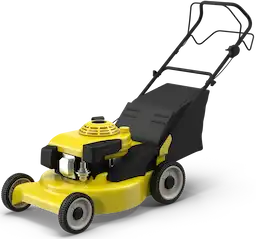
A mulching lawn mower is a rotary mower set up to keep grass clippings under the deck, cut them again, and drop them back into the lawn instead of bagging them or blowing them out the side. That’s the whole idea: more cuts per clipping, smaller pieces, and a lawn that feeds itself.
The marketing makes it sound like magic. The research is more interesting than that. A North Carolina State University study that measured clippings from mowers in mulching and side-discharge mode found mulching didn’t make the clippings smaller. That doesn’t mean mulching is pointless, but it does change what you should expect from the mower and what matters for your lawn.
Quick Answer: A mulching lawn mower has a closed deck (a plug or door blocks the discharge chute) and usually a mulching blade with extra cutting surfaces, so clippings circulate and get recut before falling into the turf. Many mowers are 3-in-1, meaning they can bag, side-discharge, or mulch. The real benefit comes from leaving clippings on the lawn, which Illinois Extension says returns nitrogen and doesn’t cause thatch. But a 2019 NC State study found mulching mode didn’t shrink clippings compared with side discharge; mower size and grass type mattered more. Mulch on dry grass, mowed often enough that you’re removing no more than a third of the blade.
How a Mulching Mower Works
Every rotary mower does the same basic thing: a spinning blade cuts the grass and creates airflow that lifts clippings off the deck. What happens next depends on the setup.
| Mode | Where Clippings Go | What You Need |
|---|---|---|
| Bagging | Blown back into a catcher bag | A rear bag attachment |
| Side discharge | Blown out a side chute onto the lawn | The chute open, often with a deflector |
| Mulching | Kept under a closed deck, recut, and dropped into the turf | A mulching plug or closed-deck design, often a mulching blade |
A mulching setup changes two things:
The deck is closed. A plastic plug fits into the rear bag opening, or a door closes over the side chute, so clippings can’t leave. NC State researchers describe this as closing the discharge openings to create a fully enclosed deck. Some mowers use a dedicated mulching-only deck instead.
The blade has more cutting surface. A standard high-lift blade is built to throw clippings into a bag or out a chute. A mulching blade (sometimes sold as a 3-in-1 or all-purpose blade) has a curved or multi-edged profile meant to slice clippings several times as they swirl under the deck.
In principle, clippings stay under the deck longer, get hit by the blade more often, and come out smaller. Smaller clippings should filter down between grass blades instead of sitting on top.
Types of Mulching Mowers

Dedicated mulching mowers. Built with a mulching-only deck and no bag or side chute. Common on some walk-behind models and commercial setups.
3-in-1 mowers. The most common setup on homeowner push and self-propelled mowers. You switch modes by inserting the mulching plug, attaching the bag, or opening the side chute. In the NC State test, two of the three mowers had built-in features to close the discharge chute, while the third needed an add-on kit.
Conversion kits. Many standard mowers can be set up to mulch with a manufacturer’s mulching kit, usually a plug or chute cover plus a mulching blade. Check your mower’s manual for the right part; blades are model-specific.
What the Research Found About Mulching vs. Side Discharge
This is the part most mower guides leave out.
In a 2019 study published in Crop, Forage & Turfgrass Management, NC State turfgrass scientists led by Grady Miller tested three mowers (a 22-inch homeowner mower, a 36-inch commercial walk-behind, and a 52-inch riding mower) in both mulching and side-discharge modes. They mowed tall fescue and zoysiagrass maintained at typical home-lawn heights, then counted and measured tens of thousands of clippings with a particle analyzer.
What they found:
- Mulching didn’t make clippings smaller. On tall fescue, mulched clippings were about 20% longer than side-discharged ones. On zoysiagrass, there was no difference between modes.
- Mower size mattered more than mode. The medium and large mowers produced clippings 28 to 31% shorter than the small mower. The researchers point to the small mower’s slower blade speed.
- Grass type mattered too. Tall fescue clippings were 28% longer than zoysiagrass clippings, partly because tall fescue is mowed higher.
- The deck edge is the weak spot. On tall fescue, clippings collected along the edge of the deck were about 74% longer than those from under the middle, and nearly 85% longer in mulching mode. Those longer pieces weren’t getting hit by the blade as often, and the researchers note they can create a clumpy look.
The authors also cite earlier work from the same group showing lower turf quality right after mowing with a mulching unit, because more clippings stayed visible on the surface. Their conclusion: side discharge may leave fewer clippings on the surface than mulching mode.
It’s one study, on two grasses and one brand of mower, mowed in late summer in North Carolina. But it’s the best direct measurement available, and it lines up with what plenty of homeowners notice: a mulching mower doesn’t erase clippings, and a powerful mower with a sharp blade does more for a clean finish than the plug does.
So Is a Mulching Mower Worth It?
The case for mulching was never about the mower. It’s about not bagging. When clippings stay on the lawn, by mulching or side discharge, you get the benefits:
University of Illinois Extension says that as long as the lawn is mowed as needed and the one-third rule is followed, clippings filter back into the lawn and don’t need to be collected. They’re 75 to 80% water, decompose readily, don’t cause thatch, and recycle nutrients, especially nitrogen, so the lawn needs less fertilizer.
Where a mulching setup does help:
- No clippings thrown at beds, sidewalks, or the street. Side discharge sprays clippings in one direction; a closed deck keeps them on the lawn.
- No bag to empty. That’s a real time saver over bagging every week.
- Leaves in fall. Penn State Extension says a mulching mower works best for shredding leaves into the lawn, though a regular mower does the job too.
Where it doesn’t:
- It won’t fix overgrown grass. Illinois Extension notes mulching mowers don’t perform at peak efficiency when the lawn is too tall (more than a third of the blade removed) or wet.
- It won’t make clippings vanish. Based on the NC State data, expect similar clipping sizes to side discharge, with some clumping along the deck edge.
If you’re buying a new mower, a 3-in-1 model gives you all three options for little or no extra cost. If you already own a side-discharge mower, you don’t need to replace it to get the benefits of leaving clippings on the lawn.
For the bigger question of when to leave clippings and when to bag, see our guide on whether it’s better to bag or mulch grass.
And if you’d rather not own a mower at all, LawnGuru connects you with local mowing pros who mow, trim, and blow clippings off your hard surfaces every visit, with instant pricing and no contracts.
Disadvantages of a Mulching Mower
- Struggles with tall or wet grass. A closed deck has nowhere to send a heavy load of wet clippings, so it can clog, bog down, and leave clumps. Mow dry grass when you can; our guide on whether you can mow wet grass covers the risks.
- Visible clippings and clumps. Research shows mulching doesn’t necessarily reduce clipping size, and longer clippings can collect along the deck edge.
- Needs frequent mowing. Mulching works when you’re taking off a small amount each time. Skip a week in spring and you’ll likely need to bag or double-cut.
- Not the right mode for every situation. When a fungal disease is active or weeds have gone to seed, bagging removes the problem instead of spreading it around the lawn.
How to Get the Best Results From Mulch Mowing
- Mow often enough. Remove no more than a third of the grass blade per cut. In spring, Illinois Extension says that likely means more than once a week. Our guide on how often to mow your lawn breaks it down by season.
- Mow when the grass is dry. Dry clippings scatter; wet ones clump.
- Keep the blade sharp. A dull blade tears grass, and Illinois Extension notes sharp blades give a cleaner cut and reduce disease from ragged leaf tips.
- Slow down in heavy growth. Penn State recommends moving slowly when shredding leaves to give the blade time to chop them, and the same logic applies to thick grass.
- Overlap passes. Since the longest clippings come out along the deck edge, overlapping slightly gives those pieces a second cut.
- Mow at the right height. Taller turf hides clippings better. Our mowing heights by grass type guide lists targets for each species.
Mulching Leaves With Your Mower
Fall is where a mulching mower earns its keep. Instead of raking, you can shred leaves right into the lawn.
Penn State Extension recommends mowing over leaves while they’re relatively dry and not piled too deep, going over them a second time in a cross direction if needed, and leaving a shredded layer up to about half an inch thick. It cites Michigan State University research that found no negative effects from mulching leaves into turf: grass quality improved, broadleaf weeds decreased, soil quality improved, and soil pH didn’t change whether the leaves were oak or maple.
Don’t wait until every leaf has fallen. A thick, wet mat is too much for any mower to process, and leaves left too long can smother grass. If you’re behind, our guide on whether leaves kill grass explains when they become a problem.
Frequently Asked Questions
What are the disadvantages of a mulching mower?
It handles tall or wet grass poorly, can clog or leave clumps, and needs frequent mowing to work well. NC State research also found mulching mode didn’t reduce clipping size compared with side discharge, so you may still see clippings on the surface.
Can you mulch with a regular lawn mower?
Yes. Any mower that leaves clippings on the lawn gives you the main benefit of mulching. Side discharge returns clippings too, and many mowers can be converted with a mulching plug and blade. Penn State notes a regular mower can also shred leaves, though not quite as effectively as a mulching mower.
Are mulching lawn mowers better?
They’re better than bagging for saving time and returning nutrients, and better than side discharge for keeping clippings off beds and walkways. They aren’t proven to make finer clippings than side discharge: a 2019 NC State study found mower size and grass type mattered more than mulching mode.
When should I use a mulching mower?
Use mulching mode when the grass is dry and you’re cutting off no more than a third of the blade, which during peak growth means mowing about once a week or more. Switch to bagging when the grass is overgrown, when disease is active, or when weeds have gone to seed.
Do you have to mow slower when mulching?
It helps in heavy growth. A slower walking speed gives the blade more time to recut clippings. Penn State Extension specifically recommends moving slowly when shredding leaves.
What is a mulching blade?
A mulching blade, often labeled 3-in-1 or all-purpose, has a curved or multi-edged design that recuts clippings as they circulate under a closed deck. Standard high-lift blades are designed to throw clippings into a bag or out a chute instead.