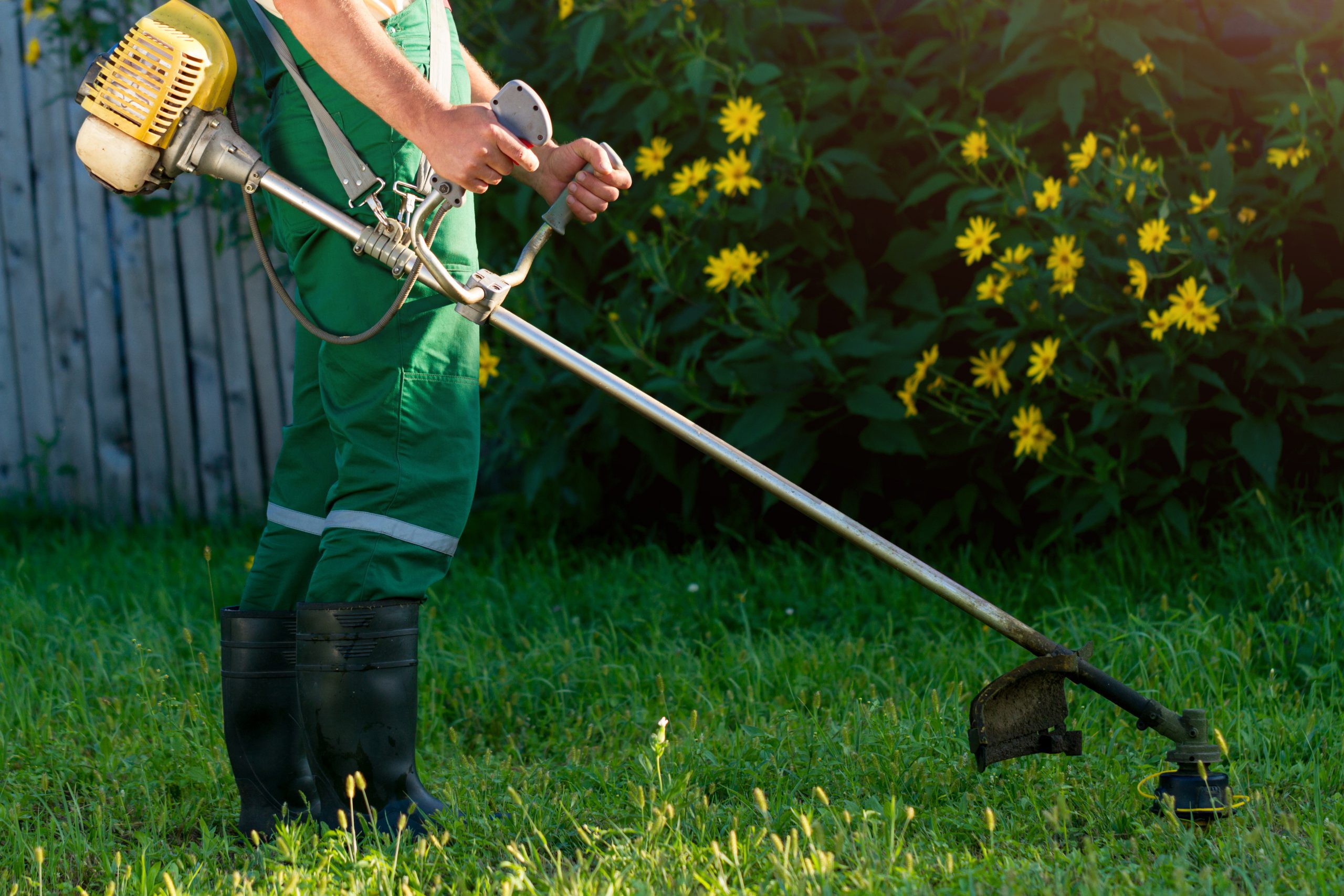
Lawn care cost depends less on your zip code than on one question most price guides skip: which services does your lawn need? A weekly mow on an average lot runs about $35 a visit on LawnGuru. Add aeration, a few fertilizer applications, and spring and fall cleanups, and the yearly total looks nothing like the monthly number on a flyer.
This guide uses prices paid on LawnGuru for each service, then builds them into a monthly and annual budget. It also covers what a mowing company does and doesn’t include, which services you can skip, and how to judge whether a quote is fair.
Quick Answer: On LawnGuru, mowing averages $35.23 per visit ($28 to $45), which works out to roughly $120 to $195 a month for weekly service on a typical lot. Other common services average $123 for aeration, $176 for dethatching, $151 for bed weeding, and $328 for a yard cleanup. A full season of weekly mowing plus aeration, fertilizer, and spring and fall cleanups comes to about $1,650 to $2,150 a year for an average suburban lawn, or $2,100 to $2,600 with regular bed weeding. Lawn size, grass type, and how overgrown the lawn is move the price most.
What Does Lawn Care Cost per Month?

For most homeowners, the monthly bill is mostly mowing. At LawnGuru’s average of $35.23 per visit and about 4.3 visits a month, weekly mowing comes to roughly $150 a month. Across the typical $28 to $45 range, that’s $120 to $195 a month. Weekly customers on LawnGuru save 15%, which pulls that down further.
| Service Level | What’s Included | Typical Monthly Cost |
|---|---|---|
| Biweekly mowing | Mow, trim, blow clippings off hard surfaces | About $60 to $100 |
| Weekly mowing | Mow, trim, edging, clippings cleared | About $120 to $195 |
| Weekly mowing plus treatments | Above, plus fertilizer and weed control spread over the season | About $145 to $285 |
The third row is a planning range. LawnGuru doesn’t sell fertilizer programs, so treatment costs here come from national price guides, which typically put a single fertilizer application at about $50 to $150. Spread three or four applications over a six- or seven-month season and you add roughly $25 to $90 a month.
Monthly averages hide one thing: grass doesn’t grow evenly. Spring growth can need weekly cuts while a dry August might need every other week. If a company bills a flat monthly rate all season, ask how many visits it covers.
Lawn Care Cost by Service
Here’s what LawnGuru customers paid for each service. These are marketplace averages, not list prices, so your quote will depend on lawn size and condition.
| Service | Average Price on LawnGuru | Typical Range | How Often |
|---|---|---|---|
| Mowing | $35.23 per visit | $28 to $45 | Weekly or biweekly in season |
| Power edging | $49 | $20 to $70 | Included in recurring mowing |
| Aeration | $123 | $74 to $193 | Once a year, spring or fall |
| Dethatching | $176 | $136 to $212 | Only when thatch builds up |
| Bed weeding | $151 | $134 to $325 | Every 4 to 6 weeks in season |
| Yard cleanup (leaf removal, beds, debris) | $328 | $174 to $487 | Spring and fall |
| Seeding | $829 | $378 to $1,280 | As needed for thin or bare areas |
| Hedge trimming | $417 | $177 to $659 | Once or twice a year |
Two of those deserve a note. Edging is a separate line item for one-time jobs, but it’s already part of LawnGuru’s recurring mowing, so don’t pay for it twice. And seeding is a repair job, not a yearly expense (sod and hydroseeding are bigger, new-lawn projects that cost more). If you need it every year, something else (shade, compaction, thatch, grubs) is killing the grass, and that’s the cheaper thing to fix.
For a deeper look at mowing prices by lot size and frequency, see our lawn mowing cost guide. Aeration has its own breakdown in our lawn aeration cost guide.
Is $200 a Month for Lawn Care Good?
For weekly mowing with edging and cleanup on an average lot, $200 a month sits at the top of the normal range. It’s a fair price for a larger lot, a yard with a lot of trimming around beds and fences, or a busy metro area. For a small, simple lawn, you’re likely overpaying for mowing alone.
If that $200 includes fertilizer and weed control on top of weekly mowing, it’s a good deal. Ask for the quote broken out by service so you can tell which one you’re getting.
Annual Lawn Care Budget: A Worked Example
Monthly numbers are how lawn care gets sold. Annual numbers are how it gets paid. Here’s a full season for a typical cool-season lawn in the Midwest or Northeast, using LawnGuru averages where they exist and labeled planning ranges where they don’t.
| Line Item | Assumption | Annual Cost |
|---|---|---|
| Weekly mowing | About 26 cuts at $30 to $35 (with weekly savings) | $780 to $910 |
| Spring cleanup | One visit at the LawnGuru average | $328 |
| Fall cleanup | One visit at the LawnGuru average | $328 |
| Aeration | Once, in fall | $123 |
| Fertilizer | Two or three applications at $50 to $150 (planning range) | $100 to $450 |
| Bed weeding | Three visits over the season | $453 |
| Total | About $2,100 to $2,600 |
Drop the bed weeding (or do it yourself) and the total falls to roughly $1,650 to $2,150. Skip fertilizer entirely and mow every other week and a basic season can come in under $1,200.
The 26-cut figure is an assumption for a season running from late April through October. Southern lawns with Bermudagrass or St. Augustine grow longer and may need mowing for eight or nine months, so plan on more visits there.
Mowing Companies vs. Treatment Companies: What Each One Covers
This is where many homeowners pay twice or end up with gaps. Illinois Extension points out that few lawn care services are complete. Some fertilize and control weeds, insects, and disease but leave the mowing, watering, and seeding to you. Others mow and rake but don’t fertilize or treat weeds. In most cases, watering stays the homeowner’s job either way.
What that means for your budget:
- A mowing service (like LawnGuru’s recurring mowing) covers cutting, trimming, edging, and clearing clippings. Fertilization and weed control are separate.
- A treatment company covers fertilizer and weed control on a schedule. Mowing is separate.
- Full-service landscapers may do both, but confirm it in writing.
Illinois Extension also recommends knowing exactly what’s in the contract price and what costs extra before work starts, and warns that comparing material cost alone is misleading, because you’re paying for labor, timing, and product choice.
Services You Can Skip (or Cut Back)
The easiest way to lower lawn care cost is to stop paying for things your lawn doesn’t need.
Routine insect and disease treatments. Most lawn programs include a spring crabgrass preventer and a broadleaf weed treatment. Illinois Extension says insecticides should be applied only when a serious insect outbreak happens, not as a routine, and the same goes for disease control. If a program bills for monthly insect treatments, ask why. For grubs specifically, our guide to identifying and repairing grub damage explains how to check before you treat.
Extra fertilizer applications. Illinois Extension’s fertilizer guidance suggests about 3 pounds of nitrogen per 1,000 square feet per season for most full-sun cool-season lawns, split into two or three applications, and about half that for shade. It also notes a lower-density lawn can do fine with a single late-summer feeding, and that four applications are for high-density, irrigated lawns. A five- or six-step program on a lawn that doesn’t need it is money spent on top growth you then pay to mow. Our guide to how often to fertilize a lawn covers timing by grass type.
Annual dethatching. Most lawns don’t need it every year. Check thatch depth first.
Repeated reseeding. As above, fix the cause.
Package Plans vs. Paying per Visit
Package plans bundle several services into one recurring price. They’re convenient and sometimes cheaper, but only if you’d have bought every service in the bundle anyway.
Before signing, check four things:
- Number of visits. How many mows and how many treatments are included for the season?
- What’s excluded. Edging, leaf cleanup, and bed weeding are often extra.
- Skip rules. Can you pause during a drought without paying for a visit that doesn’t happen?
- Price lock. Is the per-visit rate fixed for the season?
Recurring mowing on LawnGuru keeps the same provider each visit, locks pricing for the season, and lets you skip or pause from the app, which covers most of what people want from a plan without bundling in treatments you might not need.
Factors That Affect Lawn Care Cost
Lawn Size
The biggest single factor. More square feet means more time on the mower and more product for treatments. Pricing for fertilizer and seed is often figured per 1,000 square feet for this reason.
Grass Type and Growth Rate
Fast growers cost more to maintain. Bermudagrass in summer, or Kentucky bluegrass and tall fescue during a wet spring, may need weekly cuts, while a slow-growing lawn in a dry stretch may only need mowing every other week. Grass type also changes the fertilizer schedule.
Condition: Overgrown or Neglected Lawns
An overgrown lawn takes longer to cut and often needs a second pass, so first visits after a gap usually cost more than routine ones. Staying on a regular schedule is one of the cheapest ways to keep per-visit prices down.
Obstacles and Layout
Beds, trees, fences, swing sets, and slopes all slow a crew down. Two lawns of the same size can get noticeably different quotes if one is open turf and the other is broken up by obstacles.
Frequency
Weekly service costs more per month but less per visit, since the grass is shorter each time. LawnGuru’s 15% weekly discount reflects that.
What Is the 1/3 Rule of Mowing?
The 1/3 rule says not to remove more than one-third of the grass blade in a single mowing. So a lawn kept at 3 inches gets mowed when it reaches about 4.5 inches. That rule is what sets how often you need mowing, which drives most of your lawn care cost.
It’s a guideline, not a law of nature. Iowa State University Extension traces it back to a decades-old greenhouse study on forage grass, and notes that a later NC State field study found tall fescue could grow to double its mowing height before cutting without serious harm. In practice, stretching to biweekly mowing during slow growth is usually fine. Letting it go a month is not.
Lawn Care Cost by Location
Where you live changes two things: labor rates and season length. A crew in a high-cost metro area charges more per hour, and a lawn in the South may need mowing for eight or nine months instead of six or seven.
Climate also shifts which services you need. Cool-season lawns get most of their fertilizer in late summer and fall; warm-season lawns get it during summer. Drier western regions may spend more on irrigation than on treatments. Get two or three local quotes for the same scope of work to see your area’s real price.
Is $100 an Hour Too Much for Landscape Work?
It depends on who’s working and with what. The Bureau of Labor Statistics puts median pay for grounds maintenance workers at $19.27 per hour. A company’s hourly rate has to cover that wage plus equipment, fuel, insurance, travel between jobs, and profit.
For a two-person crew with commercial mowers and a truck, $100 an hour isn’t out of line. For one person with a push mower and a string trimmer, it’s high. Flat per-job pricing is usually easier to compare than hourly rates.
DIY vs. Professional Lawn Care
Doing it yourself costs less in cash and more in time. The DIY budget is mostly equipment up front (mower, string trimmer, blower, spreader) plus fuel, blade sharpening, fertilizer, and seed each year. Aeration and dethatching usually mean renting a machine for a day.
Hiring out makes sense when:
- You don’t have the time on weekends during peak growth
- The lawn is large enough that mowing takes hours, not minutes
- Physical work isn’t safe or comfortable for you
- You’d need to buy or rent equipment for a once-a-year job like aeration
A mixed approach works for many households: hire the weekly mowing, handle fertilizer yourself with a spreader, and book aeration and cleanups as one-time jobs. Book recurring lawn mowing through LawnGuru and you get the same provider each visit, edging included, locked seasonal pricing, and 15% off for weekly service.
For older homeowners weighing the same choice, our guide to lawn care services for seniors covers safety and budgeting.
How to Save on Lawn Care
- Price the season, not the month. Use the annual table above with your own quotes.
- Mow weekly in peak season. Shorter grass means faster, cheaper visits, and LawnGuru discounts weekly service.
- Cut routine treatments your lawn doesn’t need. Insecticides only for real outbreaks, fertilizer at the rate your lawn needs.
- Bundle cleanups with other work. One fall visit for leaves, beds, and hedges costs less than three trips.
- Leave clippings on the lawn. They return nutrients, which can trim your fertilizer needs.
- Water it yourself. Watering is almost never included, so a smart schedule saves you more than any service discount.
Frequently Asked Questions
Is $50 for lawn mowing good?
For a standard suburban lot, $50 is above what most LawnGuru customers pay. The average is $35.23 per visit, with most mows between $28 and $45. $50 is reasonable for a large lot, a lot of trimming, or an overgrown first cut.
How much to charge for 3 hours of mowing?
Multiply the hours by your hourly rate, then add travel and any disposal. At an illustrative $60 an hour, 3 hours comes to $180. Most pros price large mowing jobs per visit rather than per hour, so the customer knows the cost up front and you’re rewarded for working efficiently.
How much for 2 hours of yard work?
At an illustrative $60 an hour, 2 hours of yard work comes to about $120 before hauling or disposal fees. For comparison, LawnGuru yard cleanups average $328, and most take 1 to 3 hours depending on yard size and debris, with leaves and branches hauled away.
How often do lawns need to be mowed?
Most lawns need mowing every week during peak growth and every one to two weeks when growth slows. Use the 1/3 rule as a guide: mow before you’d have to remove more than a third of the blade.
How many times a year should a lawn be fertilized?
Illinois Extension suggests two or three applications a year for most full-sun cool-season lawns, totaling about 3 pounds of nitrogen per 1,000 square feet, with late summer to early fall as the most important feeding. Low-maintenance lawns can do well with one.
Does lawn care include watering?
Usually not. Illinois Extension notes that watering is the homeowner’s job with most lawn care services, so budget for it separately and set a schedule that waters deeply and less often.