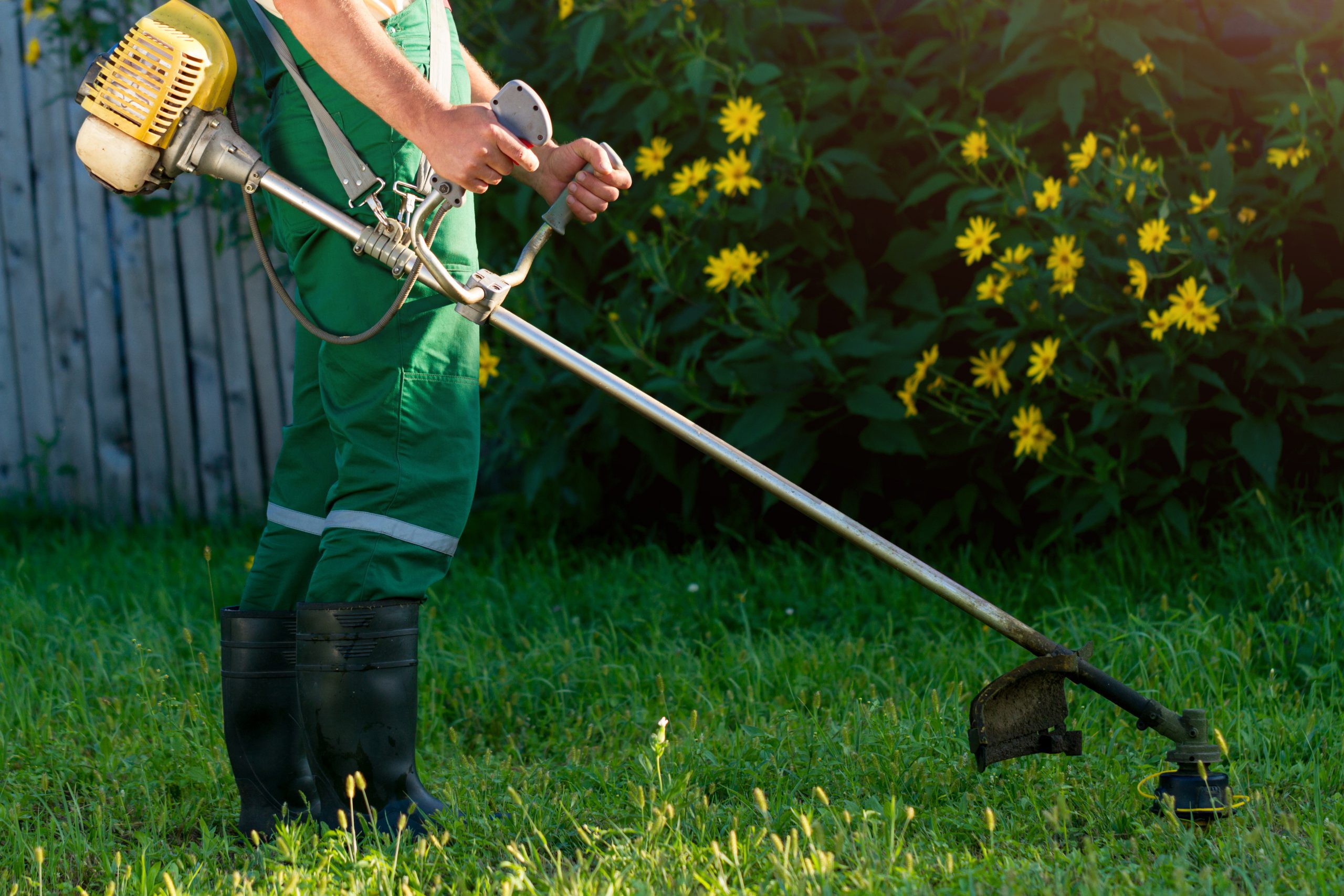
Quick answer: Hold the trimmer head tilted about 10 degrees off flat for general trimming, walk in the direction that throws clippings away from what you’ve already cut (left-handed spin, walk right; clockwise spin, walk left, depends on your specific machine), and keep the string tip, not the housing, doing the cutting. Switch to a steeper 90-degree angle only when you’re actually edging a hard border like a sidewalk. Skip it entirely on wet grass and right after mowing a very short cut, both increase the odds of tearing turf instead of trimming it.
What Weed Whacking Actually Is

Quick version: a weed whacker uses spinning nylon string to cut grass and weeds in the spots a mower’s deck can’t reach, tight against fences, around trees, along walkways. For the full definition, history of the term, and how it differs from a string trimmer versus a brush cutter, our dedicated guide covers that ground. This page is about doing it correctly once you’ve got a machine in hand.
Choosing the Right Weed Whacker for the Job
Gas trimmers put out the most power and run the longest, but they’re heavier, louder, and need mixed fuel. Battery trimmers have closed most of the power gap for a typical residential yard and skip the fuel mixing entirely, the tradeoff is battery life on larger properties. Corded electric works fine for small lots close to an outlet and nowhere else. If you’re deciding between a string head and a fixed blade attachment, or trying to figure out what “weedeating” even covers as a job category, our weed eater breakdown goes deeper on that specific choice, and our guide to string trimmer line covers picking the right string diameter for your machine.
Safety Gear Worth Actually Wearing
Closed-toe shoes, not sandals, flying debris and an accidental brush against spinning string both happen more than people expect. Safety glasses matter more here than with a mower, the cutting head sits closer to face height and kicks up small rocks and debris at speed. Long pants protect shins from string burn on bare skin, and earplugs are worth it on gas models specifically, they run loud enough for hearing damage over repeated seasonal use.
Step-by-Step: How to Weed Whack Without Damaging Your Lawn
Step 1: Walk the area first. Pick up rocks, sticks, and anything else that turns into a projectile at trimmer-string speed. This step gets skipped more than any other and causes most of the “why did that just hit my window” moments.
Step 2: Hold it at the right angle. For general trimming, tilt the head about 10 degrees off flat, per The Home Depot’s string trimmer guide, rather than running it perfectly parallel to the ground, that shallow angle lets the string tips do the cutting instead of the whole loop dragging through grass. Save a steeper, closer-to-90-degree angle for actual edging along a driveway or sidewalk, where you want a clean vertical cut rather than a trim.
Step 3: Walk in the direction that clears debris, not against it. Which direction depends on which way your specific trimmer’s head spins, check the manual if you’re not sure. The point is the same regardless: walk so clippings fling away from the section you already finished, not back across it. Get this backwards and you’re re-trimming the same clumped grass twice.
Step 4: Taper as you go for a finished look. Along beds and hardscaping, angle the trimmer around 45 degrees toward the edge instead of cutting flat all the way to the border, that taper is most of what separates a professionally trimmed edge from a hacked-at one.
Step 5: Clear the debris when you’re done. Blow or sweep clippings off walkways and driveways rather than leaving them to wash into a storm drain in the next rain, same reasoning that applies to bagging grass clippings generally.
Weed Whack Before or After Mowing?
Before, in most cases. Trimming first means the mower picks up any longer clippings the trimmer leaves behind on its final pass, instead of leaving a visible height mismatch between mowed and trimmed sections that you’d otherwise have to fix separately. The exception is a yard with very tall, overgrown patches along the edges, mow those areas down first so the trimmer isn’t fighting through material a mower blade handles faster.
Can You Weed Whack Wet Grass?

Technically yes, but it clumps against the string instead of cutting cleanly, which means more passes and a rougher-looking result. If rain caught you mid-project or your yard stays damp most mornings, our full breakdown of weed whacking wet grass covers the specific adjustments that help.
Keeping Your Weed Whacker Running
Wipe grass buildup off the shaft and head after each use, packed clippings around the motor housing trap heat and shorten the machine’s life. Check the string spool before you start, running out mid-yard on a job you could’ve caught in thirty seconds is a common annoyance. For gas models, stale fuel left sitting over winter is the single most common reason they won’t start come spring, drain it or run it dry before storage.
FAQ
How do you spell “weed wack”?
The correct spelling is “weed whack” or “weed whacking,” with an H. “Weed wack” is a common misspelling based on how the word sounds, since the H is silent in casual pronunciation.
Is it “weed wacker” or “weed whacker”?
“Weed whacker” is the correct spelling. Weed Whacker was actually a specific brand name before it became a generic term for the tool, similar to how Kleenex became shorthand for tissues, which is part of why the misspelling without the H is so common.
Is “weed eater” a southern term?
Largely, yes. According to search-trend data compiled by Gold Eagle Co., “weed eater” dominates search terms across the South, with Louisiana, Alabama, and West Virginia showing the strongest preference, and Texas, Mississippi, Arkansas, and the Carolinas not far behind. The name traces back to the original Weed Eater brand, invented in Houston in 1971, which likely explains why the term stuck hardest in the region where it launched. “Weed whacker” and “string trimmer” see more use outside that regional footprint.
What do Americans call a weed whacker?
Depends heavily on region: “weed eater” in the South, “weed whacker” and “string trimmer” more commonly elsewhere, and “weed wacker” or “line trimmer” show up occasionally too. All of them describe the same tool, there’s no functional difference behind the naming split.
Is it better to weed whack or pull weeds by hand?
For grass and weeds in tight spots along a lawn’s edges, weed whacking. For an actual weed problem in a garden bed or between pavers, hand-pulling (or a targeted herbicide) does more, since a trimmer just cuts the top growth and leaves the root system to grow right back.
How do you properly weed whack without scalping the lawn?
Keep the string tips doing the work rather than pressing the full head into the grass, hold the shallow 10-degree angle described above, and don’t try to remove more than you’d take off in a normal mow in a single pass. Scalping usually comes from running the head too flat and too close to the ground for too long in one spot.
Bottom Line
Technique matters more here than the machine you’re holding: the right angle, the right walking direction for your trimmer’s spin, and a light touch around edges get you a clean result regardless of whether you’re running gas, battery, or corded electric. Skip wet grass and freshly-scalped turf, taper your edges instead of cutting flat, and clear debris off hard surfaces when you’re done.
Would rather hand this one off entirely? LawnGuru’s local pros handle mowing and trimming together so the edges actually match the rest of the cut.