Quick Answer: Never cut more than a third of the grass blade in one pass. For grass under a foot tall, set your mower to its highest setting and mow, then wait 2 to 5 days and lower the height a notch. For grass over a foot, knee-high, or worse, knock it down first with a string trimmer or brush cutter before a mower ever touches it. Bag the clippings on that first cut instead of mulching, since clumps of long, wet-cut grass smother the lawn underneath them.
You come back from two weeks away, or you finally get to the side yard you’d been putting off, and the grass is somewhere between “shaggy” and “the neighbors have opinions.” Whatever got you here, mowing overgrown grass wrong can do more damage than the neglect did: scalp it in one pass and you’re looking at a yellow, patchy lawn for weeks, not the clean cut you were hoping for.
How Tall Is “Overgrown,” and What Do You Do About It?

The right approach changes a lot depending on how far things have gotten, so start by looking at the grass instead of guessing.
Under 6 inches, you’re fine with a regular mower on its highest setting. This is barely overgrown, more “skipped a week” than an actual project.
Between 6 and 12 inches, a standard mower will struggle or clog, especially if the grass is at all damp. Run a string trimmer over it first to knock the height down by roughly half, then follow with the mower once the cut material has had a chance to dry and settle.
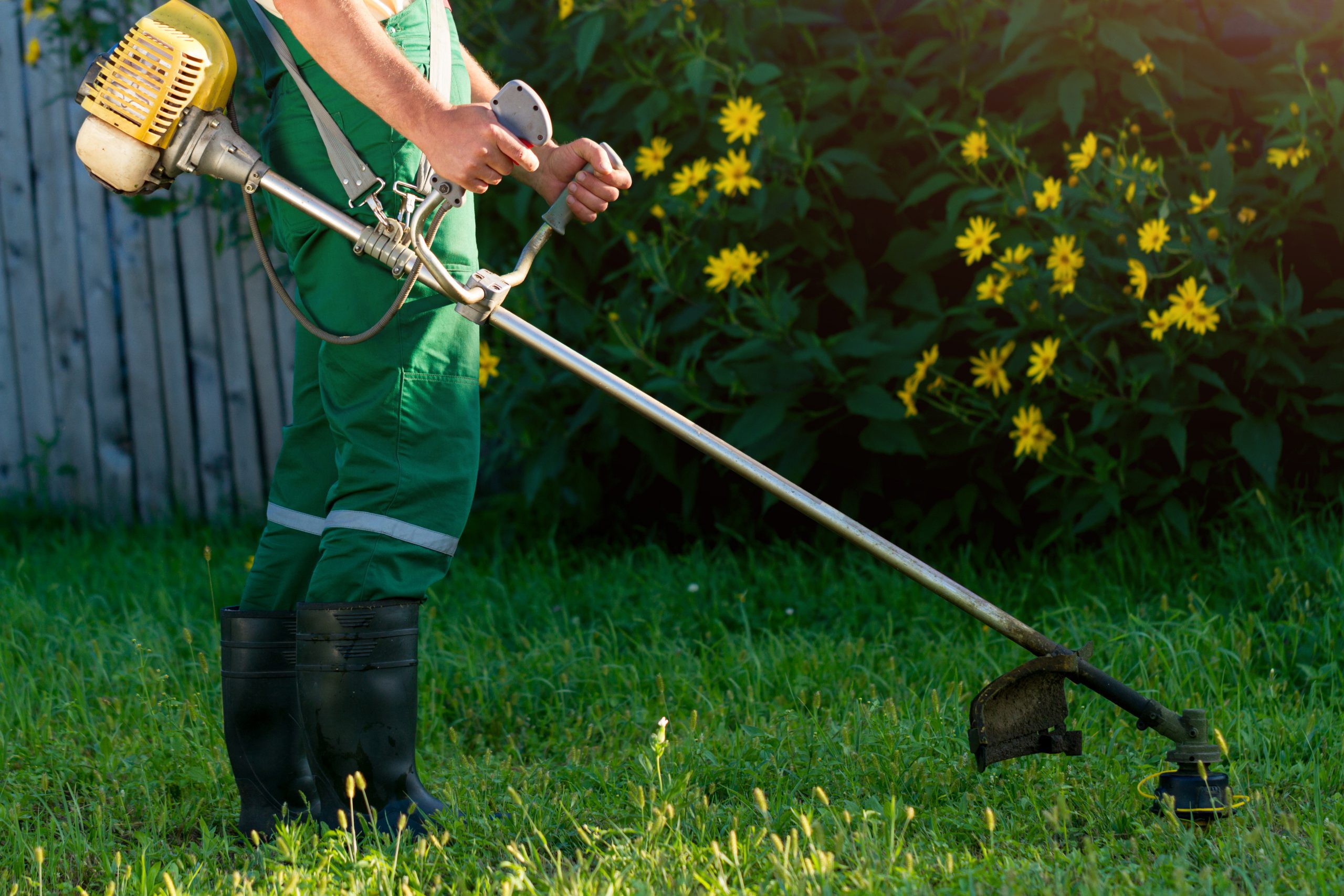
Past 12 inches, and especially anywhere close to knee height, skip the mower entirely for the first pass. A string trimmer with a heavy-duty line, or a brush cutter if you have access to one, is what gets through grass that thick without bogging down every few feet. Mower blades aren’t built to chew through that volume of material, and forcing it usually ends with a clogged deck or a stalled engine, not a cut lawn.
If you’re dealing with grass past your knees, tangled with weeds, or you’re just not confident your equipment can handle it, this is a reasonable point to call in a mowing service instead of buying a brush cutter for a one-time job.
Before You Start: Walk the Yard First
This step gets skipped constantly, and it’s the one most likely to hurt you or wreck your equipment.
Tall grass hides things. Rocks, fallen branches, dog toys, sprinkler heads, even holes in the ground, all disappear once grass grows past a few inches, and a mower blade spinning at around 200 miles an hour turns any of them into a projectile. Texas A&M AgriLife’s Extension Safety Program puts real numbers on this: more than 230,000 people a year are treated for injuries from lawn and garden equipment, and riding mowers alone accounted for over half of the 167 deaths the Consumer Product Safety Commission recorded in a single year. Walk the entire area before you start, clear anything you find, and give any small animals nesting in the tall grass, rabbits, snakes, ground-nesting birds, a chance to move on before the blade starts.
Skip mowing if the grass is wet, whether from rain or morning dew. Oklahoma State University Extension’s safety guidance for lawn equipment flags slipping on wet grass as a leading cause of foot injuries from power mowers, and wet, overgrown grass is worse on both counts: it’s more likely to clog the deck and more likely to have you losing your footing while you fight with it.
Basic gear matters more here than on a normal mow. Closed shoes, not sandals. Safety glasses if you’re running a string trimmer or brush cutter through anything with sticks or gravel mixed in, since those fling debris a lot harder than a mower does. It sounds like overkill for a Saturday afternoon chore, until you’re the person Oklahoma State’s fact sheet describes with a piece of fence wire kicked up through a sneaker and into a foot.
The One-Third Rule, and Why It’s Not Just a Suggestion
You’ve probably heard some version of this already: never cut more than a third of the grass blade’s height in a single mow. It’s not an arbitrary number.
According to the UMass Extension Turf Program, cutting a lawn too short reduces the leaf area available for photosynthesis, and root systems shrink right along with it, since grass invests less in roots when it can’t feed itself properly above ground. A shorter root system means the lawn needs more frequent watering and fertilizing just to hold its ground, and it becomes noticeably less tolerant of heat, drought, and weed pressure in the meantime. Take off more than a third at once, on already-overgrown grass, and you’re asking for that stress response in a lawn that’s already behind.
Most cool-season lawns (Kentucky bluegrass, tall fescue, the fine fescues, perennial ryegrass) do best mowed in the 2.5 to 3.5 inch range, though the right height varies by species and by how the lawn gets used. If you’re not sure where your grass falls, our breakdown of mowing heights by grass type and season has the specifics. Whatever your target height is, the same math applies: if you’re mowing at 3 inches, don’t let the lawn grow past about 4 before you cut it again. An overgrown lawn has already blown past that window, which is exactly why you bring it down gradually instead of in one aggressive pass.
Cutting Overgrown Grass With a Mower, Step by Step

Once you’ve dealt with anything over 12 inches using a trimmer or brush cutter first, here’s how the mower part goes.
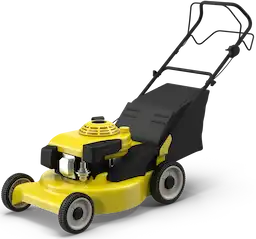
Set the mower to its highest cutting height for the first pass. Sharp blades matter more than usual here, since a dull blade tears through thick, tall grass instead of slicing it cleanly, which stresses the plant further and leaves ragged, brown-tipped edges behind. Mow slowly, and expect to clear a clogged deck once or twice along the way.
Wait 2 to 5 days before the next cut. The exact number depends on your grass and the weather, but the point is the same either way: give the lawn time to recover before you take off more. Lower the mower one notch and go again, staying within the one-third rule each time. For a lawn that was genuinely out of control, expect this to take three or four sessions spread over a couple of weeks, not one big weekend project.
On that second or third pass, mowing in a different direction than the last time helps lift any blades that got missed or matted down, the same idea behind double-cutting a lawn for a cleaner finish. Overlap each pass by a few inches so you’re not leaving thin, uncut strips behind.
Cutting Overgrown Grass Without a Mower
Sometimes a mower isn’t the right first tool, or isn’t available at all, and that’s fine.
A string trimmer with a heavy-duty line handles most overgrown situations up to knee height. Work in a slow, sweeping motion, angling the head slightly toward the ground rather than straight down, and go over an area in sections rather than trying to clear it all in one sweep. For anything denser, thick weeds mixed in with the grass, or growth past knee height, a brush cutter (essentially a heavier-duty trimmer with a metal blade instead of a string) cuts through material a standard trimmer will just bounce off of.
If you genuinely have no power equipment, a manual scythe or a long-bladed grass hook still works, and it works better than most people expect on grass that’s dry rather than wet. It’s slow going for anything beyond a small patch, but it’s a real option, not just a last resort in theory.
Whichever tool you use for the first pass, treat it as prep work, not the finished cut. Follow up with a mower once the material is short enough for one to handle, so you end up with an even, consistent height instead of the choppy look a trimmer alone leaves behind.
Should You Bag or Mulch the Clippings?
For a normal mow, mulching clippings back into the lawn is usually the better call. UMass Extension’s guidance notes that returned clippings recycle nitrogen and other nutrients back into the turf and don’t meaningfully contribute to thatch buildup, since they break down quickly.
Overgrown grass is the exception. Cutting off that much material at once produces long, heavy clippings that clump instead of settling into the canopy, and a mat of wet cut grass sitting on the lawn blocks light and traps moisture underneath it, which is exactly the setup for a dead, smothered patch a week or two later. Bagging clippings on that first cut is worth the extra step, even though it’s more cleanup, and once you’re back down to a normal mowing height, mulching again is fine.
Helping Your Lawn Recover After a Hard Cut
Some yellowing after cutting back overgrown grass is normal, not a sign you killed it. It’s the plant showing stress from losing more leaf area than it would in a typical mow, and it usually resolves with a week or two of consistent watering and sunlight rather than any additional product or treatment.
Bald or thin patches sometimes show up too, especially in spots where grass was smothered under dense growth or old clippings and never got enough light to stay thick. Those areas usually need reseeding rather than time alone to fill back in, since there’s often not enough live turf left nearby to spread into the gap on its own.
Keeping Your Lawn From Getting Overgrown Again
The easiest way to avoid another overgrown-grass project is a mowing schedule that doesn’t leave room for it to happen, generally every 1 to 2 weeks during the growing season, tighter during a rainy stretch when grass grows faster than usual.
If a specific week or two is the problem, vacation, a busy stretch at work, whatever, a single scheduled mow to cover that gap costs a lot less time and hassle than the multi-session recovery process above.
DIY or Call a Pro?
A lawn that’s a few weeks overgrown is a reasonable weekend project with the right tools and a little patience. Grass that’s knee-high, tangled with weeds, or covers a large property is a different scale of job, and it’s often faster and cheaper to have someone with the right equipment handle it than to buy or rent a brush cutter you’ll use once. If you’d rather skip the multi-session process entirely, LawnGuru can connect you with a local lawn mowing pro who already has the equipment for it.
FAQ
How do I cut severely overgrown grass?
Work in stages instead of one pass. Knock the height down by roughly half with a string trimmer or brush cutter first, mow at the highest setting once it’s short enough for a mower to handle, then wait 2 to 5 days and lower the height gradually over several more mows. Trying to finish severely overgrown grass in one session is what causes scalping, clogging, and stress damage.
What’s the best tool for cutting very long grass?
It depends on the height. A string trimmer with a heavy-duty line handles most grass up to knee height. Past that, or anywhere weeds are mixed in with the grass, a brush cutter gets through material a standard trimmer struggles with. Either way, treat it as the first pass, then finish with a mower once the grass is short enough.
My grass is too long to mow. What can I do?
Don’t force a mower through it. Reduce the height first with a string trimmer or brush cutter, let the cut material dry out and settle for a bit if it’s especially thick, then mow. If the grass is well over knee height or covers a large area, hiring a mowing service for the initial cut is often more practical than tackling it entirely by hand.
How tall is too tall to cut grass in one pass?
Anything where a single mow would remove more than a third of the blade height. In practice, that’s usually grass over about a foot tall for most lawns kept at a normal 2.5 to 3.5 inch mowing height. Beyond that, plan on multiple sessions spread a few days apart rather than one cut.
Is it bad to let grass grow really long before mowing?
It’s not harmful to the grass itself in the short term, but it makes the eventual cut more stressful on the lawn and more likely to leave scalped or yellow patches if it’s mowed down in one pass. Tall grass also hides debris and pests, so treat an overgrown lawn as a multi-step job rather than a single mow, regardless of what caused the delay.