Quick Answer: Most Georgia lawns do best with a warm-season grass. Bermudagrass and zoysiagrass are adapted statewide, centipedegrass and St. Augustinegrass are best suited to the middle and lower part of the state, and tall fescue is the one cool-season option, limited mostly to north Georgia and the Piedmont. University of Georgia Extension does not recommend bahiagrass, seashore paspalum, or buffalograss for home lawns here, even though you’ll see all three mentioned online.
If your lawn keeps disappointing you, thinning in the shade, browning out every winter, or refusing to fill in no matter how much you water it, there’s a decent chance the grass itself is the problem, not your maintenance. Georgia’s climate splits the state between two very different growing patterns, and the grass that thrives two counties over might struggle badly in your yard. University of Georgia Cooperative Extension publishes an actual bulletin on this, written by turfgrass specialist Clint Waltz, and it’s more specific than most of what shows up in a quick search.
Why Georgia Grows Mostly Warm-Season Grass
Warm-season grasses grow best from May through October, when temperatures run 80 to 95°F, according to UGA Extension’s official lawn bulletin. Cool-season grasses do the opposite: they grow best in spring and fall, when temperatures average 60 to 75°F, and struggle through Georgia’s long, hot summers. That’s the whole reason warm-season grass dominates here. Most of the state simply spends more of the year in warm-season territory than cool.
North Georgia is the exception. Winters there run cold enough that some homeowners lean on tall fescue instead, especially under heavy tree cover where warm-season grass won’t hold up anyway. If you want your exact zone rather than a regional generalization, the USDA Plant Hardiness Zone Map lets you look it up by zip code. But UGA is direct about the tradeoff either way: pick one type and stick with it. Mixing cool-season and warm-season grass in the same lawn is something the bulletin specifically advises against, since the two grow on opposite schedules and neither one looks good carrying the other through its dormant months.
The Warm-Season Grasses Georgia Lawns Use
Four warm-season species cover nearly every warm-season lawn in the state, and each one has a different set of tradeoffs worth knowing before you plant or replace anything.
Bermudagrass
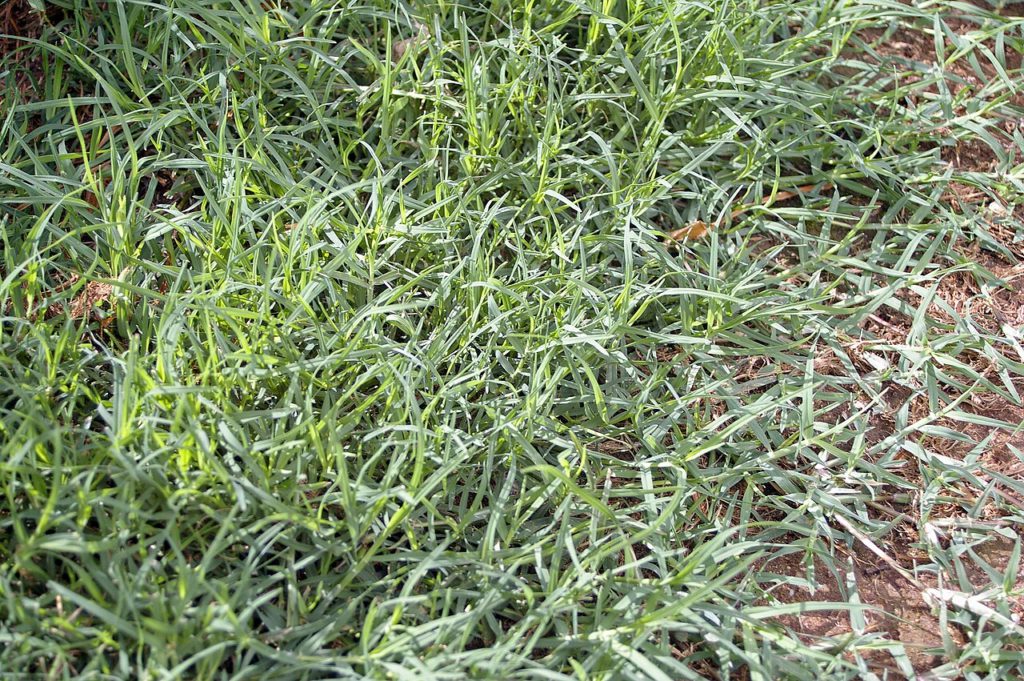
Bermudagrass is adapted to the entire state and tolerates a wide soil pH range, though 5.5 to 6.5 is ideal. There’s a split within the species worth understanding: common bermudagrass can be grown from seed and is popular for that reason, while hybrid bermudagrass (a cross with African bermudagrass) is sterile and has to be planted as sod, sprigs, or plugs, but delivers noticeably better density, disease resistance, and color.
Tifway 419, bred and released from the Georgia Coastal Plain Experiment Station back in 1960, has become the most widely used bermudagrass cultivar in the world, and every hybrid cultivar released since gets compared back to it. If you’re buying Tifway sod, look for a Georgia Crop Improvement Association blue-tag certificate. That program exists specifically because Tifway has been contaminated or mislabeled often enough over the decades that growers needed a way to guarantee you’re getting the real thing.
Two newer cultivars worth knowing: TifTuf® uses roughly a third less water than older bermudagrass cultivars in UGA’s own studies, which matters if your lawn doesn’t have permanent irrigation. TifGrand® has a genetically darker green color, which sounds cosmetic but lowers its nitrogen needs too, since you’re not fertilizing for color the grass already has built in.
Recommended mowing height for hybrid bermudagrass lawns is 1 to 1.5 inches. Like every grass on this list, it goes dormant and brown in winter. Our guide to bermudagrass in winter covers what’s normal dormancy versus what’s a real problem.
Zoysiagrass
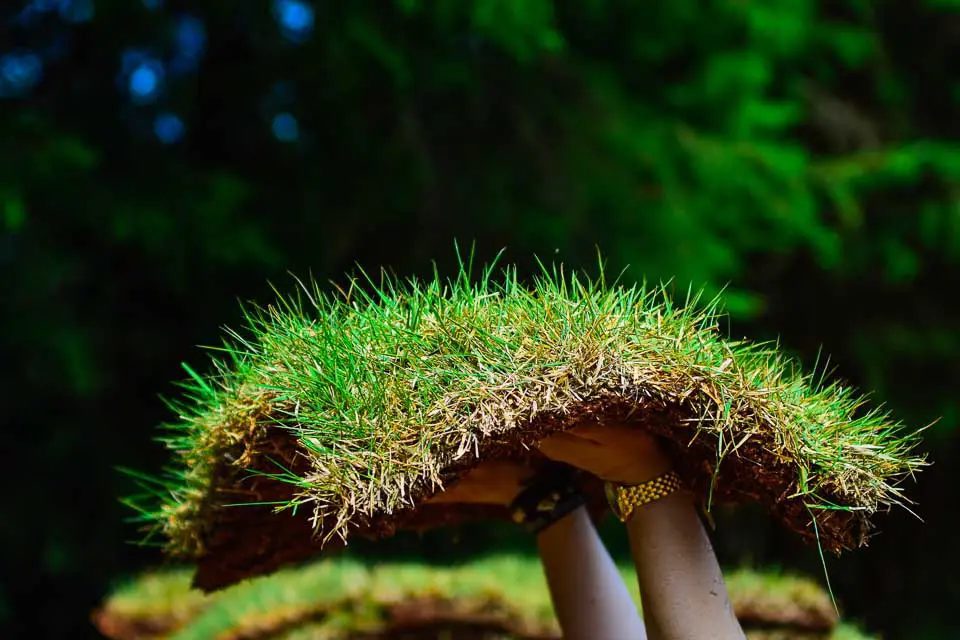
Zoysiagrass is adapted statewide and has been gaining ground in Georgia for years, forming a dense, tight turf once it’s established. That’s the catch: establishment is slow. Most zoysia is planted as sod, sprigs, or plugs, since only two cultivars, Zenith and Compadre, are commercially available as seed, and seeded zoysia takes even longer to fill in than vegetative planting.
The older, well-known cultivars are Meyer and Emerald. Meyer has a medium leaf texture and good cold tolerance. Emerald is finer-textured with better shade tolerance but a slower growth rate and a tendency toward thatch buildup if it’s overfertilized. Since then, plant breeders have released a wave of newer cultivars, Zenith, Compadre, El Toro, JaMur, Empire, Geo, Zeon, Zorro, that grow faster, thatch less, and hold up better after mowing with a standard rotary mower instead of needing a reel mower.
Zoysia’s advantage over bermudagrass is shade tolerance. Some cultivars maintain acceptable quality with as little as 4 to 4.5 hours of filtered sunlight a day, which is worth knowing if part of your yard sits under mature trees. It also needs less nitrogen than the other warm-season grasses, just 1 to 2 pounds per 1,000 square feet a year. Keep it mowed at 1 to 2 inches.
Centipedegrass
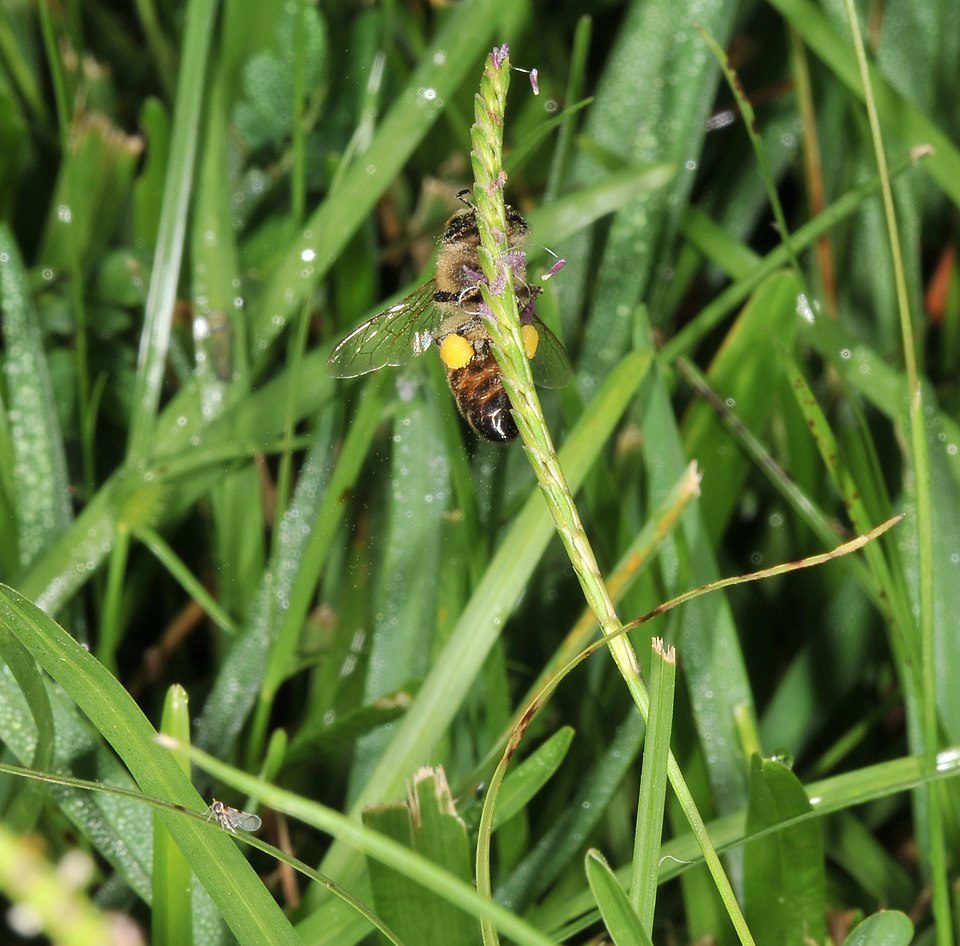
Centipedegrass earns its reputation as the low-maintenance option honestly. It has a distinctive apple-green color, spreads slowly by stolons only (no rhizomes), and needs less nitrogen than any other grass on this list, just 1 to 2 pounds per 1,000 square feet a year, with the low end usually being enough. It’s best adapted to the middle and lower part of Georgia but can be grown statewide using TifBlair, a cultivar bred specifically between Tifton and Blairsville for better cold hardiness.
Spring is the tricky season for centipedegrass. It’s prone to large patch disease during cool, wet spring weather, and applying nitrogen too early, before soil temperature at a 4-inch depth is consistently 65°F and rising, makes the problem worse rather than better. Keep it mowed at 1 to 1.5 inches, and skip phosphorus fertilizer unless a soil test specifically calls for it. Most all-purpose lawn fertilizers contain more phosphorus than centipedegrass needs, and it’s part of why so many centipede lawns get overfertilized without anyone realizing it. Our guide to how often to fertilize a lawn breaks down timing by grass type in more detail.
St. Augustinegrass
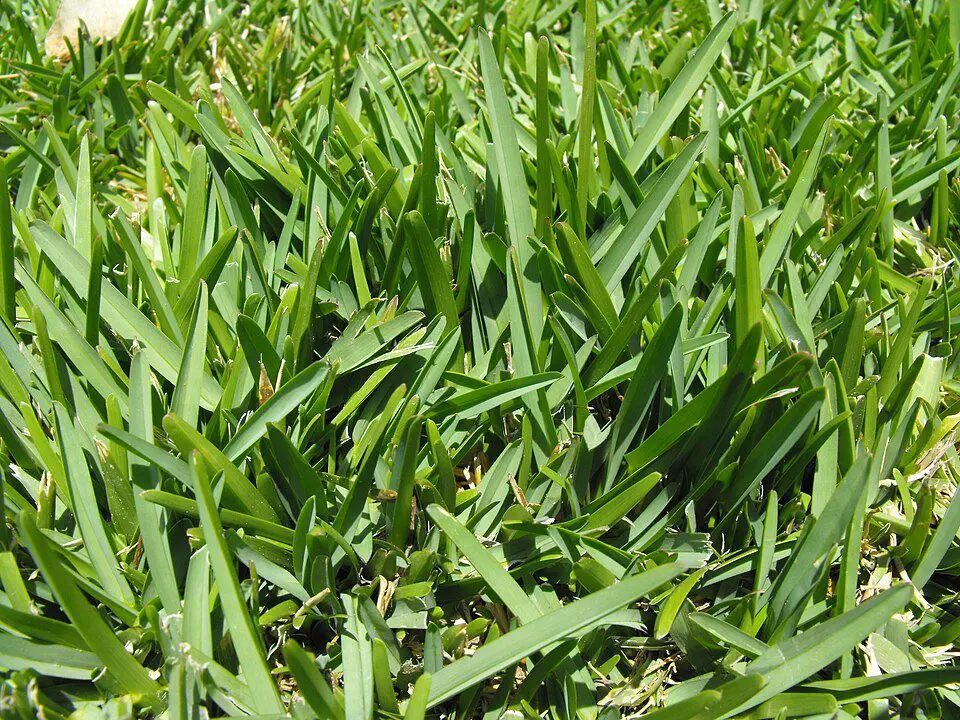
St. Augustinegrass has wide, coarse blades and forms a dense, attractive lawn, but it’s the least cold-tolerant grass on this list and the one that struggles most with foot traffic and compaction. It’s best adapted to the middle and lower part of the state, though plenty of Atlanta-area yards grow it too. Raleigh and Palmetto are the two cultivars UGA trials show performing well in both sun and shade in Georgia.
It can’t be seeded at all, only planted from sod, sprigs, or plugs. Suggested mowing height is 2 to 3 inches, though UGA notes it’s common and acceptable to mow as high as 4 inches, since the grass grows fast enough that frequent mowing becomes a real chore otherwise. Nitrogen needs run higher than the other warm-season grasses, 2 to 5 pounds per 1,000 square feet a year, with southern Georgia’s longer growing season and sandier soil needing the higher end of that range.
Tall Fescue: Georgia’s Cool-Season Option
Tall fescue is the only cool-season grass UGA recommends for Georgia lawns, and it comes with a geographic limit worth knowing before you plant it: the southern boundary for reliable tall fescue growth runs roughly through Griffin, Georgia, though it can survive further south in shaded or protected spots. North of that line, especially in the Piedmont, it’s a legitimate option.
What you’re buying matters more than most people realize. Turf-type tall fescue cultivars, developed since the early 1980s, have finer blades, better color, and better shade tolerance than ‘Kentucky 31’, an older forage cultivar that’s still sold cheap in some bargain seed mixes and looks noticeably coarser and paler once it’s established. UGA’s own turfgrass breeding program has released cultivars like ‘Southeast’, ‘Tenacity’, and ‘Bulldog 51’ specifically bred for Georgia’s acidic soils, though they haven’t caught on as widely for home lawns since they don’t look as refined as the standard turf-type blends.
Tall fescue grows in bunches rather than spreading by runners, so a preemergence herbicide in spring is usually necessary to keep weeds from filling gaps the grass can’t close on its own. It stays green through winter when everything around it is dormant, which is exactly why homeowners plant it, but the canopy thins in summer heat and older lawns tend to get patchy every few years without reseeding. Keep it mowed at 2 to 3 inches.
What About Bahiagrass?
You’ll see bahiagrass mentioned constantly if you search around for Georgia grass options, and it’s worth addressing directly: UGA Extension’s own bulletin does not recommend it for home lawns. Bahiagrass has an open canopy, unsightly seedheads, and a light green color that looks rough right after mowing, and in most lawns it’s actually treated as a weed rather than a planted grass. It’s considered a low-maintenance ground cover best suited for roadsides and soil stabilization, not somewhere you’re trying to grow an attractive yard.
That said, it does have two redeeming traits: drought tolerance and nematode resistance, both genuinely useful if you’re seeding a rough utility area rather than a front lawn. It grows statewide but is best adapted to sandy soils in mid to lower Georgia. If bahiagrass showed up in your search results as a top Georgia lawn option, that’s a sign the source wasn’t checking against UGA’s actual guidance.
Grasses to Skip for a Georgia Lawn
A few other grasses turn up in Georgia yards or get recommended online, and UGA’s own bulletin is blunt about why most homeowners should pass on them.
Carpetgrass resembles centipedegrass and sometimes shows up as a contaminant in older centipede lawns, but seed isn’t widely sold and there’s no sod production for it, so establishing it on purpose is hard to do. Seashore paspalum tolerates salt well and works for coastal golf courses, but it needs intensive management to look good and isn’t recommended for home lawns anywhere in the state. Buffalograss gets requested sometimes by homeowners chasing a “native” low-water lawn, but it’s native to the central Plains, not the Southeast, and Georgia’s humidity makes it prone to disease. UGA’s bulletin notes it typically loses out to better-adapted grasses within two to three years of being planted here.
How Georgia’s Grass Types Compare
| Grass | Heat Tol. | Cold Tol. | Shade Tol. | Mow Height |
|---|---|---|---|---|
| Bermudagrass | Excellent | Poor | Very poor | 1-2 in. |
| Zoysiagrass | Excellent | Very good | Good-fair | 1-2 in. |
| Centipedegrass | Good | Good-fair | Good-fair | 1-1.5 in. |
| St. Augustinegrass | Excellent | Fair-poor | Good | 2-3 in. |
| Tall fescue | Good | Very good | Good | 2-3 in. |
Adapted from University of Georgia Extension’s turfgrass adaptation data. Our breakdown of mowing heights by grass type and season covers how these ranges shift through the year.
How to Tell Which Grass Is Already in Your Yard
Growth habit is the fastest way to narrow it down, faster than color or texture alone, since two grasses can look similar side by side but spread completely differently. Bermudagrass spreads aggressively by both stolons (above-ground runners) and rhizomes (below-ground stems), which is exactly why it invades flower beds so easily. Zoysiagrass spreads by both too, but noticeably slower. Centipedegrass and St. Augustinegrass spread only by stolons and don’t send out rhizomes, so they stay closer to where they were planted. Tall fescue doesn’t spread by runners in any meaningful way; it grows in distinct clumps, which is why bare patches in a fescue lawn need reseeding rather than filling in on their own.
Color and leaf width help narrow it down further once you’ve got the growth pattern. Centipedegrass has a lighter, almost apple-green color that stands out next to the darker green of Bermuda or Zoysia. St. Augustinegrass has the widest, coarsest blades of the group. If you’re still not sure, a photo and a call to your local county Extension office will get you a faster answer than guessing.
What’s “Poor Man’s Grass”?
That’s centipedegrass, and the nickname (along with “lazy man’s grass”) dates back to the Great Depression, when it earned a reputation for growing in poor, acidic Southeastern soil with almost no fertilizer or attention. It’s not an insult so much as an accurate description: centipedegrass genuinely needs less input than the other grasses on this list, and Georgia’s soil and climate happen to be a good match for it. If low maintenance matters more to you than a golf-course look, it’s worth taking that old nickname as a recommendation rather than a knock.
DIY or Get Local Help Choosing?
Picking the right grass is only half the job. Soil pH, drainage, sun exposure, and how the last homeowner treated the lawn all affect which grass actually takes. If you’d rather skip the guesswork, LawnGuru can connect you with a local lawn care pro who already knows what performs in your part of Georgia and can handle the planting or overseeding once you’ve settled on a grass.
FAQ
What grass is most common in Georgia?
Bermudagrass, since it’s adapted to the entire state and tolerates heat, sun, and heavy traffic better than the alternatives. Zoysiagrass has been catching up in popularity for yards that need more shade tolerance.
Can I grow fescue year-round in Georgia?
In north Georgia, yes, with normal seasonal care and usually some fall overseeding to keep it thick. In central and southern Georgia, summer heat stresses it hard enough that most homeowners treat it as a short-term option rather than a permanent lawn.
Should I mix grass types in one Georgia lawn?
UGA Extension specifically advises against mixing cool-season and warm-season grasses in the same lawn. They grow on opposite schedules, so one is always dormant while the other is actively growing, which tends to look patchy and uneven no matter how you manage it.
What’s the softest grass for a Georgia lawn?
Among the warm-season options, finer-textured zoysia cultivars like Zeon or Emerald feel softest underfoot. St. Augustinegrass has the coarsest, widest blades of the group.
Why does my Georgia lawn die back every summer?
Usually it’s a cool-season grass planted somewhere too hot for it to handle, or a warm-season grass struggling through poor drainage or too much shade. Centipedegrass in particular declines if it’s overfertilized or planted where water sits after rain.