Spring mowing is where a lot of lawns get accidentally set back. The grass is waking up, the ground can be soft, and it’s tempting to “clean it up” by cutting low. That’s usually when scalping, thin spots, and ugly color show up.
If your lawn looked rough after winter, spring mowing height is one of the fastest ways to help it recover without doing anything fancy.
For most lawns, start spring mowing a little taller than you think you need, then lower the height gradually only once the lawn is growing strongly. Follow the 1/3 rule (never remove more than a third of the blade in one mow) to avoid stress and scalping.
If you’re not sure, the safest move is to begin on the taller side for the first couple of mows, watch how the lawn responds, and step down one notch at a time.
Why Spring Mowing Height Is Different Than Summer
In spring, your lawn isn’t in “steady cruising” mode yet. It’s coming out of slow growth, the soil can still be holding moisture, and the surface can be uneven from winter heaving or settling. That combination makes cutting short riskier than it is later in the season.
A low cut in spring also exposes more of the soil to sun and wind at a time when roots may not be deep or active yet. The lawn can look neat for a day, then turn pale, thin, or patchy as it struggles to rebound.
The Starting Point Most Homeowners Get Right
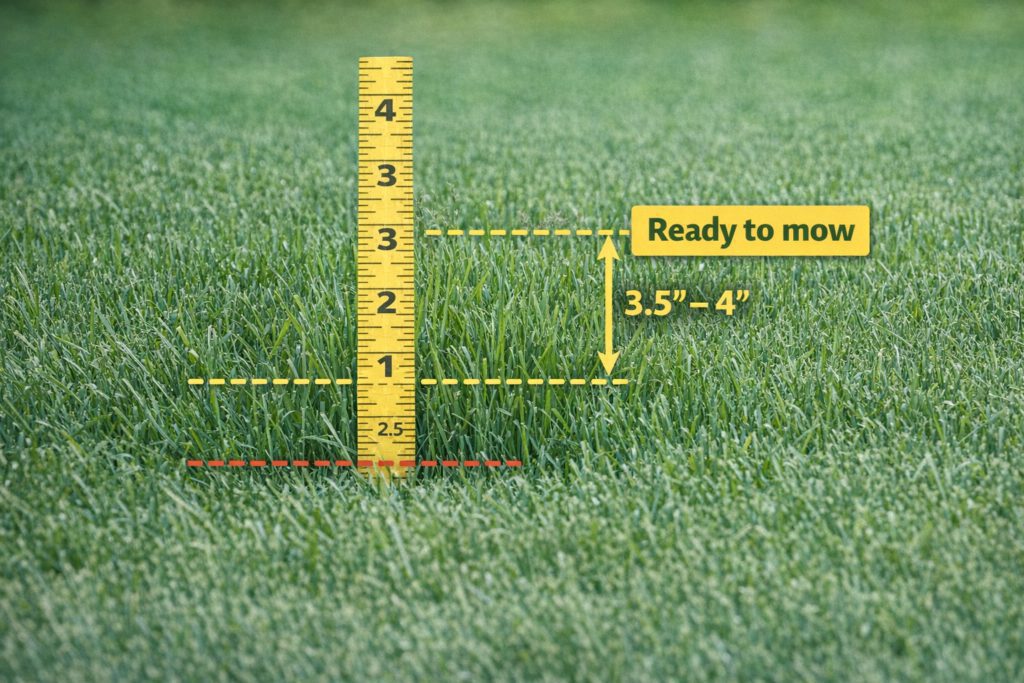
A good spring starting point is a medium-to-taller cut that protects the crown of the plant and gives you a buffer against uneven ground. Most homeowners do best starting in the “middle” of their mower’s settings rather than dropping it down right away.
The 1/3 rule matters even more in spring. If you take off too much at once, the lawn has to spend energy repairing leaf tissue instead of building steady growth. That’s when you see weak color, frayed tips, and slow recovery.
If you want a shorter look for the season, it usually works better to arrive there in steps. Start a little higher for the first couple mows, then lower the deck one notch per mow once the lawn is clearly growing and thickening.
Common terms: mowing height, cutting height, scalping, 1/3 rule, cool-season grass, warm-season grass.
Pick Your Spring Height by Grass Type (Cool-Season vs Warm-Season)
Before you pick a number, it helps to know what “type” of lawn you have. Cool-season lawns are the ones that grow best in cooler weather and often start greening up earlier. Warm-season lawns like heat and tend to wake up later, sometimes looking stubborn or half-dormant while the weather is still bouncing around.
If you’re unsure which you have, think about your lawn’s behavior. If it’s one of the first yards to green up and it pushes growth in spring and fall, it’s often cool-season. If it stays tan longer and really takes off once it’s consistently warm, it’s often warm-season.
Cool-season grasses (examples: Kentucky bluegrass, fescues, ryegrass): In spring, a slightly taller cut usually helps. It shades the soil a bit, supports stronger root activity, and gives you room to avoid scalping on uneven spots. You can tighten the height later once growth is steady and you’re mowing regularly.
Warm-season grasses (examples: Bermuda, zoysia, centipede, St. Augustine): Spring height is more about timing than aggressiveness. Going low before full green-up can expose stems and soil, slow the transition, and make the lawn look worse instead of better. With warm-season lawns, it’s often safer to start at a moderate height and only lower once the lawn is actively growing and filling in.
Use this table to choose a safe spring starting height based on grass type and what your lawn is doing right now.
| Grass type | If it’s early spring and patchy | If it’s actively growing | If you want a neater/shorter look | Notes to avoid scalping |
|---|---|---|---|---|
| Cool-season (Kentucky bluegrass) | Start taller; focus on clean cuts and recovery | Maintain a moderate height; mow often enough to follow the 1/3 rule | Step down one notch per mow until you reach your preferred height | Uneven ground will scalp fast, keep a buffer early |
| Cool-season (tall fescue / fine fescue) | Start taller to protect thin areas | Moderate-to-taller is usually safest as it thickens | Lower gradually only if density is good and color stays strong | Fescues show stress quickly, stop lowering if tips look ragged |
| Cool-season (perennial ryegrass) | Start moderate-to-taller; avoid big reductions | Moderate height with frequent mowing | Step down slowly if you’re mowing regularly | Rye can look “shredded” with dull blades, sharpness matters |
| Warm-season (Bermuda) | Start moderate until green-up is consistent | You can go shorter once it’s truly growing | Lower gradually; don’t jump to a very low cut in one pass | Don’t scalp dormant or half-dormant Bermuda, it will look brown longer |
| Warm-season (zoysia) | Keep it moderate while it wakes up | Moderate is usually safest; adjust once growth is strong | If lowering, do it slowly and only with steady growth | Zoysia can thin if stressed early, avoid aggressive cuts |
| Warm-season (centipede / St. Augustine) | Stay on the taller side early | Maintain a taller cut as it fills in | Don’t chase short, aim for even, consistent height | Taller mowing helps prevent stress and bare spots |
First Mow of Spring: Don’t Guess Use These Lawn Signals
The first mow of spring is where people get into trouble, mostly because they mow when the lawn isn’t ready or they set the deck too low. Instead of picking a date, use what the lawn is telling you.
If the grass bends over and stays down when you walk through it, it’s often still too wet or soft. Mowing then can leave ruts and scalped stripes, even if your mower height is reasonable.
If you see footprints that stay visible or the yard feels squishy, you’re likely to tear up the surface. In that situation, a “quick cleanup mow” can create damage that takes weeks to grow out.
Pay attention to the cut quality. If the tips look torn or fuzzy instead of cleanly cut, that’s usually blade sharpness or mowing in poor conditions. In spring, torn tips can make the whole lawn look grayish or stressed even when it’s technically growing.
Also look at what you’re cutting. If your mower is taking mostly brown tops and you’re barely seeing new green, you may be going too early or too low. A higher first mow removes the messy top growth without exposing the tender parts of the plant.
Height Decisions When Conditions Aren’t Ideal
Not every lawn starts spring in perfect shape. A few common conditions should change your mowing height choice.
Wet soil and soggy spots: If parts of the yard stay wet, raise the height and avoid tight turns. Taller mowing reduces the chance of scalping where tires sink, and it’s easier on the grass when it’s already stressed.
Uneven ground after freeze/thaw: Even a normally “safe” height can scalp if the surface is lumpy. Start higher than normal, especially on slopes and along the curb where the mower tends to dip.
Shade lawns that green up slowly: Shady areas often lag behind the sunny parts. Keep them a bit taller and don’t rush them into a shorter cut. The grass needs leaf area to make energy in lower light.
Thin areas or overseeded spots: New or thin grass hates a sudden low cut. Start higher, mow only when it’s dry and standing up, and avoid taking big bites that pull young plants loose.
Heavy foot traffic (kids/pets): Traffic plus spring softness can chew up the turf. A slightly taller cut helps the lawn handle wear, and it hides minor thinning while the grass is still filling in.
A Simple Step-by-Step Plan for Spring Mowing
1) Start with the mower check: sharp blade, level deck, correct tire pressure. A slightly uneven deck is a scalping machine in spring.
2) Pick a starting height one notch taller than your “summer look.” It’s easier to step down later than to fix scalped patches.
3) Mow only when the lawn is firm underfoot. If you’re leaving footprints or ruts, you’re mowing too soon.
4) Follow the 1/3 rule. If it’s overgrown, split it into two mows 3–7 days apart instead of forcing it in one pass.
5) Change direction each mow. This reduces rutting and helps keep the lawn standing upright instead of laying over.
6) Manage clippings based on amount. Light clippings can be mulched back in; heavy rows should be dispersed so they don’t smother new growth.
7) Step the height down gradually, one notch per mow, only if the lawn is growing strongly. You should see steady color and density improving.
8) Pause lowering height if you see scalping, pale color, or slowed growth. Hold that height for a couple mows and let the lawn catch up.
Mistakes That Lead to Scalping and Thin Spots
One of the most common spring mistakes is cutting short to “get rid of the dead stuff.” It feels productive, but it usually removes too much green at the same time, especially if the lawn is uneven.
Mowing wet because the lawn “looks long already” is another big one. Wet grass lays over, the mower rides lower in soft soil, and the cut ends up uneven even if you think you’re being careful.
Dropping deck height before the lawn is actively growing is a quiet problem. The lawn might not have the energy to recover quickly, so you get a thin, washed-out look that lasts.
Dull blades are an underrated spring issue. Frayed tips make the lawn look stressed, and it can open the door to problems that show up as browning or a fuzzy, off-color cast.
And then there’s chasing the striped, manicured look while the ground is still uneven. Striping is fine, but in early spring it’s better to prioritize a clean, even cut over a dramatic pattern.
The Habits That Keep Spring Cuts Looking Clean
Spring mowing looks best when the basics are steady. Don’t overcorrect week to week based on one bad-looking mow. Pick a sensible height, stick with it for a couple cycles, and adjust only when the lawn is clearly responding.
Watering is a common trap. If spring has been wet, adding routine watering can keep the surface soft and make mowing messy. Instead, watch for simple cues like wilting or a dull bluish-gray cast before you assume it needs water.
Fertilizer can also change mowing decisions fast. Pushing growth too hard can create a cycle where you’re always trying to cut down a surge of top growth.
Weeds are another place people expect mowing height to be a magic fix. Height helps the lawn compete, but it won’t “erase” weeds overnight. The cleanest-looking spring lawns usually come from consistent mowing, not from cutting extra short.
The simplest habit that pays off is keeping blades sharp and clippings managed. A clean cut and no heavy piles will make almost any spring lawn look better, even before it fully fills in.
FAQs About Spring Mowing Height
Should I cut my grass really short in spring to get rid of dead blades?
Usually no. A very short cut often removes a lot of new green along with the dead top growth, and that’s when lawns turn pale or thin. If you want it to look cleaner, start a bit taller and let a couple mows tidy it up without scalping.
What’s the best mowing height if my lawn is still patchy and slow to green up?
Stay on the taller side at first. Patchy lawns need leaf area to recover, and short cuts can expose soil and make thin areas look worse. Once you see steady growth and the lawn is thickening, you can step down gradually if you want.
Does mowing taller in spring help prevent weeds, or is that a myth?
It can help, but it’s not a cure. A slightly taller cut shades the soil and makes it harder for some weed seedlings to get going, especially when your grass is still filling in. The bigger benefit is that taller mowing reduces stress, and a less-stressed lawn competes better overall.
Is it okay to mow when the ground is damp if I raise the deck?
Sometimes, but it still depends on how soft the yard is. If your steps leave deep prints or your mower tires are sinking, you’re likely to rut and scalp no matter what height you choose. If it’s just a little damp on top and the soil is firm, a higher cut and slower pace can work.
How do I know if I’m scalping the lawn, even if it doesn’t look “bald”?
Look for sudden light patches, streaks where the mower dipped, or areas that turn straw-colored within a day or two. Another sign is seeing soil or stems you don’t usually notice after mowing. If you suspect scalping, raise the height and change direction next mow.
What spring height should I use if I overseeded and the new grass is coming in?
Keep it higher and be gentle. New grass can get pulled or torn if you take too much off at once or mow when it’s wet. Mow only when it’s standing up well, follow the 1/3 rule closely, and avoid tight turns over the newest areas.
Getting Spring Mowing Height Right Without Overthinking It
Spring mowing goes smoother when you treat height like a dial, not a one-time decision. Start a little taller, make sure the lawn is firm and actively growing, and lower the height only in small steps if you actually need to.
If you remember one thing, make it this: scalping in spring costs more time to fix than it saves. A cautious first few mows usually leads to a thicker, greener lawn faster.
Need a Second Set of Eyes on Your Spring Mowing Plan?
If you’re not sure whether your lawn should be cut shorter yet, it helps to get a simple second opinion, especially if you’re dealing with uneven ground, thin spots, or a lawn that’s slow to green up. Some homeowners enjoy dialing it in themselves, and others would rather hand off the troubleshooting. If you want help thinking through height, timing, and the first few mows, LawnGuru can be a practical option.