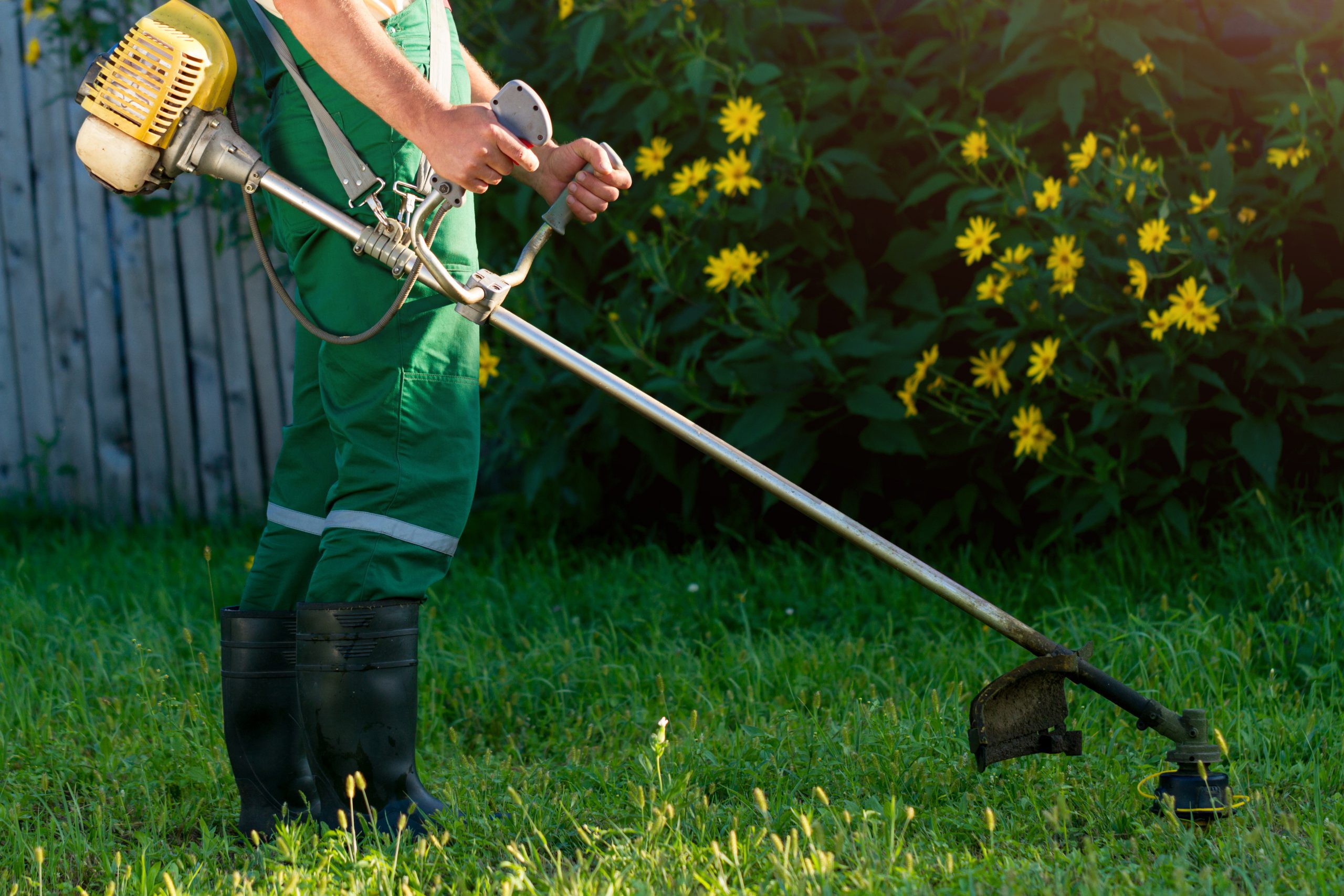
If your grass has gone from green to dull and gray-brown over the last few weeks of high heat, and your kid’s footprints from Tuesday are still sitting there flattened into the yard, your lawn is dealing with heat stress. It’s one of the most common calls lawn care pros get in July and August, and it’s also one of the most misdiagnosed. Homeowners see brown grass and assume it’s dead, dig up perfectly recoverable turf, and reseed a lawn that would have bounced back on its own with the right water and patience.
This guide covers what grass heat stress actually looks like, why cool-season lawns struggle so much more than warm-season ones, how to tell a dormant lawn from a dead one before you do anything drastic, and the specific watering, mowing, and timing decisions that get a stressed lawn back to green.
Quick Answer: A heat-stressed lawn is almost always alive, not dead. It’s protecting itself by shutting down growth and turning brown, a survival response called dormancy. Water deeply in the early morning (around 1 to 1.5 inches a week while it’s still green and trying to recover), raise your mower deck to its highest setting, and stay off the grass as much as you can. A lawn that’s dormant will green back up once temperatures ease and watering resumes consistently. A lawn that’s actually dead won’t, and you can tell the difference with a simple test covered below.
Heat stress happens when grass spends too much energy just surviving the temperature and not enough growing. For cool-season lawns (Kentucky bluegrass, tall fescue, perennial ryegrass, fine fescue), that tipping point usually starts once daytime highs sit in the upper 80s and 90s for several days straight, especially without rain. The grass isn’t broken. It’s doing exactly what it’s built to do under those conditions, which is stop growing and hold on.
What Does a Heat-Stressed Lawn Look Like?

The earliest sign isn’t color, it’s texture. Walk across the lawn, then look back at your footprints. On a healthy, well-watered lawn, the blades spring back up within a minute or two. On a heat-stressed lawn, the footprints stay flattened and dull. That’s the grass telling you it doesn’t have enough water in the blade to hold its shape, and it’s worth checking before the color even changes.
Color comes next, and it moves in stages. First the grass shifts from bright green to a dull blue-gray or grayish-green, which is the blade folding slightly to cut down on moisture loss. That stage is your best window to act, because deep watering here can often stop things before they go further. From blue-gray it moves to yellow, then to tan or brown as more of the lawn goes dormant.
One distinction matters more than people realize: uniform browning across the whole lawn, or across whole sections that get full sun, usually points to heat and drought. Grass along a driveway, on a south-facing slope, or near a sidewalk will typically brown out first, since pavement radiates extra heat and drains soil moisture faster. If the brown patches are irregular, ring-shaped, or show up in shaded or low-traffic areas that shouldn’t be under the same stress, something else, usually disease, is more likely the cause. More on telling those apart below.
Why Do Cool-Season Grasses Struggle in Extreme Heat?
This is the part most lawn care advice skips, and it’s the actual mechanism behind everything else in this guide. According to Purdue University’s Turfgrass Science program, cool-season grasses (bluegrass, fescue, ryegrass) photosynthesize best between 68°F and 77°F. They can still function somewhat outside that range, but once temperatures climb past about 87°F, something specific starts going wrong at the cellular level: the plant has trouble pulling in carbon dioxide and instead absorbs oxygen, a process called photorespiration. Photorespiration burns energy instead of producing it. In plain terms, the hotter it gets past that threshold, the more the grass is spending stored energy just to stay alive instead of making new energy to grow roots and blades.
That’s why cool-season lawns in the Midwest, Northeast, and Upper South hit a wall in July and August regardless of how much you water them, and why warm-season grasses like Bermuda, zoysia, and St. Augustine don’t have the same problem; their internal chemistry is built to run efficiently at those higher temperatures instead of against them. If you’re not sure which category your lawn falls into, LawnGuru’s guide to warm season and cool season grass types breaks down the split by region and species.
How bad this gets depends heavily on where you live. A lawn in Minnesota or Michigan might only fight real heat stress for a few weeks a year, in short spikes, with plenty of cooler nights to recover between them. A lawn in the transition zone, roughly Missouri through Virginia, where cool-season grass is common despite sitting on the edge of warm-season territory, deals with this same stress for most of June through September. If you’re in that stretch and your cool-season lawn struggles every single summer rather than during the occasional heat wave, that’s less a one-time fix and more a sign the lawn is fighting its climate, which is worth factoring in the next time you overseed.
Drought compounds all of this. Grass blades are roughly 80% water, and that water does double duty: it’s a core ingredient in photosynthesis, and it’s what lets the plant cool itself the way sweat cools skin. When soil moisture drops, that cooling mechanism breaks down at the exact moment the plant needs it most, which is why heat and drought stress almost always show up together rather than as separate problems.
Is Your Lawn Dormant or Dead? The 2-Minute Crown Test
This is the single most useful thing to check before you spend money on anything. Kelly Kopp, a turf and water conservation specialist with Utah State University Extension, puts it bluntly: don’t start “performing funeral rites” on brown grass in the middle of summer. In most cases, it isn’t dead. It’s dormant, a protective process the plant uses on purpose to survive heat and drought it can’t otherwise fight off.
Here’s the test. Pull up a small plug of turf, roots and all, from a brown area. Look at the crown, the pale, slightly thickened point at the base of the plant right at soil level, where the roots go down and the blades grow up. If the crown is firm, white or light-colored, and intact, the lawn is dormant and will recover once conditions improve. If the crown is soft, dark, mushy, or missing entirely, that section is dead and will need reseeding or sod, not more patience.
According to Kopp, dormant cool-season grass can survive on surprisingly little water while it waits out the heat. She recommends “survival watering,” roughly one inch per month, just enough to keep the crown alive without trying to force the lawn out of dormancy. That’s a very different number from the 1 to 1.5 inches per week you’d use on a lawn you’re actively trying to keep green, and mixing the two up is a common mistake: watering a fully dormant lawn like it’s actively growing wastes water without actually helping it, and under-watering a lawn you’re trying to keep green stalls the recovery you’re going for.
If the crown test comes back bad across a section of the lawn, or you’d rather just start fresh, LawnGuru’s guide on how to revive dead grass covers the reseeding and repair process for turf that genuinely didn’t make it.
Heat Stress or Something Else? How to Tell the Difference
Homeowners often assume every brown patch in July is heat stress, but disease and heat damage look different enough to tell apart once you know what to check.
| Sign | Heat Stress | Lawn Disease |
|---|---|---|
| Pattern | Even, follows sun exposure | Irregular rings or patches |
| Location | Full-sun areas, slopes, near pavement | Can appear in shade or wet areas |
| Timing | Builds gradually over hot, dry weeks | Often appears suddenly after humidity or rain |
| Spread rate | Slow, matches drought duration | Can expand noticeably day to day |
If you’re seeing patches that don’t line up with sun exposure, that showed up within a day or two rather than building gradually, or that have a distinct ring or halo shape, it’s worth checking LawnGuru’s guide to getting rid of brown spots on your lawn, since fungal disease needs a different response than a hose and a higher mower deck.
How to Fix a Heat-Stressed Lawn

Water deep, not often, and at the right time of day. For a lawn that’s still green or just starting to go dormant and you want to keep it that way, aim for 1 to 1.5 inches of water per week, applied in one or two sessions rather than a little every day. Water between roughly 6 and 10 a.m. Morning watering gives the lawn time to absorb what it needs before evaporation kicks in and lets the blades dry off before evening, which matters because wet grass overnight is an open invitation to fungal disease. For LawnGuru’s full breakdown of session length by sprinkler type and soil, see how long to water your lawn in summer.
Raise your mowing height and back off frequency. According to University of Illinois Extension, mowing higher, in the 3 to 4 inch range for most cool-season lawns, shades the soil, slows moisture loss, and protects the crown from direct sun. Never cut more than a third of the blade length in a single mow, and if the grass has gotten long, take it down gradually over two mowings instead of scalping it in one pass.
| Grass Type | Summer Mow Height |
|---|---|
| Kentucky Bluegrass | 3-3.5 in |
| Tall Fescue | 3-4 in |
| Perennial Ryegrass | 2.5-3.5 in |
| Fine Fescue | 3-4 in |
| Bermudagrass | 1-2 in |
| Zoysiagrass | 1.5-2.5 in |
| St. Augustinegrass | 3-4 in |
Warm-season grasses stay short year-round since they’re built to handle heat, so don’t apply the “mow it taller in summer” rule to Bermuda or zoysia the way you would to a cool-season lawn. LawnGuru’s lawn mowing heights guide by grass type and season covers the full seasonal breakdown if your lawn is a blend or you’re not sure which category it falls into.
Stay off it. Dry, stressed grass blades are more brittle than usual and don’t spring back from foot traffic the way a well-watered lawn does. If you can, route foot traffic around the most visibly stressed areas for a few weeks, especially the parts already showing the blue-gray color change.
Hold off on fertilizer until the lawn is actually growing again. A dormant or heavily stressed lawn isn’t using nutrients efficiently, and Illinois Extension specifically warns against pushing nitrogen during hot, dry stretches, since it forces top growth the plant can’t support and increases burn risk on already-stressed blades. Wait for real green-up, not just improved weather, before feeding.
Common Mistakes That Make Heat Stress Worse
A few habits turn a lawn that would have recovered fine into one that struggles for weeks longer.
Watering a little every day instead of deeply, less often. Light daily watering only wets the top inch or two of soil, which keeps roots shallow and near the surface where heat and dryness hit hardest first. It feels proactive, but it trains the lawn to need water more often, not less.
Panicking and reseeding a lawn that’s only dormant. This is the single most common overreaction. If you haven’t done the crown test, don’t tear up or reseed brown turf in the middle of summer. Reseeding into a heat-stressed environment means the new seedlings face the same conditions that stressed the existing lawn, and you’ll likely be reseeding again once real fall weather arrives anyway.
Applying weed killer or pesticide during active heat stress. Most herbicide labels warn against application above 85 to 90°F, and for good reason: a stressed lawn absorbs and processes chemicals differently than a healthy one, and the risk of burning already-weakened turf goes up. Hold off on weed control until temperatures ease, unless the product label specifically says otherwise.
Mowing with a dull blade. A dull blade tears grass tips rather than cutting them cleanly, and torn tips brown faster and lose more moisture. If you haven’t sharpened your mower blade this season, this is a cheap fix that helps more than people expect.
How Long Does It Take a Heat-Stressed Lawn to Recover?
There’s no fixed countdown, because recovery depends on two things outside your control: how much longer the heat lasts and how much rain or irrigation the lawn actually gets once temperatures ease. What’s consistent across extension research is the mechanism, not the calendar: as long as the crown survived, the plant starts pulling energy back into growth once soil temperatures drop and moisture becomes available again, and new green growth typically shows up first right at the base of the plant, near the crown, before it spreads up the blade.
A lawn that went dormant for a few weeks during a single hot stretch often greens up within days of consistent rain or watering resuming. A lawn that’s been fully dormant for six to eight weeks through a longer drought takes longer and benefits from sticking to one watering schedule rather than watering hard for a few days, stopping, then starting again, since that stop-start pattern is harder on the plant than staying dormant a little longer.
How to Prevent Heat Stress Before It Starts
The lawns that handle summer best aren’t the ones that get rescued in July, they’re the ones set up for it in spring and the fall before. A few things make the biggest difference:
Build a deep root system early. Watering deeply and infrequently starting in spring, rather than short daily waterings, trains roots to grow down toward moisture instead of staying shallow near the surface. Shallow-rooted lawns are the ones that go into crisis fastest once real heat arrives.
Keep the mower height consistent all season, not just during a heat wave. A lawn that’s been scalped short in June has less shade protection and a shallower crown by the time it actually needs it in July and August.
Address compaction and thin turf in the fall, not the summer. Compacted soil holds less water where roots can reach it, and thin lawns have less shade cover for their own soil. Fall, once cool-season grass is actively growing again, is the right window for both aeration and overseeding with a more resilient variety, not the middle of a heat wave when the lawn is already stressed. If your lawn goes through this every summer, that’s usually the fix that actually breaks the cycle rather than another round of emergency watering. If aeration isn’t something you want to tackle yourself, LawnGuru connects you with local lawn care pros who handle fall aeration, and you can book and manage the service online without the back-and-forth of getting quotes.
Frequently Asked Questions
Will my grass come back after heat stress?
In most cases, yes. Heat stress triggers dormancy, not death, and as long as the crown at the base of the plant is still alive, the lawn will green back up once temperatures drop and watering becomes consistent again. Use the crown test above if you’re not sure which situation you’re dealing with.
How much water does a heat-stressed lawn actually need?
It depends on whether you’re trying to keep the lawn green or just keep it alive through dormancy. A lawn you’re actively watering to prevent full dormancy needs roughly 1 to 1.5 inches per week. A lawn that’s already fully dormant and you’re not trying to force back needs far less, closer to one inch per month, just enough to keep the crown from dying outright.
Should I fertilize a lawn that’s showing heat stress?
Not while it’s actively stressed or dormant. Fertilizer, especially a fast-release nitrogen product, pushes top growth the plant doesn’t have the energy or water to support right now, and it can burn already-stressed blades. Wait until you see real new growth before feeding again.
Why does my grass look blue-gray instead of green?
That color shift is one of the earliest visible signs of drought stress. The grass blade folds slightly along its length to reduce the surface area exposed to sun and wind, which cuts down on moisture loss. It’s an early warning, not a late-stage symptom, so catching your lawn at this stage and watering deeply is usually enough to head off full dormancy.
Is it safe to let kids or pets play on a heat-stressed lawn?
Light use is fine, but repeated heavy traffic on dry, brittle grass slows recovery in those spots. Use the footprint test as your guide: if the grass springs back within a minute or two of being walked on, normal use is fine. If footprints stay flattened, it’s worth routing traffic elsewhere for a couple of weeks.