If water sheets off your lawn after a storm, a screwdriver won’t push into the soil, or the grass along the path to the back door keeps thinning out, it’s probably time to aerate your lawn. Core aeration pulls small plugs of soil out of the ground so air, water, and roots can get back into it. It’s one of the few lawn jobs where timing matters as much as technique: done during active growth, the grass fills in within weeks; done at the wrong time, you’ve stressed a lawn that can’t recover.
This guide covers both halves: when to aerate based on your grass type, and how to do it step by step, plus the aftercare decisions (overseeding, fertilizer, pre-emergent) where most of the conflicting advice online comes from.
Quick Answer: Aerate cool-season lawns (Kentucky bluegrass, tall fescue, perennial ryegrass) in early fall, leaving at least four weeks of good growing weather before cold sets in. Aerate warm-season lawns (bermudagrass, zoysiagrass, St. Augustinegrass) in late spring through summer, once the grass has fully greened up. Use a core aerator with hollow tines, work on moist (not wet) soil, make two passes at right angles, and leave the soil plugs on the lawn. Most home lawns need it once a year or less; heavily trafficked clay soils may need more.
What Is Lawn Aeration?
Aeration is the practice of punching or pulling holes in the turf to relieve soil compaction. Clemson Cooperative Extension explains that the problem usually lives in the top 4 to 6 inches of soil. Once that layer is packed down, water infiltration drops, runoff and puddling increase, roots stay shallow, and the grass wilts faster in dry spells. Clemson names foot, pet, and vehicle traffic as probably the leading cause, followed by construction equipment and heavy rain.
Compaction also feeds thatch. Low oxygen in compacted soil slows the earthworms and microbes that break down dead stems and roots, so thatch builds faster on compacted and heavy clay soils.
Core aeration fixes that by physically removing soil. The hollow tines pull out soil plugs roughly the diameter of a pencil, which leaves open channels behind and lets the surrounding soil relax into the space.
Signs Your Lawn Needs Aeration
You don’t need to aerate on a calendar. Look for these signs first:
- The screwdriver test fails. Push a screwdriver into moist soil in several spots. Both Clemson and Illinois Extension use this check: if it goes in with little resistance, you probably don’t need to aerate. If you have to lean on it, you do. Test after a rain or watering, because dry soil resists even when it isn’t compacted.
- Water pools or runs off instead of soaking in, a sign of poor drainage at the surface.
- Thin grass along traffic paths, play areas, dog runs, or where cars park on the edge of the lawn.
- Weeds that like wet, packed soil. Illinois Extension notes that yellow nutsedge, prostrate knotweed, and spotted spurge thrive in wet compacted areas where grass won’t grow.
- The lawn sits on a new-construction lot. Heavy equipment compacts soil before the grass is ever planted.
- The ground feels like concrete underfoot. Clemson suggests walking the lawn and feeling for it with your feet.
One caution from Clemson: don’t confuse compaction with soil that’s naturally poorly drained, such as a low spot or a flood plain. Those hold water without being compacted, and aeration won’t fix them.
When to Aerate Your Lawn
The rule is simple: aerate when your grass is growing hard enough to fill the holes back in.
| Grass Type | Examples | Best Time to Aerate | Avoid |
|---|---|---|---|
| Cool-season | Kentucky bluegrass, tall fescue, perennial ryegrass, fine fescue | Early fall; early spring is a weaker second choice | Summer heat, dormancy |
| Warm-season | Bermudagrass, zoysiagrass, St. Augustinegrass, centipedegrass | Late spring through summer, after full green-up | Spring before green-up, fall and winter dormancy |
Clemson recommends fall for cool-season grasses because there’s less heat stress and less pressure from weedy annuals, and it advises leaving at least four weeks of good growing weather afterward so the turf can recover. For warm-season grasses, Clemson’s window is late spring and summer, when they’re actively growing. If you aerate in summer during a dry stretch, watch your irrigation: Clemson notes aerified turf dries out faster than it did before.
For a month-by-month breakdown by region, including the transition zone where both grass types grow, see our guide to the best time to aerate your lawn.
When Should You Not Aerate Your Lawn?
Skip or postpone aeration when the grass is dormant, the soil is in the wrong condition, or the lawn doesn’t need it:
- The grass is dormant or stressed. Cool-season lawns in July heat and warm-season lawns before spring green-up recover slowly and can stay scarred for weeks.
- The soil is soaking wet. Clemson warns that aerifying wet soil is messy and can compact it further. If soil sticks to your shoes or to the probe, wait until it dries some.
- The soil is bone dry. The tines won’t penetrate, and you’ll pull short, shallow cores or none at all.
- You just seeded or sodded. New roots need time to knit before you punch holes through them.
- First frost is close. You need several weeks of growth afterward for the holes to close up.
- It doesn’t need it. If the screwdriver slides in easily and the grass is thick, aerating anyway adds stress without a payoff.
Core vs. Spike Aeration (and Why Liquid Aeration Isn’t a Substitute)
Core aeration removes plugs of soil. This is the method university extension services recommend, and it’s the one that makes a measurable difference on compacted ground.
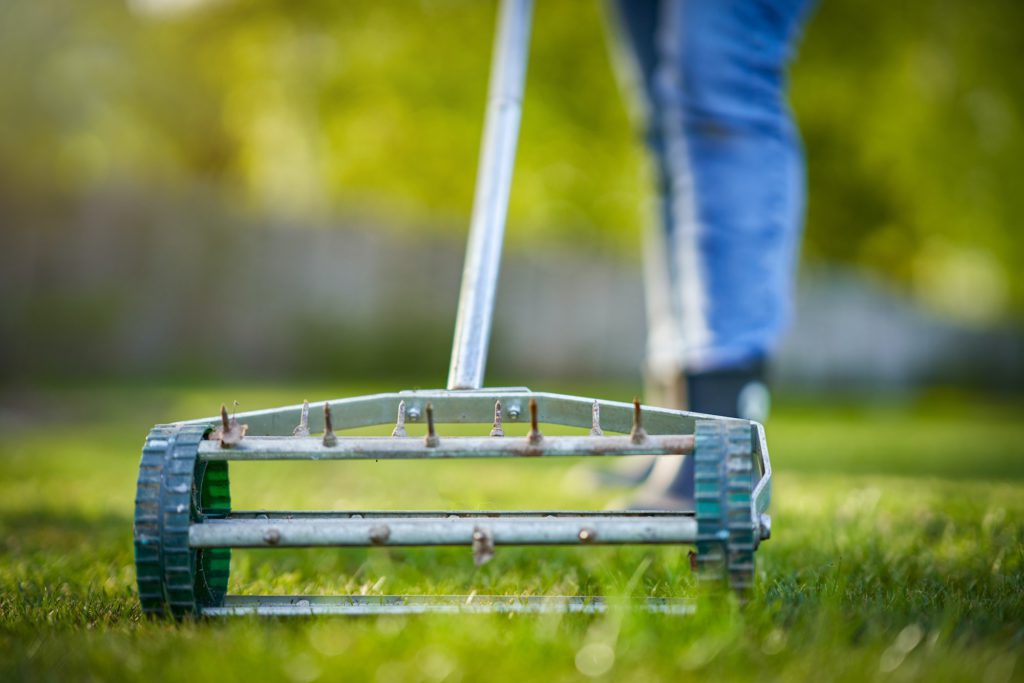
Spike aeration uses solid tines that poke holes without removing anything. Illinois Extension notes that spike aerators can cause more compaction by pressing soil together around each hole. Aerator sandals and push spikers fall in this category.
Liquid aeration products spray a wetting agent or soil conditioner on the lawn. They don’t make holes, so they don’t physically relieve compaction the way cores do. Our guide to liquid aeration vs. core aeration goes deeper on what the sprays can and can’t do.
What to look for in a machine: Clemson’s guidance is tines from 1/4 to 3/4 inch wide, pulling cores 2 to 3 inches deep, spaced 2 to 3 inches apart. Closer spacing removes more soil and relieves compaction better than wide spacing.
How to Aerate Your Lawn, Step by Step
For most homeowners, this means renting a walk-behind core aerator from a garden center or equipment rental shop for a few hours. They’re heavy, so bring help and a truck or trailer.
Step 1: Check timing and moisture. Confirm you’re in your grass type’s growing window. Then water the lawn deeply a day or two before, or plan the job for a day or two after a good rain. You want soil that’s moist enough for clean cores but not muddy.
Step 2: Mow. Cut at your normal height, or a little lower if you plan to overseed afterward, and clear leaves and debris so the tines reach the soil.
Step 3: Flag hazards. Mark sprinkler heads, shallow irrigation lines, invisible dog fence wire, and cable runs. A core aerator will damage anything shallow in its path.
Step 4: Make the first pass. Run the aerator across the lawn in straight, slightly overlapping rows, like mowing.
Step 5: Make a second pass at a right angle. Clemson recommends going over the lawn twice, once in one direction and then perpendicular to it. Spend extra passes on the worst compacted areas rather than the whole yard.
Step 6: Leave the plugs. Don’t rake them up. Both Clemson and Illinois Extension say to leave cores on the surface to break down with rain, mowing, and foot traffic. If they bother you, run the mower over them once they dry.
Step 7: Follow up. Water, overseed, or fertilize based on what your lawn needs (next section). If you’re also dealing with heavy thatch, read our breakdown of aeration vs. dethatching before deciding whether you need both.
No machine? For a small compacted patch, Clemson suggests a spading fork pushed at least 4 inches deep and rocked back and forth, though it compacts the soil around each hole. A hand sod-coring tool works better because it pulls real cores.
What to Do Immediately After Aerating a Lawn
Right after aeration, the soil is open and every input goes further. Here’s the order that works:
- Water if the next few days are dry, especially in summer, since aerated turf loses moisture faster.
- Overseed thin areas if you’re in the right season for seeding (fall for cool-season lawns).
- Fertilize to support regrowth.
- Hold off on weed and feed or pre-emergent if you just seeded, since pre-emergent herbicides stop grass seed from sprouting too.
Overseeding After Aeration: How to Avoid a Speckled Lawn
Almost every guide says to overseed right after aerating, and for a thin cool-season lawn in fall that’s sound advice. Illinois Extension calls fall the best time to aerate and notes that the holes give seed the soil contact it needs to germinate. Its suggested overseeding rates are 3 to 5 pounds per 1,000 square feet for tall fescue and perennial ryegrass and about 1.5 pounds for Kentucky bluegrass, with regular watering, sometimes once or twice a day, for about two weeks.
There’s a catch most guides leave out. Clemson points out that seed landing in or near the aerator holes germinates much better than seed between them, which can leave the lawn looking speckled, with tufts of new grass in a grid. Its fix for renovating sparse areas is many more passes, six to ten, so the holes end up no more than about 4 inches apart.
In practice:
- Light overseeding to thicken a decent lawn: aerate with two passes, seed, and accept a little early speckling that fills in.
- Thin or patchy lawn: make several extra passes over the thin areas before seeding so the holes are dense, or follow up with a slit seeder.
Our full guide on how to overseed a lawn covers seed choice, rates, and watering schedules.
Is It Okay to Aerate Your Lawn and Then Fertilize It?
Yes. Right after aeration is one of the best times to fertilize, because the open holes let product reach the root zone instead of sitting in thatch. If you overseeded, use a starter fertilizer rather than a weed-and-feed product.
Does Aeration Break the Pre-Emergent Barrier?
This question gets two confident and opposite answers online, and both have some backing.
- Clemson Extension advises against applying pre-emergent before aerating, saying aeration opens up the herbicide layer and lets weeds through. Its advice is to aerate first and make pre-emergent applications afterward.
- Several university studies reached the opposite conclusion. A 1996 expert column archived by Michigan State University’s Turfgrass Information Center summarized that multiple university findings showed aerifying after a pre-emergence application had no significant effect on crabgrass control.
The low-risk path satisfies both: aerate before you apply pre-emergent whenever your schedule allows. If you’ve already applied it, the research suggests you probably haven’t lost your crabgrass control, but check the product label first. Some labels say not to disturb the soil after application.
How Often Should You Aerate Your Lawn?
Clemson’s answer is “as often as needed,” which depends on soil type and traffic. That can mean anything from once every couple of years to two to four times a growing season on heavy, poorly drained soil with lots of foot traffic.
A practical schedule for most homes:
| Lawn Situation | How Often |
|---|---|
| Sandy or loamy soil, light traffic, thick grass | Every 2 to 3 years, or only when the screwdriver test fails |
| Average home lawn | Once a year in the right season |
| Heavy clay, kids and pets, new-construction lot | Once a year, plus extra passes on the worst spots |
| St. Augustinegrass or centipedegrass in high-traffic areas | More often, since Clemson notes these tolerate traffic poorly |
Clemson also suggests that high-traffic strips can often be aerated by hand between full treatments, rather than running the machine over the whole yard.
The Most Common Lawn Aeration Mistakes
- Aerating dormant or heat-stressed grass. The holes stay open for weeks and invite weeds.
- Working on dry or soggy soil. Dry soil gives shallow cores; wet soil compacts more and makes a mess.
- Using spike tools on compacted clay. They push soil sideways instead of removing it.
- One quick pass. A single pass leaves holes too far apart to matter on badly compacted ground.
- Raking up the plugs. They return soil and microbes to the surface and break down on their own.
- Forgetting to flag sprinkler heads and buried lines.
- Applying pre-emergent right before seeding. Pre-emergents block grass seed as well as crabgrass.
- Aerating on a calendar instead of a need. Test the soil first.
Is Lawn Aeration Worth It?
For compacted soil, yes. Clemson describes compaction as a major contributing factor in turfgrass decline and lists the payoffs of core aeration: looser soil, more oxygen, better water infiltration and drainage, deeper roots, and better drought tolerance. Cutting through roots and stolons also stimulates new shoots that fill the holes and thicken the stand.
For a lawn on loose, sandy soil with little traffic that passes the screwdriver test, the benefit is small, and you can skip a year.
DIY or hire it out? Renting a core aerator makes sense if you have a truck, a helper, and a flat lawn. For a large or sloped yard, or if you’d rather not wrestle a heavy machine, it’s often easier to hire it out. On LawnGuru, aeration averages $123, with most jobs between $74 and $193 depending on lawn size. Book lawn aeration through LawnGuru, compare up to five local quotes, and pay after the job with a picture receipt. For pricing by lawn size and what affects the quote, see our lawn aeration cost guide.
Frequently Asked Questions
What is the best month to aerate your lawn?
For cool-season lawns in the North and the transition zone, September is commonly the sweet spot, with late August to early October as the wider window. For warm-season lawns in the South, late May through July, once the grass has fully greened and is growing fast.
Should I pick up the soil plugs after aerating?
No. Clemson and Illinois Extension both recommend leaving the cores on the lawn. They break down within a few weeks of rain and mowing and return soil and microbes that help decompose thatch.
Can I aerate a wet lawn?
Not when it’s saturated. Moist soil is ideal, but soaking-wet soil smears, sticks to the tines, and can compact further. If soil sticks to your shoes, wait a day or two.
How deep should aeration holes be?
Aim for cores about 2 to 3 inches deep, spaced 2 to 3 inches apart. Depth depends on soil moisture, soil type, and the machine’s weight, which is why moist soil matters so much.
Can you aerate a lawn without a machine?
For small areas, yes. A hand sod-coring tool pulls real cores and is the better choice. A spading fork pushed in at least 4 inches and rocked back and forth also opens the soil, though it presses the soil around each hole tighter. For a whole lawn, a powered core aerator is far faster and more effective.
Should I dethatch or aerate first?
If you have a thick thatch layer and plan to do both, many pros dethatch first so the aerator tines reach soil instead of a mat of dead stems. For moderate thatch, core aeration alone helps, since the cores bring up microbes that speed thatch breakdown.