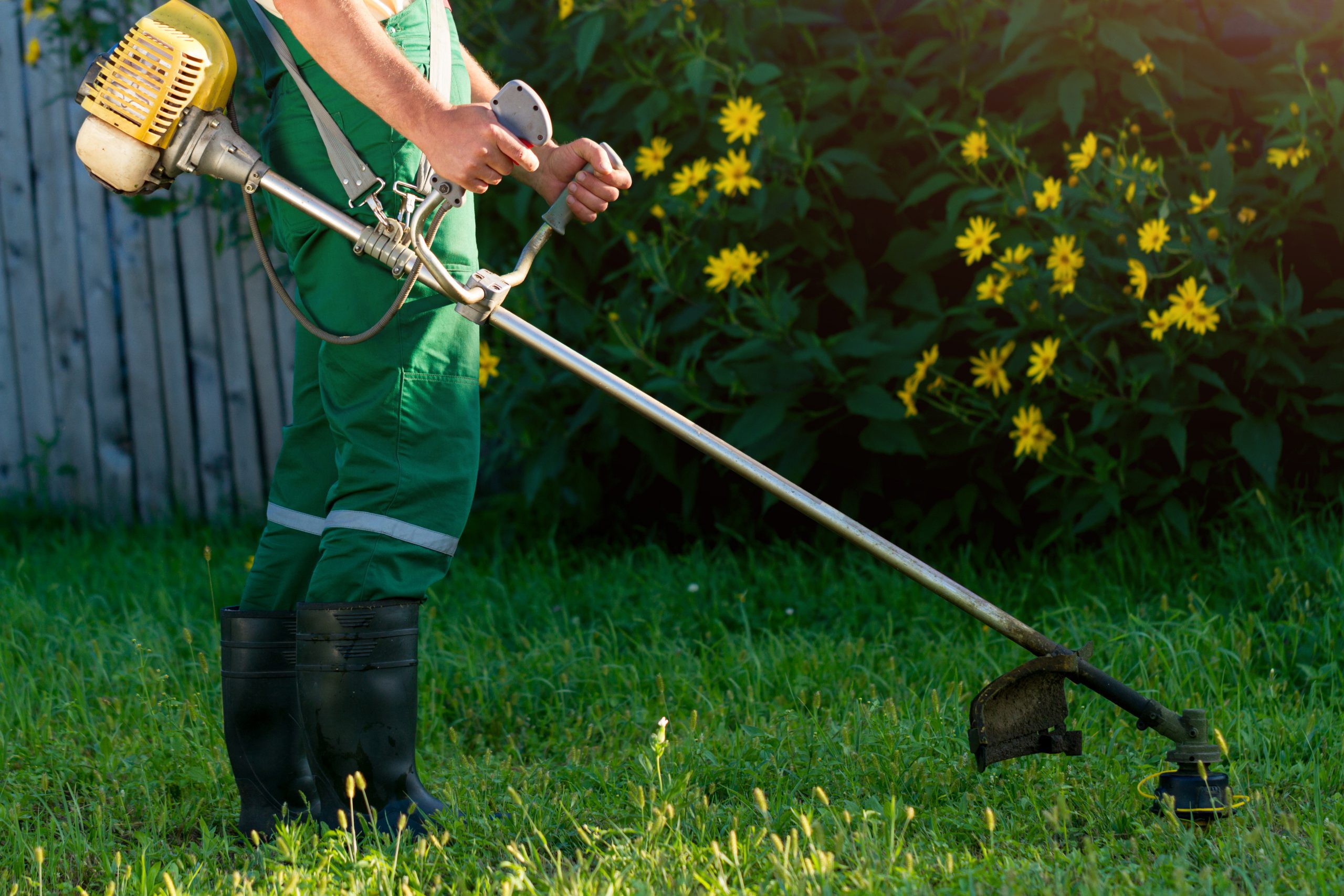

Making a homemade weed killer with salt costs less than $5 and uses ingredients most households already have. The recipes work, but not all of them work the same way, and the type of salt you choose matters more than most guides admit. This article covers the two most effective salt-based weed killer recipes, what actually makes each one work, and the soil damage warnings you need to read before applying anything.
Quick Answer: The most effective homemade salt weed killer combines 1 gallon of white vinegar, 1 cup of table salt, and 1 tablespoon of dish soap. Use table salt or rock salt, not Epsom salt. Epsom salt is magnesium sulfate, a plant nutrient, not a weed killer. Apply on a warm, dry day directly to weed leaves. Do not use on lawn or garden soil, as sodium chloride sterilizes soil and prevents regrowth for years. Salt weed killer works best in driveways, gravel, cracks, and pavers.
What Kind of Salt Should You Use for Weed Killer?
The type of salt determines whether your weed killer actually works. The key ingredient is sodium chloride. Here is how the common salt types compare:
| Salt Type | Active Ingredient | Kills Weeds? | Notes |
|---|---|---|---|
| Table salt | Sodium chloride | Yes | Dissolves fast, best for sprays |
| Rock salt | Sodium chloride | Yes | Slower to dissolve, larger crystals |
| Kosher salt | Sodium chloride | Yes | Same as table salt, slightly larger grain |
| Epsom salt | Magnesium sulfate | No | Plant nutrient, not a herbicide |
| Sea salt | Sodium chloride + trace minerals | Yes | Works but more expensive than needed |
Table salt is the best choice. It is pure sodium chloride, dissolves completely in water, and is inexpensive. Rock salt works too but takes longer to dissolve. Both are effective at the same mechanism: drawing moisture out of plant cells through osmosis until the plant dehydrates.
Does Epsom Salt Kill Weeds? The Truth
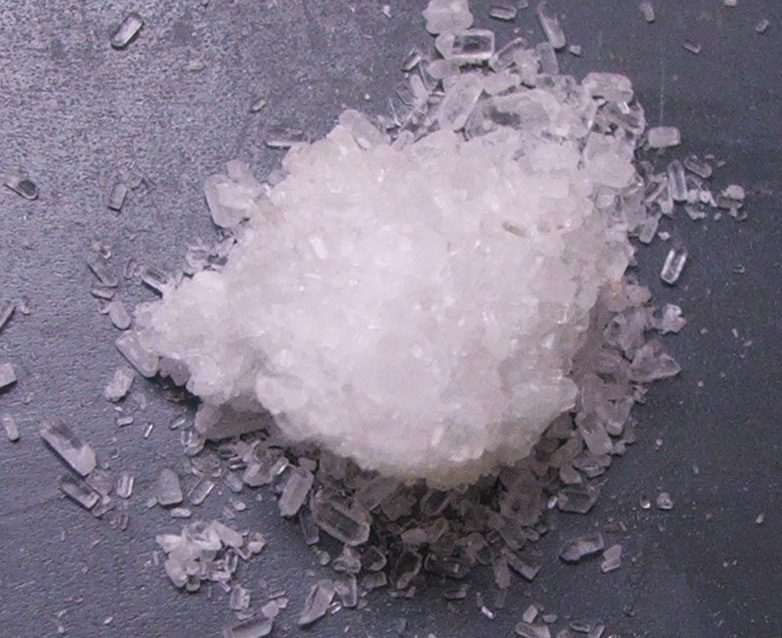
Epsom salt does not reliably kill weeds and should not be used as the primary ingredient in a homemade herbicide. Epsom salt is magnesium sulfate, a compound that plants use as a nutrient. It provides magnesium, which supports chlorophyll production and root development. In normal quantities, applying Epsom salt to your yard feeds plants rather than killing them.
Some articles suggest using Epsom salt as a weed killer in very high concentrations. While extreme saturation can stress some young, shallow-rooted weeds, the effect is inconsistent and far weaker than table salt at the same application rate. The magnesium and sulfur also linger in the soil and can disrupt pH balance over time.
If a recipe calls for Epsom salt as the primary ingredient, the weed-killing effect you see is coming from the vinegar or the sheer volume of any substance, not from the Epsom salt itself. For DIY weed control, use table salt.
For a broader look at how salt interacts with weeds and soil, the will salt kill weeds guide covers the full science behind sodium chloride as a natural herbicide.
Salt and Water Weed Killer Recipe
The simplest effective recipe is a concentrated saltwater solution. This works for spot-treating weeds in cracks, gravel, and paved areas where soil health is not a concern.
Recipe:
- 1 gallon hot water
- 1 cup table salt or rock salt
Directions:
- Heat the water until hot but not necessarily boiling. Hot water dissolves salt faster and also kills weeds on contact.
- Stir in the salt until fully dissolved.
- Pour or spray directly onto weeds, soaking the base of each plant where roots meet the soil.
- Apply on a dry day. Rain within 24 hours will dilute the solution before it absorbs.
This recipe works within 5 to 10 days for most annual weeds and grasses. Perennial weeds with deep root systems may need a second application. The saltwater ratio can be increased to 3 parts salt to 1 part water for more aggressive treatment in hardscape areas.
Vinegar, Salt, and Dish Soap Weed Killer Recipe
This is the most effective and fastest-acting homemade weed killer recipe. The acetic acid in vinegar acts as the primary herbicide, the salt enhances dehydration, and the dish soap breaks the surface tension of the liquid so it sticks to waxy weed leaves instead of beading off.
Recipe:
- 1 gallon white vinegar (standard 5% acetic acid)
- 1 cup table salt
- 1 tablespoon liquid dish soap
Directions:
- Combine all three ingredients in a large container. Stir until the salt fully dissolves.
- Transfer to a spray bottle or garden sprayer.
- Apply on a warm, sunny day when no rain is forecast for at least 24 hours.
- Spray directly onto weed leaves, coating them thoroughly. Avoid saturating the soil.
- Check results after 24 to 48 hours. Most weeds brown and wilt within this window.
Vinegar concentration matters. Standard household white vinegar contains 5% acetic acid and works well on young, shallow-rooted annual weeds. Horticultural vinegar at 20% to 30% acetic acid is significantly more effective on mature weeds and perennials, but requires protective gloves and eye protection during handling as it causes skin and eye burns. According to Clemson University Extension, acetic acid-based herbicides at 20% concentration caused 80 to 100 percent burndown of most annual weeds within 24 hours under field conditions.
How and Where to Apply Salt Weed Killer
Best surfaces for salt-based weed killer:
- Driveway cracks and expansion joints
- Gravel driveways and paths
- Patio and paver joints
- Sidewalk edges and curb lines
- Gravel or rock mulch beds with no desired plants
Surfaces to avoid entirely:
- Lawn areas with grass you want to keep
- Garden beds and vegetable gardens
- Areas near trees or shrubs
- Any area where you plan to grow plants in the next few years
Apply on a calm, dry day with temperatures above 60 degrees Fahrenheit for best results. The sun speeds up the dehydration process. Avoid applying before rain, which washes the solution away before it can work and risks carrying sodium into surrounding soil and nearby groundwater.
Use a spray bottle for small spot treatments. A pump garden sprayer is more practical for larger sections of driveway or gravel. Wear gloves when mixing and applying, especially if using higher-concentration vinegar.
Important Warnings Before You Use Salt in Your Yard
Salt does not discriminate between weeds and plants you want to keep. It kills all vegetation it contacts and, more importantly, stays in the soil long after the weeds are gone.
Sodium chloride does not break down. Unlike organic herbicides, sodium ions do not decompose. They remain in the soil until rain gradually leaches them away, which can take several years in low-rainfall areas. Soil treated repeatedly with table salt or rock salt can become infertile for a decade or more in severe cases.
Do not use salt near trees or shrubs. Sodium carried by rain or irrigation runoff can travel several feet from the application site and reach root zones of established plants, causing browning, dieback, and death.
Runoff is a real risk. Salt washed into storm drains, groundwater, or nearby water features raises sodium levels that harm aquatic plants and animals. Check local ordinances before using salt herbicides near waterways.
If you are treating weeds in a lawn or garden bed, salt is the wrong tool. For those situations, see what kills weeds permanently for methods that target weeds without long-term soil damage.
For professional weed control in lawn or landscape areas, find a local weeding service rather than risk soil damage with DIY salt treatments in the wrong location.
Frequently Asked Questions
How long does it take for salt to kill weeds?
Most annual weeds show visible wilting and browning within 24 to 48 hours of applying the vinegar-salt-dish soap recipe. The basic salt and water solution takes 5 to 10 days. Perennial weeds with established root systems take longer and typically need a second application. Hot weather and direct sun speed up the process.
Does salt kill weeds permanently?
Salt kills existing weeds but does not prevent new seeds from germinating. Once the sodium leaches out of the soil over time, new weeds will return. In paved or gravel areas, repeated seasonal applications keep weeds suppressed. In soil areas, the sodium itself becomes the longer-term problem, sterilizing the ground for years.
What is the best homemade weed killer with vinegar and salt?
The most effective recipe is 1 gallon of white vinegar, 1 cup of table salt, and 1 tablespoon of dish soap. The acetic acid in the vinegar does most of the killing work; the salt enhances dehydration; and the soap helps the solution stick to leaves. For faster results on tougher weeds, use horticultural 20% vinegar instead of 5% household vinegar.
Can I use salt to kill weeds in my lawn?
No. Salt kills grass as readily as it kills weeds, and the sodium stays in the soil long after the plants die. Using salt in a lawn creates dead patches that may not recover for years. For weed control within grass, use a selective herbicide labeled for lawn use instead. The types of weeds in lawn guide covers identification and targeted removal methods that do not harm turf.
Does the vinegar or the salt do the actual weed killing?
Both contribute, but the vinegar does the heavier lifting in the combined recipe. Acetic acid is a contact herbicide that breaks down leaf cells rapidly. The salt dehydrates plant tissue and inhibits water uptake. The dish soap is a surfactant that helps both ingredients stick to and penetrate waxy leaf surfaces. This is also why Epsom salt cannot substitute for table salt in the recipe: magnesium sulfate does not dehydrate plant cells the way sodium chloride does.
Is homemade salt weed killer safe for pets and kids?
The basic vinegar, salt, and dish soap recipe uses food-grade ingredients and is generally low-risk once dry. While spraying, keep pets and children away from the treatment area. The main hazard is eye and skin irritation from higher-concentration horticultural vinegar. Do not let pets walk on treated areas until the solution has dried completely, and do not apply in areas where pets graze.
The Bottom Line
The best homemade salt weed killer is 1 gallon of white vinegar, 1 cup of table salt, and 1 tablespoon of dish soap. Use table salt or rock salt, not Epsom salt, which is a plant nutrient rather than a herbicide. Apply in driveways, cracks, gravel, and pavers, never in lawn or garden soil. Results appear within 24 to 48 hours. The critical limitation is soil damage: sodium chloride does not break down and can sterilize the ground for years if overused or applied in the wrong location. For weed problems in lawn or planted areas, use targeted weeding methods or book a local weeding service to avoid long-term soil damage.