Zoysia grass seed exists, but it’s a narrower product than the photos on the bag suggest. Only one species of zoysia is sold as seed, and the fine, carpet-like lawns most people picture are sod-only varieties. Seed works, slowly, if you know what you’re buying and accept a full summer of establishment.
Clemson Cooperative Extension puts it plainly: there are seeded types, but establishment from seed “may be difficult and time consuming.” That’s not a reason to skip seed. It’s a reason to do it right.
Quick Answer: Zoysia grass seed is almost always Zoysia japonica, sold mainly as Zenith or Compadre. Clemson Cooperative Extension recommends planting Zenith in late spring to early summer at 1 to 2 pounds per 1,000 square feet, barely raked in and kept moist. Expect germination in 14 to 21 days (Lowe’s) to 21 to 28 days (Stover Seed), and plan on one full growing season for a dense lawn. Seed is the cheapest route; plugs or sod are faster and the only way to get fine-textured varieties like Emerald or Zeon.
Which Zoysia Grass Seed Varieties Can You Buy?
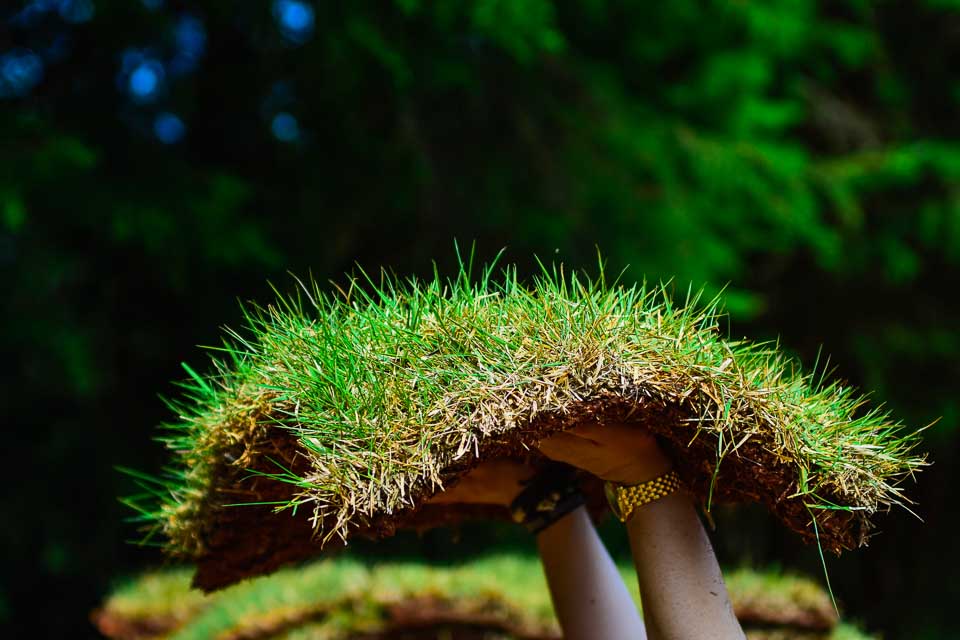
Clemson notes that Zoysia japonica, also called Japanese or Korean lawngrass, is the only zoysia species with seed commercially available. The finer species (Z. matrella, Z. tenuifolia) and the hybrids bred from them are planted as sod, plugs or sprigs.
| Variety | Sold as seed? | Texture | Notes |
|---|---|---|---|
| Zenith | Yes | Medium-coarse | The most common zoysia seed; Clemson calls it well suited to home lawns |
| Compadre | Yes | Medium | Wear tolerant; Clemson notes strong salt tolerance, popular on the coast |
| Meyer (Z-52) | Planted vegetatively | Medium-coarse | University of Missouri Extension calls it the best choice for the Midwest transition zone |
| Emerald | No | Finest | Clemson calls it possibly the most attractive zoysia; less winter hardy |
| Zeon | No | Fine | Good shade and drought tolerance (Clemson) |
| Palisades | No | Medium-coarse | Aggressive rhizomes, mowed from 3 inches down to 1/2 inch (Clemson) |
Two cautions from the extensions. Clemson says seeded zoysia varieties “do not perform as well overall as do the vegetative cultivars.” And University of Missouri Extension says currently available seeded types often show variable leaf width and color and still need evaluation for Midwest winter hardiness. In the northern part of zoysia’s range, that second point matters.
Is Seed Worth It? What the Extensions Say
Not every extension agrees seed is a good idea. The University of Maryland Extension says starting zoysia from seed is challenging and not recommended, citing high cost, limited availability and unreliable germination. Clemson and Missouri both describe sod and plugs as the usual way to establish zoysia.
Our take: seed makes sense for a large, sunny, weed-free area in the South where budget matters more than speed. For a small yard, a shady lot, or anywhere in the northern transition zone, plugs or sod are the safer bet.
Zoysia Seed vs. Plugs vs. Sod
| Method | Varieties | Time to full cover | Cost | Best for |
|---|---|---|---|---|
| Seed | Zenith, Compadre | One full growing season or more | Lowest | Large, sunny, weed-free areas |
| Plugs | Most varieties | About two growing seasons (Missouri, Clemson) | Moderate | Converting an existing lawn, patching |
| Sod | All vegetative varieties | Immediate cover | Highest | Fast results, slopes, fine-textured varieties |
Missouri’s plug spacing table shows how much material plugging takes for 1,000 square feet, using 2-inch plugs:
| Plug spacing | Plugs per 1,000 sq ft | Sod needed to cut plugs |
|---|---|---|
| 6 inches | 4,000 | 12+ square yards |
| 8 inches | 2,250 | 7 square yards |
| 12 inches | 1,000 | 3+ square yards |
Clemson recommends 2-inch plugs on 6-inch centers for complete cover in two growing seasons or less. Missouri adds that plugs can convert a bluegrass lawn to zoysia over two to five years, mowed short at 1 inch to help the zoysia spread.
Seeding Rate: How Much Zoysia Seed You Need
This is where sources disagree most.
| Source | Rate | Per 1,000 sq ft |
|---|---|---|
| Clemson (Zenith) | 1 to 2 lb per 1,000 sq ft | 1 to 2 lb |
| Product listings (Zenith) | 1 lb per 1,000 sq ft | 1 lb |
| Stover Seed (Zenith) | 1 lb per 300 sq ft | About 3.3 lb |
Stover notes that the rate can be increased to speed up germination and establishment, and lists about 1,000,000 seeds per pound. Clemson’s 1 to 2 pounds is a sound middle ground for most home lawns. If you’re fighting weed pressure or want faster cover, lean toward 2 pounds; bare clay or seed that’s been in storage also argues for the higher end.
Check the bag’s germination and purity numbers. Stover’s spec sheet guarantees at least 80% germination and 95% purity. Lower numbers mean you need more seed for the same result.
When to Plant Zoysia Grass Seed
Late spring to early summer, once frost is past and soil is warm. Pennington says zoysia germinates best at soil temperatures around 65 to 70°F, which roughly lines up with daytime air temperatures near 80°F. Lowe’s allows a fall seeding at least 60 days before the first expected frost, but Missouri warns that late-summer plantings may not have time to establish before winter.
For state-by-state windows, including Texas and Georgia, see our guide on when to plant zoysia grass seed.
How to Plant Zoysia Grass Seed
- Soil test first. Missouri recommends a pH of 6.0 to 6.5 and lime only below 6.0. Lowe’s gives 5.8 to 6.5. Apply lime and fertilizer at the test’s rates.
- Clear competition. Lowe’s and Missouri both describe killing existing vegetation with a non-residual herbicide and waiting about a week before planting.
- Check for preemergent. Lowe’s says not to use any preemergent or weed-and-feed product within 90 days before seeding. Product labels vary, so read yours.
- Loosen and smooth the soil. Lowe’s suggests loosening the top 1 to 2 inches and raking smooth.
- Apply starter fertilizer and work it into the top inch, as Missouri recommends for zoysia establishment.
- Spread seed at your chosen rate with a drop or broadcast spreader, half in one direction and half crosswise.
- Cover lightly. Clemson says to barely rake the seed in and cover the area with wheat straw to hold moisture. Lowe’s says to work seed in no more than 1/4 inch.
- Water lightly and often. Clemson recommends light watering three or four times a day to keep the seed moist.
Should You Cover Zoysia Seed?
Lightly, yes. A common claim online is that zoysia seed must sit fully exposed because it needs light. The extension guidance is more balanced. UMD says grass seed needs light, so don’t bury it under more than about 1/2 inch of soil or 1/4 inch of compost or straw, but a light cover improves germination by holding moisture. Clemson recommends a light rake plus wheat straw for Zenith. Lowe’s suggests a thin mulch that still lets light reach the seed.
The rule that holds across all three: you should still see soil and seed through the straw. Thick straw or buried seed is the failure, not a thin layer.
How Long Do Zoysia Grass Seeds Take to Grow? Germination and Establishment
Germination takes 14 to 21 days, according to Lowe’s, and 21 to 28 days according to Stover Seed. Cool soil stretches it out. Stover puts establishment at 10 to 12 weeks after seeding, which is a reasonable “usable lawn” mark, while a dense, weed-resistant stand usually takes the full first summer.
| Stage | Typical timing | What you’ll see |
|---|---|---|
| Germination | 2 to 4 weeks | Thin green fuzz, uneven at first |
| Seedling growth | 4 to 8 weeks | Blades fill out; gaps still visible |
| Lateral spread | 8 to 12 weeks | Stolons and rhizomes begin knitting together |
| Established | 10 to 12 weeks (Stover) | Usable, still thin in spots |
| Dense lawn | One full growing season | Even cover that crowds out weeds |
Zoysia is slow because it spreads by stolons and rhizomes rather than growing quickly from each seedling. Don’t judge the project at week six. For how temperature and moisture drive germination across species, see our grass seed germination guide.
First-Year Care for a Seeded Zoysia Lawn
Watering. Keep the surface moist through germination. Once seedlings are established, shift to deep, infrequent watering. Clemson’s rule for established zoysia is to let the turf dry between waterings, then apply 3/4 to 1 inch.
Mowing. Start when the grass is about a third taller than your target height, as Lowe’s suggests. Missouri recommends 1 to 2 inches for zoysia, and Clemson says most varieties thrive around 2 inches with a rotary mower. Keep blades sharp; zoysia is tough to cut cleanly. Our guide on when to mow new grass covers the first cut.
Fertilizing. Missouri recommends fertilizing established zoysia from May through August, about 2 pounds of nitrogen per 1,000 square feet for the season. Early spring feeding helps weeds more than the grass, and September feeding can interfere with winter hardening. Clemson adds potassium whenever nitrogen goes down, for cold hardiness, and says to make the last nitrogen application at least 6 weeks before the first frost.
Weeds. Hand-pull while the stand is thin. Pennington says not to apply its weed-and-feed to newly seeded areas until after the third mowing; check any product label for a similar wait.
Thatch, later. Zoysia builds thatch. Missouri says to dethatch when it passes 1/2 inch, ideally in early summer after green-up. That’s a year-two concern; see what lawn thatch is and when to dethatch.
What Is the Downside of Zoysia Grass?
A few, and they matter more from seed:
- Slow establishment. Clemson notes zoysia is slow to cover completely, which makes it more costly to establish.
- Long brown season. It goes dormant with the first fall frost and stays brown until spring, per Clemson and Missouri.
- Thatch. Its dense stolons and rhizomes build thatch that needs periodic removal.
- Shade limits. Missouri says it needs at least six to eight hours of sun; it tolerates moderate shade but thins out.
- Seeded types lag. Clemson says seeded varieties don’t perform as well as vegetative cultivars.
If you’re weighing zoysia against other options, our guide to warm-season and cool-season grass types compares them side by side.
Prepping and seeding a lawn takes a full weekend, and the first month of watering decides the result. If you’d rather hand it off, LawnGuru’s seeding service averages $829, with most jobs between $378 and $1,280. Ask whether the pro has seeded zoysia before.
Frequently Asked Questions
Can you seed zoysia in the fall?
It’s risky. Lowe’s says fall seeding needs at least 60 days before the first frost, and Missouri warns that late-summer plantings may not establish in time and become more prone to winter injury. Late spring is the reliable window.
What is another name for zoysia grass?
Zoysia japonica, the seeded species, is commonly called Japanese or Korean lawngrass, according to Clemson. Zoysia matrella is often called Manilagrass.
How do you get zoysia grass green?
Feed it during active growth, not before. Clemson says not to fertilize in spring until the lawn has fully greened up; Missouri recommends May through August. Potassium alongside nitrogen helps cold hardiness, and deep watering during dry spells keeps it from going dormant early.
Will zoysia choke out crabgrass?
Once established, largely yes. Missouri says grassy weeds like crabgrass generally aren’t a problem in established zoysia lawns. A new seeded lawn is a different story: the open stand gives crabgrass room, so hand-pull and avoid preemergents until the seedlings are established.
Is Zenith or Compadre better?
Both are Zoysia japonica seed. Zenith is the most widely sold; Clemson notes Compadre’s strong salt tolerance and wear tolerance, which makes it a common pick near the coast.
Can I mix zoysia seed with other grass?
Stover says Zenith is sometimes mixed with other grasses to increase a lawn’s drought tolerance, but for a uniform zoysia lawn, seed it alone. Missouri notes existing grass competes with zoysia and slows its spread.