One bad windstorm is all it takes. You wake up to a yard stacked with prickly, dried-out tumbleweeds pressed against your fence, piled against the house, or scattered across the driveway. If you’re in the Southwest, Great Plains, or anywhere across the arid West, this is a seasonal reality. Understanding what tumbleweed is, why it ends up in your yard, and exactly how to get rid of it and stop it from coming back turns a frustrating recurring problem into one you can actually manage.
Quick Answer: A tumbleweed is a plant, most commonly Russian thistle (Salsola tragus), that dries out, breaks off at the root, and rolls across open ground dispersing seeds. Remove green tumbleweeds by hand-pulling or hoeing before they dry and scatter seeds. For dried plants already in your yard, rake and bag them or shred with a heavy-duty string trimmer. Apply a broadleaf herbicide (2,4-D or dicamba) while plants are still small and green to kill them without harming surrounding grass.
What Kind of Plant Is a Tumbleweed?

A tumbleweed is not one specific plant species. The term describes any plant that dries out, detaches from its roots, and tumbles across the landscape driven by wind. In the United States, the overwhelming majority of tumbleweeds are Russian thistle (Salsola tragus), a broadleaf annual weed introduced accidentally from Russia in the 1870s when contaminated flaxseed was shipped to Bon Homme County, South Dakota.
From that single introduction, Russian thistle spread across roughly 600,000 acres of the American West within decades. Today it thrives in arid and semi-arid regions from California to the Dakotas, with the highest concentrations in New Mexico, Colorado, Nevada, Texas, and the Pacific Northwest.
Other plants that behave like tumbleweed include Amaranthus albus (tumbling pigweed) and Kochia scoparia (kochia or burning bush), both of which grow, dry, break off, and roll the same way. Russian thistle is the most recognizable and the most widespread.
The tumbleweed lifecycle is what makes it such an effective weed. A single Russian thistle plant can produce up to 250,000 seeds in one growing season. When the plant dries in late summer or fall, it detaches cleanly at the base and rolls with the wind, distributing seeds across a wide area before stopping against a fence, wall, or any other obstruction. Those seeds remain viable in the soil for years, which is why tumbleweed pressure tends to build over time without active management.
Understanding how tumbleweed spreads is the key to controlling it. Stopping the plant before it produces and disperses seeds is far more effective than trying to remove tumbleweeds after the fact. The types of weeds in lawn and how to remove them permanently guide covers how Russian thistle fits into the broader category of broadleaf annual weeds that exploit bare and disturbed soil.
Why Tumbleweed in Your Yard Is More Than an Eyesore
Dry tumbleweeds look harmless, but they create real problems when they accumulate around structures and yard areas.
Fire hazard. Dried tumbleweeds are extremely flammable. Piled against a fence, garage, or house, they can catch and spread fire rapidly. In fire-prone regions of the Southwest and California, tumbleweed accumulation against structures is treated as a serious safety risk, not just a nuisance.
Seed bank buildup. Every dried tumbleweed pressed against your fence is a concentrated seed deposit. Leaving them in place through winter means thousands of new seeds sitting directly on soil where they’ll germinate in spring. One season of neglect creates a measurably larger problem the following year.
Physical hazard. Mature and dried Russian thistle is sharp. Attempting to remove large, dry tumbleweeds without gloves and long sleeves leads to skin irritation and puncture wounds from the hardened spines. Children and pets are particularly vulnerable when tumbleweeds accumulate in play areas.
Structural damage. Large quantities of tumbleweeds pressing against fencing, gates, and lightweight structures can bend or break them, especially when wet and heavy after rain.
How to Get Rid of Tumbleweed in Your Yard
The right removal method depends on whether the tumbleweed is still green and growing, or already dried and rolling.
Pull Green Tumbleweeds Before They Dry
The highest-value intervention happens in spring and early summer, when Russian thistle plants are small, green, and have not yet produced seeds. At this stage, hand-pulling or hoeing is fast, completely effective, and prevents the entire seed-spread problem from occurring.
Wear gloves even when the plants are green. Young Russian thistle has soft spines that still irritate skin. For small seedlings (under six inches), a sharp hoe or stirrup hoe cuts them cleanly at the soil line. For larger plants up to 12 inches, pull by hand with a firm grip at the base. The goal is to sever or remove the root connection before the plant can complete its lifecycle.
Remove Dried Tumbleweeds Physically
For tumbleweeds that have already dried and blown into your yard, physical removal is the only option. Herbicide does not work on dead or dying plants.
Raking and bagging is effective for moderate accumulations. Use a wide landscape rake and gather plants into yard waste bags. Do not add tumbleweeds to open compost piles. Any viable seeds in the pile will germinate and spread. Bag them for municipal yard waste collection.
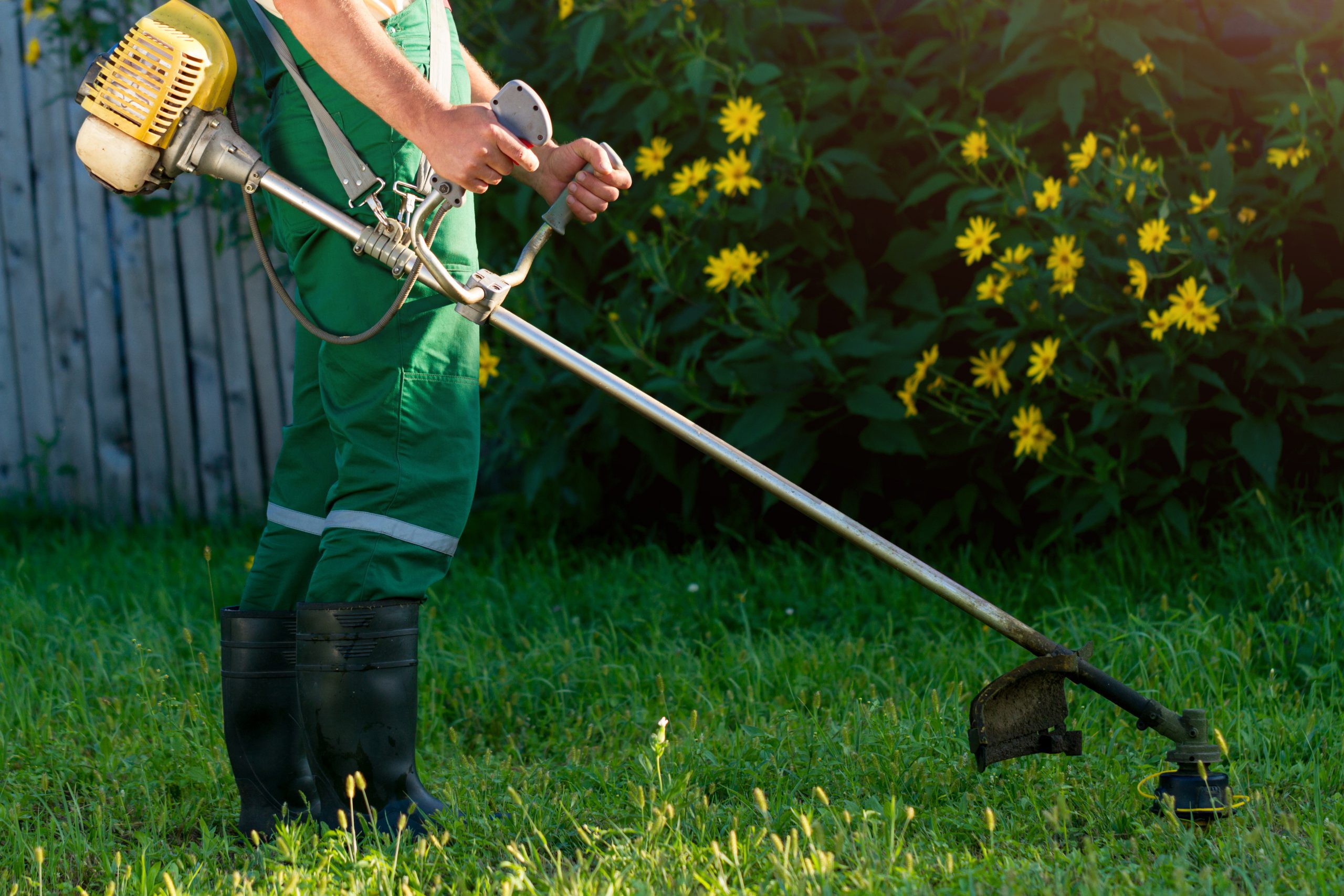
String trimmer shredding works well for large accumulations. A heavy-duty gas trimmer with a blade attachment or heavy line cuts through dried tumbleweeds quickly. Shredded material compacts into yard waste bags much more efficiently than whole plants. Los Angeles County’s Weed Abatement Division recommends mowing, hand removal, or shredding with a heavy-duty string trimmer for dried tumbleweed management on residential and agricultural properties.
Burning, where permitted by local fire codes, is fast and eliminates viable seeds in the process. Check with your local fire department before burning. In many Western communities, burning restrictions are in effect during fire season, which is often exactly when tumbleweed accumulations are at their worst.
Herbicides That Kill Tumbleweed Without Harming Grass
Chemical control works only on actively growing green tumbleweed, not on dried or detached plants. Timing is everything.
2,4-D and dicamba are selective broadleaf herbicides that kill Russian thistle without damaging most established grasses. These are the go-to options for yards where you want to keep your lawn intact while eliminating tumbleweed growing within or at the edges of the turf. Colorado State University Extension’s tumbleweed management guide confirms that 2,4-D and dicamba provide effective control of young Russian thistle when applied to small, actively growing plants.
Glyphosate (non-selective) kills tumbleweed but also kills grass. Use it in non-lawn areas: gravel driveways, fence lines, and bare dirt areas where no grass is present.
Imazapic is a pre-emergent and post-emergent option used in rangeland and larger properties. It prevents seed germination and controls established plants, but it has a longer soil residency period that can affect replanting. Best left to professional applicators on large-scale infestations.
Apply any herbicide when tumbleweed plants are under 12 inches tall and actively growing. Larger, mature plants are harder to kill with foliar treatments. The what kills weeds permanently guide covers how selective and non-selective herbicides work across different weed species, including the timing that maximizes effectiveness.
When to Target Tumbleweed: A Seasonal Approach
Tumbleweed control is most effective when it follows the plant’s lifecycle. Treating at the right stage reduces total effort and prevents seed spread far better than cleanup-only approaches.
| Season | Tumbleweed Stage | Best Action |
|---|---|---|
| Early spring | Seedlings emerging | Apply pre-emergent herbicide; pull or hoe any visible seedlings |
| Late spring to summer | Green, actively growing | Broadleaf herbicide (2,4-D, dicamba); hand-pull before plants reach 12 inches |
| Late summer to fall | Maturing, beginning to dry | Remove before detachment; mow or pull to prevent seed dispersal |
| Fall to winter | Dried, detached, rolling | Physical removal only: rake, shred, and bag; check for fire hazards near structures |
The pre-emergent application in early spring is the single most impactful intervention for most yards. Applied before tumbleweed seeds germinate, it significantly reduces the total number of plants you have to deal with all season. The preemergent for lawn guide covers product selection and timing for broadleaf weed pre-emergents compatible with established turf.
How to Prevent Tumbleweed From Coming Back

Removal addresses the current season. Prevention determines whether the problem gets smaller or larger each year.
Dense, healthy grass is the most effective long-term tumbleweed deterrent. Russian thistle thrives in bare, disturbed, and compacted soil. A dense turf with no bare patches gives tumbleweed seeds nowhere to establish. Overseeding thin areas and addressing soil compaction through aeration reduces tumbleweed germination pressure significantly over two to three seasons.
Ground cover and native plantings fill bare soil in non-turf areas where tumbleweed typically takes hold: fence lines, gravel borders, and dry corners of the yard. Native plants adapted to your region’s conditions crowd out Russian thistle more reliably than exotic plantings that struggle in arid conditions.
Landscape fabric under gravel and rock areas prevents tumbleweed seed germination in high-accumulation zones like fence lines and driveways. The landscape fabric alternatives guide covers options that allow water penetration while blocking weed germination in non-turf areas.
Fence maintenance reduces accumulation points. Tumbleweeds pile up wherever they’re stopped. Solid fencing creates large accumulation zones. Open-style fencing (ranch rail, post-and-wire) allows tumbleweeds to pass through rather than pile up, reducing the management burden on the yard side of the fence.
UC IPM’s Russian thistle management resources document how ground cover establishment and soil disturbance reduction are the most effective long-term approaches for reducing tumbleweed pressure on residential and agricultural land.
Frequently Asked Questions About Tumbleweed
What kills tumbleweeds but not grass?
2,4-D and dicamba are the best options. Both are selective broadleaf herbicides that target Russian thistle and other broadleaf weeds without damaging established cool-season or warm-season grasses when applied according to label directions. Spray when tumbleweed plants are small and actively growing for the highest kill rate.
What is the best tumbleweed removal tool?
For green plants, a stirrup hoe or sharp garden hoe cuts them cleanly at the soil surface and is faster than hand-pulling for large areas. For dried tumbleweeds, a heavy-duty gas string trimmer with thick line or a blade attachment shreds them into manageable pieces. A wide landscape rake handles cleanup after shredding. Leather gloves are non-negotiable for either task.
How do you dispose of tumbleweeds properly?
Bag dried tumbleweeds in yard waste bags for municipal pickup rather than adding them to open compost. If composting at home, only include green tumbleweed that has not yet flowered or seeded. Burning is the most thorough option where local regulations permit it. Fire destroys viable seeds, which yard waste composting may not. Check local ordinances before burning.
Will tumbleweeds go away on their own?
No. Without active management, tumbleweed pressure increases each year because of the seed bank that accumulates in the soil. A single plant produces up to 250,000 seeds, many of which remain viable for multiple seasons. Doing nothing in year one means a materially worse problem in year two.
Stop the Tumble Before It Starts
Getting rid of tumbleweed in your yard comes down to timing. Pull or hoe green plants before they dry. Apply 2,4-D or dicamba to small, actively growing Russian thistle if you want to spare the grass. Rake and bag or shred anything that’s already dried and blown in. And then work on the long game: dense turf, ground cover in bare spots, and a pre-emergent application each spring to reduce how many seeds germinate in the first place.
If tumbleweed accumulation around your property is beyond a DIY weekend project, LawnGuru connects you with local lawn care professionals who handle weed abatement and yard cleanup. Get a quote and get it cleared.