Spring lawns can look fine from the street, then you walk across them and notice the weak areas: bare patches near the driveway, thin strips along the fence, and spots that never really greened up after winter.
For most homeowners, overseeding in spring works best when you start once soil temperatures stay above 50°F, you prep the surface so seed touches soil, and you water lightly every day until germination finishes. The goal is simple: fill thin areas fast enough to earn density before summer heat, without creating a watering headache.
When to start overseeding lawn in spring without wasting seed
A lot of spring overseeding fails for one boring reason: the seed never gets a real chance to sprout before weather swings or weeds take over. Timing matters more than the bag label.
When to start overseeding lawn in spring is when soil temps hold 50–65°F and your lawn surface isn’t muddy. That window gives seed a stable germination runway and reduces the chance you end up reseeding the same area twice. You can track local soil conditions using tools like the Greencast Soil Temperature Map to get precise timing.

The “go / wait / skip” timing rules that hold up
Start with this default rule, then apply exceptions based on your yard:
- Go now when soil temps stay above 50°F for several days and nights stay above freezing.
- Wait when the ground stays wet and spongy underfoot, since footprints press seed into clumps and create bare divots.
- Skip spring overseeding when summer heat arrives early in your area and you can’t water consistently.
Exception and failure conditions (the ones that change the plan)
These are the big spring overseeding deal-breakers:
- You applied pre-emergent crabgrass preventer recently: seed won’t germinate properly.
- Your lawn is more weeds than grass: overseeding won’t outmuscle established weeds.
- Soil stays below 50°F: germination slows down and seed dries out or washes away.
- Daytime highs are already pushing summer heat: seedlings struggle and watering demand spikes.
- Heavy shade under trees: seed choice and watering need adjustment or results stay thin.
- Hard-packed soil (high traffic areas): seed-to-soil contact is weak unless you loosen the surface.
- You can’t water daily for the first 10–14 days: germination stalls and you get patchy results.
- Thick lawn thatch layer: seed sits on top and never roots into soil.
Best grass seed for overseeding in spring (and what to avoid)
Most homeowners buy whatever seed is on sale, spread it, and expect a thicker lawn in two weeks. The results depend more on germination speed and matching the site than the brand name.
The best grass seed for overseeding in spring is usually perennial ryegrass for quick fill, tall fescue for toughness, or fine fescue for shade. These grasses handle cool soil better and establish fast enough to matter before summer stress. For detailed profiles on these species, university extension services like Purdue Turfgrass Science offer excellent comparative data.
Spring overseeding seed choices
| Grass seed type | Typical germination window | Where it performs best |
|---|---|---|
| Perennial ryegrass | 5–10 days | Fast patch repair, high visibility areas |
| Tall fescue | 7–12 days | Sun to part shade, durable lawns |
| Fine fescue | 10–14 days | Shade-heavy yards, lower-input areas |
Seed choices that often disappoint in spring
Kentucky bluegrass can look great long-term, but spring overseeding is a tougher setup for it. It takes longer to establish, and that slower pace runs into summer stress in many regions.
Mixed “sun and shade” blends also vary a lot. If your yard is mostly shade, pick a shade-forward mix on purpose instead of hoping the blend sorts itself out.
Overseeding lawn in spring prep that improves seed-to-soil contact
Most lawns don’t fail because the seed was “bad.” They fail because the seed never touches soil long enough to root.
If you spread seed over tall grass and leftover winter debris, it sits on top and dries out. Cleaner results come from a short cut, a clear surface, and light rough-up where the lawn is thin.
Mow height and surface cleanup that actually helps
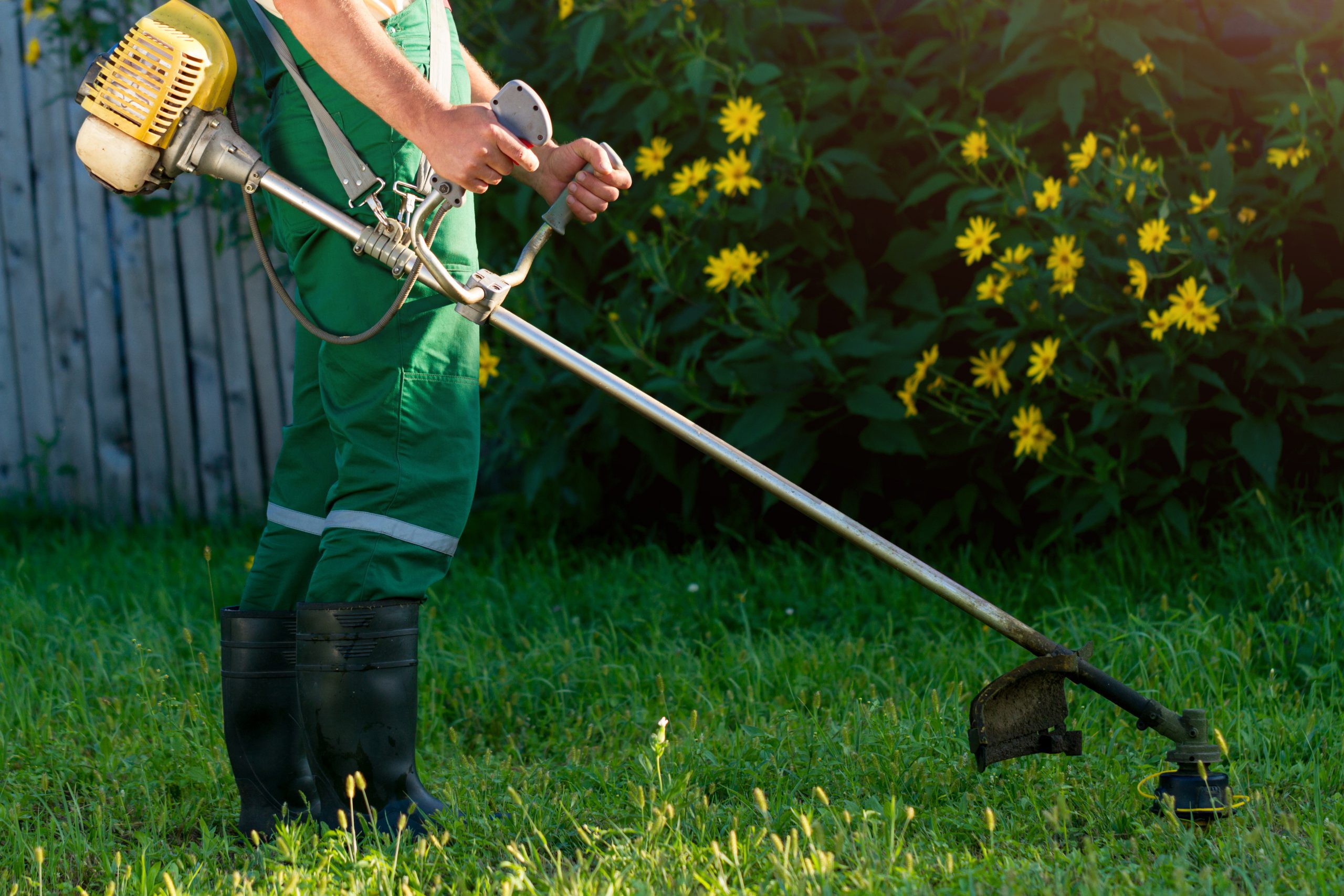
Cut the lawn shorter than your normal height before overseeding. Knowing how short to cut your grass in the spring is crucial; a lower cut opens the canopy so seed can drop down instead of landing on blades.
Then rake up what blocks contact: dead grass, sticks, matted leaves, and winter debris. If you skip this, you’re paying for seed that never anchors.

Job habit: After raking, walk the thin areas and look straight down. If you see mostly soil and short grass instead of a fuzzy mat, the seed has a real landing zone.
What to do in bare patches vs thin turf
Bare patches need a little extra attention because water moves seed around. Loosen the top layer of soil with a stiff rake so seed can settle into the surface.
Thin turf needs less disturbance. Your goal is to open space for seed without tearing up healthy grass that already has roots.
Overseeding workflow in spring that avoids clumps, stripes, and redo passes
A lot of homeowners end up with “striped” results where one pass got heavy seed and the next got almost none. That’s usually spreader pattern, walking speed, or skipping a cross-pass.
Spreader setup and walking pattern that stays even
Use a drop spreader for tight control or a broadcast spreader for speed. Either works if you keep your pace steady and overlap slightly.
Run one pass north-to-south, then a second pass east-to-west at a lighter setting. That cross pattern reduces striping and improves coverage without piling seed in one area.
The watering pattern that gets germination without washouts
Right after seeding, water lightly so the top layer stays damp. The soil should look darkened, not flooded.
For the first 10–14 days, how often and how long should you water? Often enough to keep the surface from drying out. After sprouts appear, shift to deeper watering less often so roots grow downward instead of staying shallow.
When to fertilize after overseeding in spring (without burning seedlings)
Spring overseeding often stalls because the new grass never roots strongly. Fertilizer helps, but timing matters, and the wrong product causes problems.
When to fertilize lawn after overseeding: apply a starter fertilizer the same day you seed or within a few days. That supports early rooting and helps seedlings establish faster.

Starter fertilizer vs regular lawn fertilizer
Starter fertilizer supports early establishment. Regular high-nitrogen fertilizer pushes top growth, which can lead to weak roots and more mowing before the lawn is ready.
Skip weed-and-feed products during overseeding. Those mixes interfere with young grass and slow establishment, a common issue noted by agronomists at Penn State Extension.
The second feeding timing that strengthens the stand
Once you’ve mowed the new grass a couple of times, a light feeding can help the lawn thicken. Keep it modest and focus on steady growth, not a surge.
If your lawn already gets fertilized on a schedule, avoid stacking applications too close together. That creates stress and uneven growth.
Spring overseeding mistakes that cause thin results (and how to fix them)
A thin result usually comes from one of three problems: bad contact, inconsistent moisture, or the plan fighting your yard conditions.
If you’re not seeing sprouts in the expected window, treat that as a signal. Adjust the plan and re-seed only where it makes sense.
The most common spring overseeding failure modes
Seed struggles when:
- The lawn wasn’t cut down first, so seed never reaches soil
- The surface stayed dry for a day or two during germination
- Heavy rain washed seed into low spots
- Thatch blocked contact across the entire yard
- Pre-emergent was applied earlier in the season
- The yard is shaded and the seed mix is sun-heavy
What to do if germination is uneven
Look for patterns: shaded areas, slopes, compacted zones, or sections near pavement that dry out faster. Those spots need a different approach, not more of the same.
Rake lightly, add seed only where it’s thin, and reset watering so the surface stays consistently damp during the germination window.
Decision-check: the spring overseeding rules that keep you from guessing
Homeowners lose time when they treat overseeding like a one-step chore. It’s a short project with clear switch points.
Use these rules to decide what to do next based on what you see in your yard:
- If soil temps are under 50°F most mornings, wait and keep prep tools ready.
- If you can water daily for 10–14 days, overseed now and follow the watering plan.
- If you can’t water consistently, delay and plan for fall overseeding instead.
- If the lawn is thin but mostly grass, overseed with tall fescue or perennial ryegrass.
- If the lawn is thin because of shade, overseed with fine fescue and reduce foot traffic.
- If you used pre-emergent already, pause and don’t waste seed this round.
- If heavy rain is forecast within 24 hours, hold off so seed doesn’t wash into piles.
Stop rule: If you see no sprouts by day 14 in areas that stayed moist, stop adding more seed and fix the contact issue first (thatch, compaction, or coverage).
Accountability step: when results look thin after 3–4 weeks, change one variable at a time. Improve soil contact first, then adjust watering, then revisit seed choice.
How to confirm spring overseeding is working in real time
It’s easy to think overseeding “didn’t take” when the lawn still looks thin from a distance. Use simple checks that show progress without guessing.
Check 1: sprout timing on a calendar
Mark the day you seeded. Then check the same spots every two days.
- Perennial ryegrass should show sprouts in 5–10 days
- Tall fescue often shows in 7–12 days
- Fine fescue often shows in 10–14 days
If your seed is past its window with no sprouts and the surface stayed damp, the issue is contact, coverage, or pre-emergent interference.
Check 2: coverage consistency with a before-after photo
Take a photo from the same angle at day 0, day 7, and day 21. “Better” results show as fewer visible soil gaps and more even green fill, not just longer blades.
Switch rule: If day 21 photos still show the same bare lanes, reseed only those lanes after raking and correcting the cause (thatch, compaction, or washout).
FAQ
Can overseeding lawn in spring fix a lawn that’s mostly weeds?
Overseeding helps when grass is already the main plant and you’re filling thin areas. If weeds dominate the yard, seed struggles because weeds take light, water, and space. In that case, the better move is to control weeds first, then seed when conditions support grass establishment.
How soon can I mow after overseeding in spring?
Wait until the new grass reaches your normal mowing threshold and feels anchored. A practical rule is mowing when it hits about 3 inches, then cutting back to around 2.5 inches. Use sharp blades and avoid turning hard on new seedlings.
Can I use pre-emergent and overseed in spring?
Not at the same time. Pre-emergent blocks germination, and that includes grass seed. If you already applied pre-emergent, delay overseeding until the barrier is no longer active, or shift the plan to fall.
Should I topdress with soil after overseeding?
Topdressing helps in bare spots, especially on slopes or areas that dry fast. Keep it light so sprouts can push through. The goal is coverage that holds moisture without burying seed too deep.
Get your lawn thick again without making spring a second job
If you want thicker grass but don’t want to manage the timing, prep, and watering details, we can help. LawnGuru can handle spring lawn care and overseeding with the right seed choice, surface prep, and a plan that fits your yard conditions and schedule.
To prepare your lawn for spring properly, a thicker lawn starts with the right timing and follow-through.