
For most garden beds and plantings, mulch should be spread 2 to 3 inches thick. That depth blocks sunlight from weed seeds, helps the soil retain moisture, and insulates roots without trapping too much water or choking off oxygen. Understanding the full benefits of mulch and why your garden needs it ensures you aren’t just decorating your yard, but actually improving soil health.
Less than 2 inches? Weeds punch through. More than 4? You’re asking for mold, pests, or root suffocation.
How Thick Should Mulch Be in Different Situations?
Mulch depth depends on where it’s going. The wrong thickness causes real issues, rot, runoff, and stressed-out plants. Here’s how to get it right based on what you’re mulching.
Around Flower Beds
Recommended Depth: 2–3 inches
Why: Helps regulate soil moisture, blocks light to weeds, and protects shallow roots
Quick Check: Push your fingers into the mulch. If you hit bare soil in less than 2 inches, it’s not enough.
Fine-textured mulch gives better coverage, especially around annuals. If you’re seeing weeds pop up or your mulch fades fast after one rain, you likely didn’t put down enough. Knowing the types of weeds in lawn and how to remove them permanently is helpful, but proper mulch depth is your first line of defense.
Pro Signal: Edges stay in place after a hard rain = proper depth and texture
Around Trees and Shrubs
Recommended Depth: 2–3 inches, never touching the trunk
Why: Protects the root zone while avoiding decay or insect buildup
Quick Check: Look for the root flare, the part where trunk widens at ground level. If it’s buried, you’ve gone too deep or too close.
“Mulch volcanoes” trap moisture against bark, leading to girdling roots or rot. Applying mulch around trees correctly means pulling it back at least 2 inches from the trunk and keeping the depth consistent in the drip zone. Penn State Extension warns that piling mulch too high can slowly kill even established trees by suffocating the bark.
Pro Signal: Bark stays dry and firm at the base = mulch applied correctly
Vegetable Gardens
Recommended Depth: 1–2 inches
Why: Keeps weeds down but still lets warmth and airflow into the soil
Quick Check: Look for slimy pests like slugs; too much mulch in veggie beds invites them.
Use leaf mulch, straw, or composted mulch for edibles. Heavy wood mulch holds too much moisture and cools the soil when it needs to warm up fast in spring.
Pro Signal: Soil warms quickly and dries out on top between waterings = healthy airflow
Pathways
Recommended Depth: 3–4 inches
Why: Thicker mulch here helps block out aggressive weeds and creates a soft walking surface
Quick Check: Push a screwdriver into the mulch. If you hit packed resistance near the top, it’s time to fluff or refresh.
Crushed mulch that forms a crust won’t suppress weeds or absorb water. Keep it loose and chunky. Some homeowners debate mulch or river rock which is better for these high-traffic areas, but if you choose mulch, depth is key to prevent muddiness.
Pro Signal: Footprints disappear slowly in mulch = cushioned, not compacted
Winter Insulation
Recommended Depth: 3–4 inches (seasonal only)
Why: Protects root systems from freeze-thaw cycles in colder zones
Quick Check: Smell the mulch in spring. If it smells sour or swampy, it’s breaking down and needs to be pulled back.
If you are wondering should you mulch in the fall, the answer is generally yes for insulation. Leave space around crowns or low stems to prevent rot. Once the ground thaws, rake mulch back to 2–3 inches.
Pro Signal: Perennials emerge cleanly through loosened mulch in spring = insulation did its job
Near Structures or Foundations
Recommended Depth: 2 inches max
Why: Minimizes moisture buildup and insect pressure against siding or fences
Quick Check: Run your hand along the base of the wall. If it’s damp after a dry spell, your mulch is too close or thick.
Never let mulch touch your siding or wood posts. Even a couple inches too high can lead to serious moisture problems and invite pests. According to Orkin, excessive mulch near foundations can retain the moisture that attracts subterranean termites.
Pro Signal: Dry, breathable air near walls = mulch isn’t suffocating the structure
How to Apply Mulch Correctly
No fancy tools needed, just good prep and smart layering. Before you buy, it’s wise to calculate your area and mulch cost to avoid under-buying and spreading it too thin.
- Clear weeds and prep the soil: Break up the surface, especially if you’re working over old mulch. If last year’s mulch is crusted or matted, fluff it up or remove it.
- Choose the right type: Use fine mulch for weed control and moisture retention. Coarser chips are better for airflow and long-term coverage in larger beds.
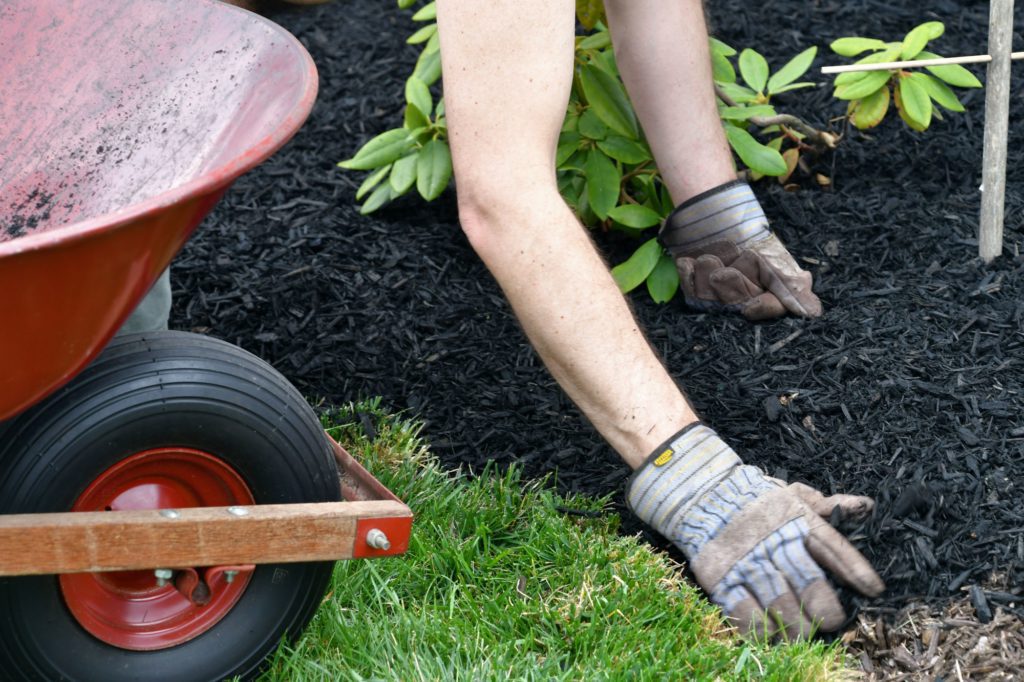
- Spread evenly: Use gloved hands or a rake, and aim for consistent depth. Spot-check with your fingers; two to three fingers deep is usually right.
- Pull back from stems and trunks: Leave a few inches of bare space. Plants need breathing room where stem meets soil.
- Don’t compress it: Let mulch fall naturally. Pressing it down traps moisture and forms a crust.
Quick Mulch Checklist
- Spread 2–3 inches in most beds
- Use 1–2 inches in veggie gardens
- Keep mulch pulled away from stems and trunks
- Break up crusty or compacted old mulch
- Use your hand to spot-check depth
- Watch for sour smell, dry soil, or runoff as warning signs
What Happens If Mulch Is Too Thick or Too Thin?
If it’s too thin, you’ll see weeds pop up in the first few weeks. Water won’t hold, and you’ll be stuck watering constantly. You may also notice uneven color, windblown patches, or bare spots after rain.
Too thick? You’ll trap moisture, smother feeder roots, and invite fungus or pests. Look out for signs like mushrooms, swampy smells, soggy soil, or yellowing lower leaves. Over time, mulch that’s too deep can form a crust that repels water, rain just beads and runs off instead of soaking in.
Pro Signal: Healthy mulch smells earthy, not fermented or sweet
What If Something Looks Off?
Mulch keeps blowing away
It’s probably too thin or too dry. Finer mulch types like shredded bark need at least 2 inches to stay put. Try dampening the top layer slightly and adding a bit more weight.
Plants are wilting even though the soil feels wet
That’s a classic sign your mulch is holding too much water. Pull it back, especially near stems. Let the soil breathe for a few days before reapplying at a lighter depth.
You see mushrooms or mold
That’s normal in small amounts, but if it spreads fast or smells bad, your mulch is too wet or thick. Rake it out to dry and avoid watering directly over it.
Soil under the mulch is bone dry
This usually means the mulch crusted over. Break it up with your fingers or a rake and soak the area slowly to rehydrate the soil.
Are There Special Rules for Mulch Thickness?
In a few edge cases, yes, but most yards won’t need to worry about them.
- Seeded areas: New lawns or wildflower beds should skip mulch altogether. It blocks light and slows germination.
- Landscape Fabric: Limit to 2 inches over fabric, or it’ll slide or trap soggy buildup underneath.
- Rubber Mulch: When weighing the pros and cons of rubber mulch, remember it doesn’t follow organic depth rules. These materials are more about aesthetics or erosion control than insulation or soil conditioning.
Real Homeowner Questions About Mulch Depth
Is 1 inch of mulch enough to stop weeds?
Not reliably. You’ll need at least 2 inches of fine mulch for consistent weed suppression. Anything less lets light through to seeds.
Can I just keep adding mulch every year?
Only if you break up or thin the old layer first. Stacking mulch every year without loosening it creates a suffocating cap over time. Research from the University of Florida IFAS suggests that as organic mulch decomposes, it adds nutrients to the soil, but simply piling new layers on top of matted old layers prevents water penetration.
Do I have to remove old mulch first?
Not always. If it’s broken down and still loose, you can apply fresh mulch on top. But if it’s matted, crusted, or smells off, rake it out.
What if my mulch fades or flattens after a storm?
That’s a sign it wasn’t deep enough or the texture was too fine. Reapply at 2–3 inches and use a mulch with more body, like bark nuggets or double-shredded hardwood.
Is thicker mulch better in summer heat?
Not necessarily. More than 3 inches can actually trap too much moisture and block airflow. Stick to the 2–3 inch range and monitor soil moisture.
How do I tell mulch depth without a ruler?
Stick your fingers in. Two to three fingers deep usually equals 2 to 3 inches. If you can’t feel the soil or you hit a packed crust, it’s probably too much.
Will termites come if mulch is too deep near the house?
Possibly. Deep mulch near siding or wood posts raises the risk. Keep it under 2 inches near structures and pull it away from direct contact.
TL;DR: How Thick Should Mulch Be?
- Most garden beds: 2 to 3 inches
- Veggie beds: 1 to 2 inches
- Pathways or winter cover: Up to 4 inches
- Keep it away from trunks, stems, and structures
- Check with your fingers, eyes, and nose, they’ll tell you if something’s off
When Help Is Worth It
If you’ve got layered mulch from previous years or you’re seeing recurring plant issues, a one-time check from a local lawn pro can save you a season of trial and error. Don’t hesitate to find the best mulching services near you to get a professional assessment of your landscape beds.