If your lawn feels spongy underfoot, drains slowly after rain, or just looks tired despite regular mowing and feeding, the cause is often a thatch layer thick enough to choke the roots underneath. Verticutting is the tool most lawn pros reach for first, before jumping to more aggressive dethatching, because it clears that layer without tearing up healthy turf.
Quick Answer: Verticutting uses a machine with closely spaced vertical blades to slice through thatch and grass stolons without ripping up the lawn the way a dethatcher’s tines do. It’s best done during your grass’s peak growing season, once or twice a year, when thatch exceeds about half an inch. This guide covers what verticutting is, how to do it step by step, verticutting vs dethatching, verticutting vs aerating, and how the process changes for Bermuda lawns and golf greens.
What Is Verticutting?
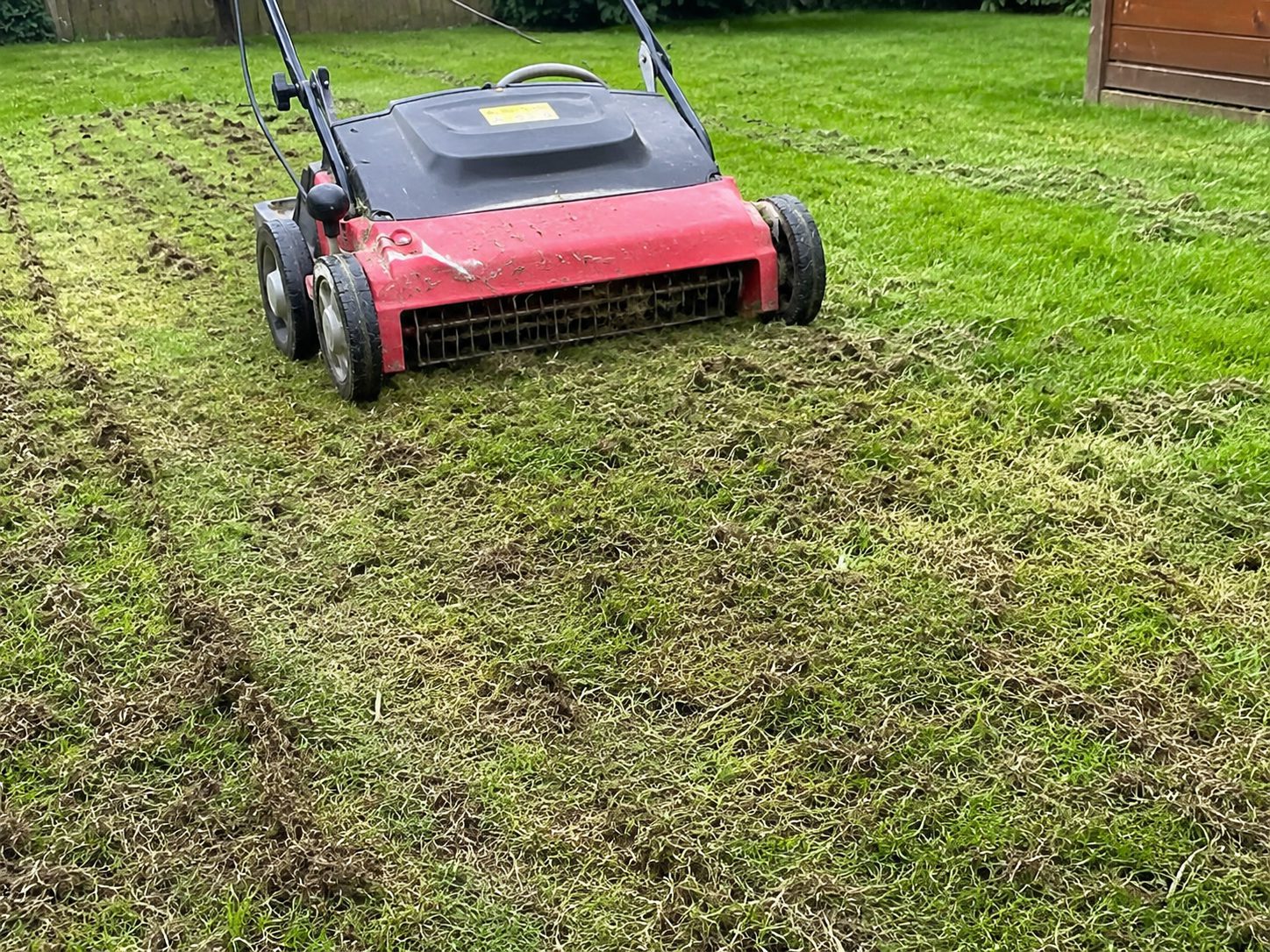
Verticutting, also called vertical mowing, is the process of running a specialized machine over your lawn with fixed, closely spaced blades that rotate vertically instead of horizontally. Rather than clawing thatch to the surface the way a dethatcher’s spring tines do, a verticutter slices straight down through it, cutting a series of thin grooves into the turf.
Those grooves do two things at once: they lift decomposing thatch and old grass stems to the surface for removal, and they prune the lateral runners (stolons and rhizomes) that spreading grasses use to fill in bare spots. That pruning effect is why verticutting grass regularly, rather than just once as a rescue treatment, actually thickens a lawn over time instead of just cleaning it up.
Why Verticut Your Lawn?
A thatch layer under about half an inch is normal and even helps cushion the lawn. Past that, it starts blocking water, air, and fertilizer from reaching the soil, and it gives pests and fungal disease a place to establish. Verticutting addresses that buildup and, because the cuts are shallow and precise, does it with far less stress on healthy grass than a full dethatching pass.
The practical benefits show up together rather than separately: water and nutrients reach the root zone instead of sitting in the thatch, root systems grow deeper instead of staying shallow near a moisture-trapping mat, and the canopy thickens as stolons branch out from each cut. It’s also the standard prep step before overseeding, since the shallow grooves give new seed direct contact with soil instead of landing on a thatch mat where it will never germinate.
Verticutting vs. Dethatching
The two terms get used interchangeably, but they’re not identical. Verticutting is technically one method of dethatching, just a gentler one.
| Factor | Verticutting | Dethatching (rake/tine methods) |
|---|---|---|
| Blade type | Fixed vertical blades that slice | Spring-steel tines that claw and pull |
| Aggressiveness | Low to moderate | Moderate to high |
| Damage to healthy grass | Minimal | Can tear up runners, especially in spreading grasses |
| Best for | Warm-season, spreading grasses; routine maintenance | Cool-season, bunching grasses; heavier thatch buildup |
| Typical frequency | 1–3 times per year | Usually once a year |
For a lawn with moderate thatch and a spreading grass type, verticutting is almost always the better first move; save more aggressive dethatching methods for thatch that’s already gotten away from you. If you want the deeper breakdown of tools and methods, see our full guide on what dethatching is.
Verticutting vs. Aerating

These two get confused for a different reason: both send a machine over the lawn, and both are usually recommended for the same stretch of the calendar. But they solve different problems. Homeowners weighing verticutting vs aerating should know that verticutting removes thatch and prunes the canopy, while aeration pulls small plugs of soil to relieve compaction and let air reach the roots. Verticutting won’t fix compacted soil, and aeration won’t clear a thick thatch layer.
Many lawn care pros run both in the same visit, aerating first to loosen the soil, then verticutting to clear the thatch that aeration alone leaves behind. If compaction is the bigger issue, our guide on aeration vs. dethatching walks through which one to prioritize.
How to Verticut Your Lawn, Step by Step
- Water two to three days ahead. Lightly watering the lawn softens the soil so the blades can penetrate cleanly instead of bouncing off dry, hard turf.
- Mow shorter than usual. Cut the lawn a notch or two below your normal height and bag the clippings so they don’t interfere with the pass.
- Set the blade depth. Most verticutters adjust from about ¼ to ½ inch. Thicker, spreading grasses like Bermuda and Zoysia need a lower setting and tighter blade spacing; thinner grasses need a shallower setting to avoid scalping.
- Make your first pass in one direction, then a second pass perpendicular to the first. Two crossing passes clear thatch far more evenly than one.
- Rake and collect the debris. A verticutter brings up a surprising volume of material; a lawn sweeper or a mower with a bagger speeds this up on larger yards.
- Fertilize and water. The lawn is more receptive to fertilizer right after verticutting since there’s no thatch layer trapping it. Water thoroughly afterward to help the turf recover.
Expect the lawn to look rough for one to two weeks before new growth fills in the grooves. That recovery window is exactly why timing matters, verticutting a stressed or dormant lawn extends that rough patch considerably.
What to Expect During Recovery
Right after verticutting, a lawn that looked fine an hour earlier can look like it took real damage: thin patches, exposed soil in the grooves, and scattered debris even after raking. That’s normal, not a sign something went wrong. With adequate water and the fertilizer application from step six, most lawns show new green growth filling in within five to ten days and look fully recovered within three weeks. Grass that was already stressed, drought-hit, or verticut outside its growing season takes noticeably longer, sometimes a month or more, which is the main reason timing matters more than almost any other variable in this process.
Verticutting Bermuda Grass
Bermuda is one of the grasses that benefits most from regular verticutting, and also the one where getting the timing wrong causes the most visible damage. Because Bermuda spreads aggressively through both stolons and rhizomes, it builds thatch faster than most cool-season lawns and tends to develop a spongy, matted layer if it isn’t verticut on a schedule.
The right window is late spring through early summer, once the grass is fully green and actively growing, never during spring green-up or while it’s still semi-dormant. Verticutting Bermuda too early, before it’s out of winter dormancy, can set growth back for weeks instead of thickening the lawn. Set the blades on the lower end of the depth range and space them tightly, since Bermuda’s dense growth habit needs a more thorough pass than a thinner cool-season lawn.
Other grasses that respond well to a similar approach include Zoysia and St. Augustine, both spreading warm-season types prone to heavy thatch. Bunch-type grasses like tall fescue build thatch much more slowly and typically need verticutting far less often.
Verticutting Greens: How Golf Courses Do It Differently

Verticutting greens is a related but distinct practice from lawn verticutting, worth a quick mention since the term shows up in searches from both homeowners and turf enthusiasts. On a golf course, verticutting is a routine maintenance task performed on putting greens at a far shallower depth and much higher frequency than anything used on a residential lawn, often weekly or even between mowings during peak season.
According to the USGA, the goal on a green isn’t thatch removal so much as controlling grain (the tendency of turf to lean in one direction) and standing up the grass blades before mowing, which produces a smoother, faster, more consistent ball roll. The blades sit far closer to the surface, sometimes barely brushing it, since even a small amount of soil disturbance on a green is unacceptable.
This is specialized turf management, not something residential lawn equipment or a typical lawn care visit covers. If you’re dealing with a home lawn rather than a putting green, the guidance above (and the Bermuda-specific timing if that’s your grass type) is what applies.
How Often to Verticut and Signs You’re Overdue
Most lawns need verticutting once a year; those with fast-spreading warm-season grass or heavy foot traffic may need it up to three times during the growing season. Rather than going strictly by the calendar, watch for these signs that a verticutting lawn treatment is overdue: a spongy or bouncy feel underfoot, water pooling on the surface after rain instead of soaking in, a mower that scalps or bogs down even at a normal height, or a lawn that still looks thin despite a consistent watering and fertilizing schedule. Pressing a finger into the turf near the soil line is a quick way to check, thatch over about half an inch thick is your cue to schedule it.
What Does Professional Verticutting Cost?
Hiring this out typically runs $150 to $350 for an average residential lot, depending on lawn size, thatch severity, and regional labor rates. Some providers price it as a flat per-visit fee; others charge hourly, generally $75 to $150 an hour for a crew and equipment. Because a verticutter is a specialized piece of equipment that most homeowners don’t own and wouldn’t use often enough to justify buying, hiring a pro is usually more cost-effective than a one-time rental unless you’re maintaining a large property or verticutting annually as routine maintenance.
Frequently Asked Questions
Is verticutting the same as scarifying?
No, though they’re often confused. Verticutting uses shallow blades that barely touch the soil and is meant as routine maintenance. Scarifying cuts deeper into the soil to remove heavier, more established thatch and is closer to a once-a-year renovation step than ongoing upkeep.
Can I mow my lawn right after verticutting?
Wait until the lawn shows new growth, typically one to two weeks, before resuming a normal mowing schedule. Mowing too soon stresses grass that’s already recovering from the verticutting pass.
Does verticutting work on a lawn with very little thatch?
There’s not much benefit to verticutting a lawn with a thin, healthy thatch layer under half an inch. The process is corrective, not preventive; running it on a lawn that doesn’t need it adds unnecessary stress without a real payoff.
What’s the best time of year to verticut?
For cool-season grasses (fescue, Kentucky bluegrass, ryegrass), early spring or early fall works best. For warm-season grasses like Bermuda and Zoysia, late spring through early summer, once they’re fully out of dormancy, is the right window.
Should I rent a verticutter or hire a professional?
Rental units run $50 to $100 a day and work fine for a single small yard if you’re comfortable operating unfamiliar equipment. For larger properties, dense or spreading grass types like Bermuda, or if you’re unsure about correct blade depth, a professional avoids the risk of over-cutting and turf damage.
Will verticutting damage a healthy lawn?
Done at the right depth and time of year, verticutting causes only cosmetic, short-term stress, the rough look during the recovery window described above, not lasting damage. The risk goes up considerably if the blades are set too deep, the lawn is dormant or drought-stressed, or the pass happens outside the grass’s active growing season, any of which can set a lawn back for weeks instead of days.
Does verticutting help with weeds?
Indirectly, yes. Removing thatch and thickening the canopy through pruned, rebranching stolons gives weeds less bare soil and light to germinate in. It’s not a substitute for a pre-emergent herbicide program, but a denser lawn after a season or two of regular verticutting does noticeably crowd out weed pressure on its own.
The Bottom Line
Verticutting is the lower-impact way to clear thatch and thicken a lawn, best used on a regular schedule rather than as an emergency fix. Get the timing right for your grass type, especially with fast-spreading Bermuda, and the recovery period is short and the payoff is a noticeably denser lawn. If diagnosing thatch buildup or timing the job yourself feels like more than you want to take on, LawnGuru connects you with local lawn care pros who handle verticutting and dethatching as part of a regular maintenance plan.