
If your lawn feels hard underfoot, puddles after rain, or struggles even with regular watering, soil compaction is usually the problem. Understanding how and when to aerate lawn helps relieve that pressure so roots can grow deeper and thicker. But timing matters more than most homeowners realize.
Do it at the wrong time, and the grass can’t recover. Do it at the right time, and you’ll see steadier growth within a few weeks.
When Is the Best Time to Aerate a Lawn?
The best time to aerate is when your grass is actively growing. That’s when it can repair the holes, expand roots, and take full advantage of better air and water movement in the soil.
For warm season and cool season grass types, the windows vary significantly. For cool-season grasses, that usually means early fall or early spring. For warm-season grasses, late spring to early summer is the safer window.
Common terms: core aeration (pulling soil plugs), spike aeration (poking holes), compaction (tight soil), overseeding (spreading seed after aerating).
Cool-Season vs Warm-Season Grass Timing
Your grass type determines your timing window. The goal is simple: aerate when the lawn is ready to grow, not when it’s stressed or dormant.
Here’s a quick way to decide.
| Grass Type | Best Time to Aerate | Avoid This Time | Why |
|---|---|---|---|
| Cool-season (Kentucky bluegrass, fescue, ryegrass) | Early fall, early spring | Mid-summer heat | Recovers during mild temperatures and steady growth |
| Warm-season (Bermuda, zoysia, St. Augustine) | Late spring, early summer | Late fall or dormancy | Needs active summer growth to fill in holes |
If you’re unsure what type you have, look at when your lawn grows most aggressively. If it surges in spring and fall, it’s likely cool-season. If it thrives in heat, it’s probably warm-season. If you are in the south, you should know when to aerate lawn texas specifically for heat-tolerant varieties.
Early Fall vs Spring: Which Is Better?
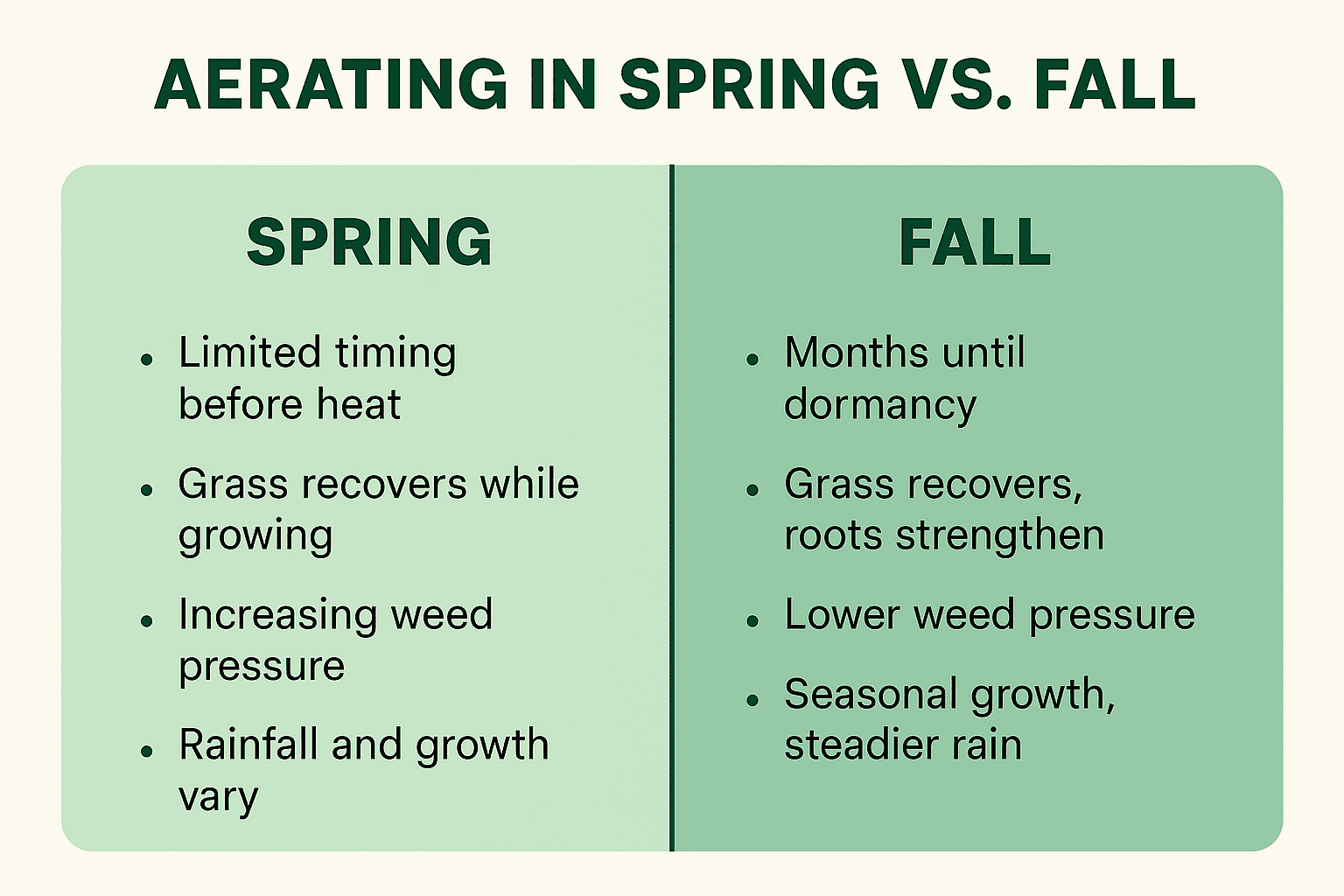
For cool-season lawns, early fall usually gives the best results. Soil is still warm, air temperatures are milder, and weed pressure is lower than in spring. If you plan to overseed, fall gives new grass a longer runway before summer heat returns.
Overseeding in spring can still work well, especially if you missed fall. Just keep in mind that spring weeds compete hard, and you may have to adjust any weed control plans.
If both windows are available, fall tends to give thicker results with fewer setbacks.
Signs Your Lawn Is Ready for Aeration
Sometimes the calendar says “maybe,” but the lawn says “now.” Knowing how to aerate your lawn and why you should begins with physical testing.
If you can’t push a screwdriver easily into the soil, compaction is likely. Water pooling or running off instead of soaking in is another clear sign. Lawns with heavy foot traffic, kids, pets, backyard gatherings, often compact faster.
You may also notice thinning areas that don’t respond to fertilizer or watering. In many cases, roots simply don’t have room to expand. According to research from University extensions, root depth is directly correlated to soil porosity.
When Waiting Is the Better Move
Aeration during extreme heat or drought can add stress your lawn doesn’t need. If the grass is already struggling to stay green, wait for better growing conditions.
Frozen soil won’t allow proper core removal, and waterlogged soil can smear instead of opening clean channels. Newly seeded lawns also need time to establish before being aerated.
If the grass isn’t actively growing, hold off. Recovery speed matters more than sticking to a date on the calendar.
Core vs Spike Aeration: Does Timing Change?
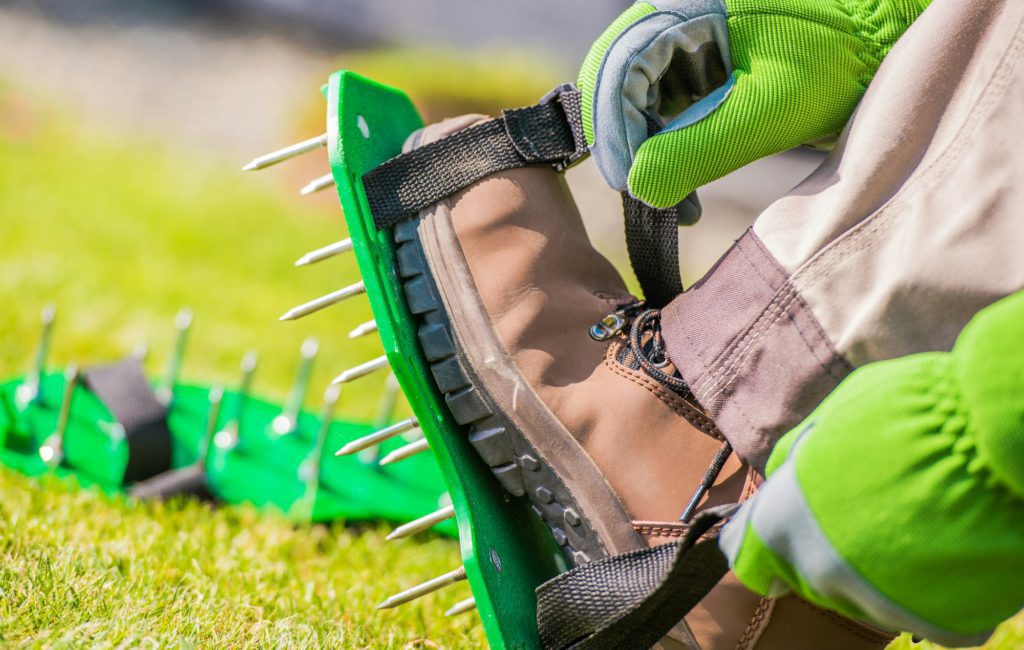
Core aeration removes small plugs of soil. Spike aeration simply pokes holes. In some cases, people even consider liquid aeration vs core aeration as an alternative.
Core aeration is generally more effective for compacted soil because it creates real space for roots to expand. Spike aeration can sometimes increase compaction around the holes if the soil is already dense.
Timing principles stay the same for both methods. The lawn still needs to be in active growth to recover properly. The idea that spike aeration can be done anytime is a common misconception.
What to Do Before and After You Aerate
A little preparation makes a noticeable difference in results.
First, mow slightly lower than your usual height, but don’t scalp the lawn. If the soil is very dry, water lightly the day before so the aerator can pull clean plugs. Mark sprinkler heads or shallow utilities so they aren’t damaged.
After aerating, leave the soil plugs on the surface. They break down naturally and return nutrients to the soil. This is also a good time to overseed a lawn if your lawn is thin.
Water consistently in the following weeks, usually around 1 inch per week total from rainfall or irrigation, depending on weather. Avoid heavy traffic for a short period while the lawn recovers.
The Habits That Keep Aeration Working
Aeration isn’t a one-time fix. It works best as part of steady lawn habits.
Mow at the proper height for your grass type so roots stay strong. Avoid frequent shallow watering, which encourages weak root systems. Manage foot traffic in high-use areas and rotate activities if possible.
If lawn thatch builds up heavily, it can limit the benefits of aeration. Understanding aeration vs dethatching is critical; if thatch is over half an inch thick, you may need to dethatch before aerating. Paying attention to these basics keeps soil healthier long after the holes close up.
FAQs
Is it better to aerate in spring or fall?
For cool-season grass, early fall usually produces stronger results. The lawn has time to thicken before winter and faces less weed pressure than in spring. Spring is still a workable second option.
Can I aerate during summer if my lawn is compacted?
If you have cool-season grass, summer heat can cause added stress after aeration. Warm-season lawns handle early summer aeration better because that’s their active growth period. Avoid aerating during extreme heat or drought.
Do I need to overseed every time I aerate?
Not always. If your lawn is already thick and healthy, aeration alone may be enough. Overseeding helps most when you see thinning or bare areas.
How often should a lawn be aerated?
Many lawns benefit from aeration once a year. Heavy clay soil or high-traffic yards may need it more frequently. Light, sandy soils may not need it as often.
Will aeration damage sprinkler systems or shallow roots?
Aeration can damage sprinkler heads if they aren’t marked beforehand. Shallow roots may look disturbed, but healthy grass recovers quickly during active growth.
Is spike aeration good enough for most lawns?
Spike aeration can help with minor surface issues, but it doesn’t relieve deeper compaction the way core aeration does. For heavily compacted soil, core aeration usually delivers better results.
Choosing the Right Aeration Window for Healthier Turf
The best time to aerate comes down to one rule: match the timing to your grass’s natural growth cycle. When the lawn is actively growing, it repairs faster and fills in thicker.
Pay attention to soil conditions, not just the season. If the ground is compacted and growth is strong, you’re likely in the right window.
Need a Hand Getting It Done at the Right Time?
Timing aeration around growth, weather, and soil conditions can feel like a moving target. Some homeowners prefer to handle it themselves, while others would rather not deal with the equipment and scheduling.
If you’d like help lining it up with the right window for your lawn, LawnGuru can help you find the best lawn aeration companies near you. It’s one less thing to guess about during a busy season.