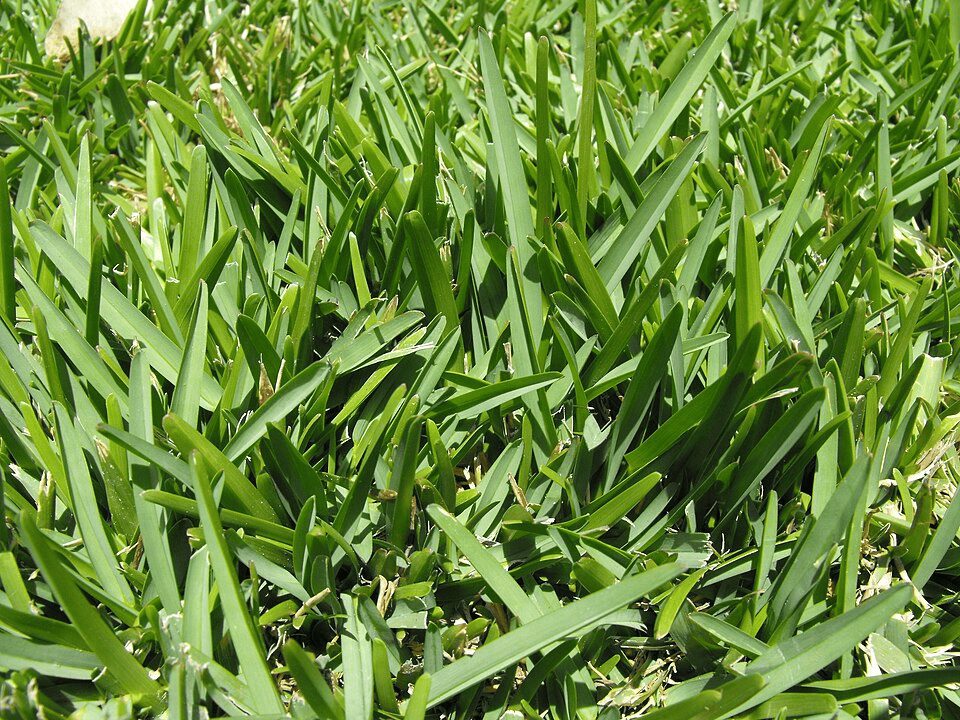
Every one of the Florida grass types that works as a lawn is a warm-season grass. The University of Florida lists seven: St. Augustinegrass, bahiagrass, bermudagrass, zoysiagrass, centipedegrass, seashore paspalum, and carpetgrass. Kentucky bluegrass, fescue, and ryegrass can grow here in the cool months, but they won’t survive a Florida summer.
Picking between the seven comes down to four things: how much sun the yard gets, whether salt is a factor, what your soil is like, and how much mowing, watering, and feeding you’re willing to do.
Quick Answer: UF/IFAS lists seven lawn grasses for Florida. St. Augustinegrass is the most common and the best choice for shade (cultivar dependent). Bahiagrass is the low-maintenance, drought-hardy option for acidic, sandy soil, but it has the lowest salt tolerance of the group. Bermudagrass and zoysiagrass handle the most wear. Centipedegrass is a low-input grass for North Florida and the Panhandle. Seashore paspalum is the pick for salty coastal sites, and carpetgrass suits wet areas.
Florida Grass Types Compared
This is UF/IFAS’s comparison of all seven, condensed. It’s the most useful single table for choosing a Florida lawn grass.
| St. Augustine | Bahia | Bermuda | Zoysia | Centipede | Seashore paspalum | Carpetgrass | |
|---|---|---|---|---|---|---|---|
| Where it’s adapted | Statewide | Statewide | Statewide | Statewide | North FL, Panhandle | Statewide | Wet areas |
| Mowing height (in) | 2 to 4 | 3 to 4 | 0.5 to 2 | 0.25 to 2.5 | 1.5 to 2 | 1 to 2 | 1.5 to 2.5 |
| Soil | Wide range | Acid, sandy | Wide range | Wide range | Acid, infertile | Wide range | Acid, wet |
| Drought tolerance | Good | Excellent | Excellent | Excellent | Good | Good | Poor |
| Salt tolerance | Good | Poor | Good | Good | Poor | Excellent | Poor |
| Shade tolerance | Good to excellent* | Fair | Poor | Good to excellent* | Fair | Poor | Fair |
| Wear tolerance | Poor to fair | Poor | Excellent | Good to excellent | Fair | Good to excellent | Poor |
| Nematode tolerance | Good | Excellent | Poor | Good | Poor | Good | Poor |
| Maintenance | Medium | Low | Medium to high | Medium | Low | Medium | Low |
| Planted as | Sod, plugs | Seed, sod | Sod, sprigs, plugs, some seed | Sod, sprigs, plugs, some seed | Seed, sod, plugs | Sod, sprigs, plugs | Seed, sprigs |
*Cultivar dependent. UF/IFAS rates bahiagrass salt tolerance lowest of all seven.
One footnote worth reading twice: UF/IFAS says “excellent” drought tolerance means the grass has strong dormancy, so it survives long dry spells. It doesn’t mean less irrigation. A bahia or zoysia lawn will still need water to stay green.
What Are the Types of Grass in Florida?
Here’s what each of the seven is like to live with.
St. Augustinegrass
The default Florida lawn. UF/IFAS says it’s adapted to most soils and regions in the state, produces a dense green to blue-green turf, has relatively good salt tolerance, and, in certain cultivars, the best shade tolerance of any Florida lawn grass. It’s mowed tall, 2 to 4 inches depending on cultivar.
St. Augustinegrass isn’t available as seed. It goes in as sod or plugs. For care details, see our full guide to St. Augustine grass.
What Is the Downside of St. Augustine Grass?
Three things. UF/IFAS rates its wear tolerance poor to fair, so it doesn’t hold up to heavy play. It can build up excessive thatch when overwatered or overfertilized. And it needs regular irrigation in dry periods; UF/IFAS notes it doesn’t perform as well without supplemental water. Chinch bugs are its best-known insect pest in Florida.
Bahiagrass
The low-input lawn. UF/IFAS says bahia grows well with limited water and fertilizer, forms a deep root system, and isn’t prone to thatch. It has excellent nematode tolerance and is one of the two Florida grasses least affected by pests overall (centipede is the other).
The trade-offs: it’s coarse, forms an open canopy rather than a dense carpet, and sends up tall Y-shaped seedheads all summer that need frequent mowing to control. It prefers acidic, sandy soils, and its salt tolerance is the worst of the seven, so it’s a bad fit near the coast. Bahia can be grown from seed; our guide to the best grass seed for Florida covers seeding it.
Bermudagrass
The full-sun, high-traffic grass. UF/IFAS rates its wear tolerance excellent, but calls it higher maintenance than other Florida lawn grasses, with poor shade tolerance, poor nematode tolerance, and a tendency to build thatch. It’s mowed short, 0.5 to 2 inches. Bermuda is the grass of golf courses and sports fields for a reason, but in a home lawn it means frequent mowing. In North Florida it goes brown in winter; see what to expect with bermuda grass in winter.
Zoysiagrass
Dense, weed-resistant, and good underfoot. UF/IFAS says zoysia has good salt, traffic, and shade tolerance, and forms a dense stand that resists weeds when managed properly. But it also says zoysia’s maintenance is different from other Florida grasses, and improper maintenance generally leads to a poor lawn. Thatch is the common failure. Most zoysia goes in as sod or plugs; seeded options are limited.
Centipedegrass
The “do less” grass for North Florida. UF/IFAS calls it low-maintenance and slow-growing, with low fertility needs and a preference for acidic soils. It’s lighter green than other Florida grasses. The catch is that overfertilizing, especially with nitrogen, increases pest problems and reduces cold tolerance. Salt and nematode tolerance are both poor.
Seashore Paspalum: The Salt-Tolerant Choice
The coastal specialist. UF/IFAS says most grasses won’t grow well in salt-affected sites, but seashore paspalum thrives there. It forms a dense, dark green turf with good to excellent wear tolerance. It needs full sun, more maintenance, and attention to thatch.
Carpetgrass
The least common of the seven. UF/IFAS lists it for wet areas with acid soil. It has poor drought, salt, and wear tolerance, so it fills a narrow niche: low, damp spots where other grasses struggle.
Best Florida Grass Types by Region
UF/IFAS describes soils differently across the state, and that drives a lot of the regional choice:
| Region | Typical soil (UF/IFAS) | Grasses that fit |
|---|---|---|
| North Florida and Panhandle | More clay, low pH | Centipede, St. Augustine, bahia, zoysia, bermuda |
| Central Florida | Lower pH, sand to muck | St. Augustine, bahia, zoysia, bermuda |
| Coastal areas | Sandy, high pH | St. Augustine, zoysia, bermuda, seashore paspalum |
| South Florida | Varies; long growing season | St. Augustine, zoysia, bermuda, seashore paspalum on the coast |
Centipede is the one regional grass on the list: UF/IFAS recommends it for North Florida and the Panhandle. Bahia and centipede struggle on high-pH coastal soils because micronutrient deficiencies show up above pH 8, per UF/IFAS. For a broader look at climate zones, see what planting zones are in Florida.
How to Pick the Right Florida Lawn Grass
Work through these in order. The first one that rules a grass out wins.
- Shade. More than a few hours of shade narrows you to a shade-tolerant St. Augustine cultivar or zoysia. UF/IFAS notes even these still need daily sunlight.
- Salt. Waterfront or salty irrigation water rules out bahia and centipede. Seashore paspalum handles the most salt, then zoysia, bermuda, and St. Augustine.
- Soil pH. Do a soil test before planting, as UF/IFAS recommends. Bahia and centipede want acidic soil.
- Traffic. Kids, dogs, and backyard games favor bermuda or zoysia. St. Augustine and bahia wear out.
- Effort and water. Bahia and centipede are the low-maintenance pair. Bermuda is the most demanding. If you won’t irrigate during dry spells, St. Augustine and zoysia are the wrong picks.
UF/IFAS adds one more rule: don’t choose on installation cost alone. A lawn is a long-term commitment, and the grass should be one you’ll maintain.
How Can I Identify My Grass Type?
Look closely at a few shoots. UF/IFAS’s Florida turfgrass identification key starts with vernation, meaning how a new leaf comes out of the sheath, then uses the ligule, collar, and seedhead.
| Grass | New leaf (vernation) | Leaf tip | Spreads by | Seedhead | Telltale sign |
|---|---|---|---|---|---|
| St. Augustine | Folded | Blunt, rounded | Stolons only | Single spike | Constricted collar with a twist; coarse blades |
| Bahia | Rolled (can look folded) | Pointed | Thick, woody rhizomes | Y-shaped | Purple tinge at the base of rhizomes |
| Bermuda | Folded | Pointed | Rhizomes and stolons | 3 to 5 spikes | Uneven leaf spacing along runners |
| Zoysia | Rolled | Pointed | Rhizomes and stolons | Spikelet | Stiff blades; more even internodes than bermuda |
| Centipede | Folded | Blunt, rounded | Stolons only | Spike | Hairs on leaf edges; light green color |
| Seashore paspalum | Folded | Pointed | Rhizomes and stolons | Fork with two branches | Even leaf spacing; often coastal |
A quick shortcut: if the leaf tips are blunt and the runners are all above ground, it’s St. Augustine or centipede. Wide, coarse blades with a twisted collar means St. Augustine. If the seedheads look like a Y, it’s bahia.
Florida Grass Pests and Problems by Type
UF/IFAS says every Florida grass has at least one major pest, though bahia and centipede are generally least affected. The common insects are chinch bugs, white grubs, mole crickets, webworms, armyworms, spittlebugs, and billbugs. The main diseases include large patch, dollar spot, Pythium root rot, take-all root rot, and gray leaf spot. Nematodes, microscopic root-feeding worms, are a problem in sandy soils, and UF/IFAS notes chemical control in home lawns is expensive, so picking a nematode-tolerant grass like bahia matters.
What Are the Worst Weeds to Control in Florida?
UF/IFAS Gardening Solutions highlights weedy grasses that are hard to get out of a lawn once they’re in:
- Cogongrass. A prohibited invasive that has spread to every county in Florida. It spreads by creeping rhizomes and wind-blown seed.
- Torpedograss. An aggressive invader with rhizomes that can grow upwards of 20 feet into lawns and beds.
- Wavyleaf basketgrass. Spreads in shady areas and outcompetes turf. A thick, shade-tolerant lawn is the best prevention.
- Crabgrass and southern sandbur. Common annual grassy weeds in thin or stressed lawns.
The best defense is a grass suited to the site, mowed at its proper height. UF/IFAS notes that mowing below the recommended height stresses the grass and invites weeds, insects, and diseases.
Mowing Each Florida Grass Type
Mowing height is the care step that differs most between grasses, and the most common mistake. St. Augustine at bermuda height gets scalped and thin; bermuda at St. Augustine height turns stemmy. Use the heights in the table above. UF/IFAS also recommends leaving clippings on the lawn; they return nutrients and don’t typically cause thatch.
If you’d rather hand it off, LawnGuru’s lawn mowing service averages $35.23 per visit, with most visits between $28 and $45. Tell your provider which grass you have so the deck is set right.
Frequently Asked Questions
What is the most common grass in Florida?
St. Augustinegrass. It’s adapted statewide and is the usual choice for shaded and coastal yards.
What is the easiest grass to maintain in Florida?
Bahiagrass and centipedegrass. UF/IFAS lists both as low maintenance, fertilized once or twice a year. Bahia suits most of the state; centipede is best in North Florida and the Panhandle.
What is the best grass for shade in Florida?
A shade-tolerant St. Augustine cultivar or zoysiagrass. UF/IFAS rates both good to excellent in shade, depending on cultivar, but both still need some direct sun daily.
What grass is best near the beach in Florida?
Seashore paspalum has excellent salt tolerance. Zoysia, bermuda, and St. Augustine handle moderate to high salinity. Avoid bahia and centipede on salty sites.
Can I grow Kentucky bluegrass or fescue in Florida?
Not as a permanent lawn. UF/IFAS says northern grasses grow in north and central Florida only in fall, winter, and early spring and won’t survive hot, humid summers. For the difference between the two groups, see warm-season and cool-season grass types.
Should I use seed or sod for a Florida lawn?
UF/IFAS calls sod the preferred method because it gives an instant lawn with fewer weed problems. Seed is an option for bahia, centipede, carpetgrass, and some bermuda and zoysia cultivars, but never St. Augustine.