
Texas lawns can look completely different from one yard to the next. Some sit in full sun all day. Others struggle under heavy tree cover. Add in the difference between North and South Texas weather, and grass choice starts to matter a lot.
Most Texas lawns use warm-season Turfgrass like Bermuda, St. Augustine, Zoysia, Centipede, or Buffalo grass. The best choice depends on sun exposure, traffic, and whether you’re in North or South Texas.
Late spring is usually the best time to plant warm-season grass seed, and early morning is the best time of day to water.
The Main Types of Grass That Grow Well in Texas
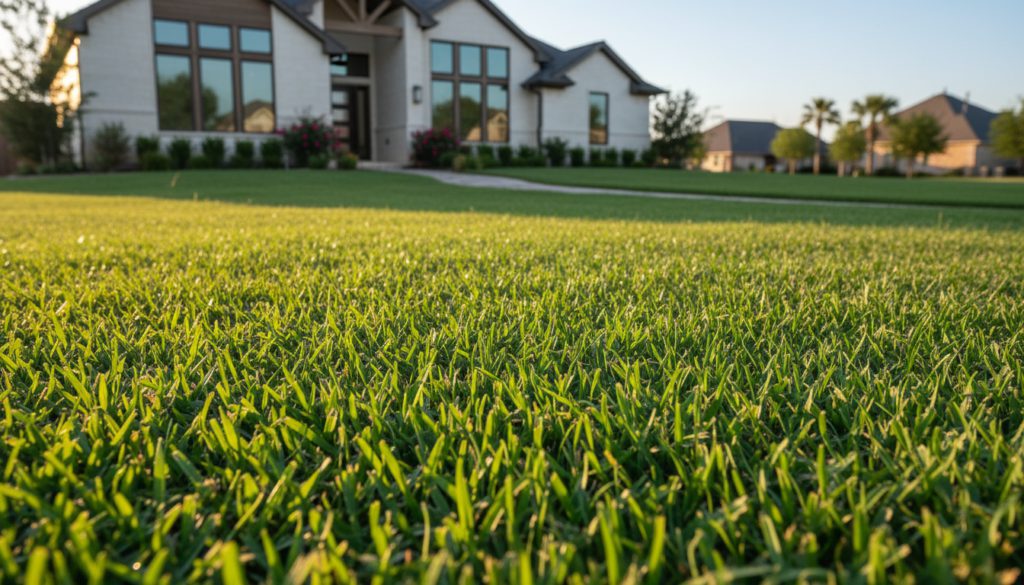
Most lawns across Texas rely on warm-season grasses. These grasses grow actively in late spring and summer and go dormant when temperatures cool.
The most common types you’ll see are:
Bermuda grass – Very heat-tolerant and handles heavy foot traffic well. It needs full sun and struggles in shade. It is helpful to understand how to manage Bermuda grass in winter.
St. Augustine grass – Popular for its thicker blades and ability to handle moderate shade. It needs consistent moisture compared to Bermuda.
Zoysia grass – Dense and slower-growing. It handles sun well and tolerates partial shade better than Bermuda.
Centipede grass – Lower-maintenance option that prefers steady warmth and less fertilizer. Not ideal for heavy traffic.
Buffalo grass – Native option with good drought tolerance. Works best in sunny, lower-traffic yards.
Common terms: Warm-season grass grows in heat and goes dormant in winter. Cool-season grass prefers cooler climates and is rarely used as a permanent lawn in most of Texas. Sod is pre-grown turf; seed is planted directly into soil.
What Grows in Shade in Texas Lawns
Shade changes everything.
If your yard gets less than six hours of direct sunlight, Bermuda is usually the wrong choice. It thins out, becomes patchy, and invites weeds.
For shade in Texas, homeowners usually look at:
St. Augustine – One of the better options for moderate shade. It still needs filtered light, not deep, dense shade all day.
Zoysia – Some varieties handle partial shade reasonably well. It won’t thrive in heavy shade, but it performs better than Bermuda.
True full shade, like under thick tree canopies or between tall buildings, makes it hard for any turfgrass to grow well. In those areas, thinning is common no matter what you plant.
A quick test: If the area gets strong morning or afternoon sun for several hours, you likely have partial shade. If the ground stays dim most of the day, grass will struggle long-term.
Grass Choices for North Texas Yards
North Texas sits in more of a transition zone according to the USDA Plant Hardiness Zone Map. Winters can bring harder freezes compared to southern parts of the state.
Bermuda does well here in sunny yards and handles summer heat and traffic. Zoysia is also a strong option, especially if you want a denser look and can wait for slower establishment.
St. Augustine can work, but it may show more winter damage in colder years. Proper mowing height and not cutting it too short going into winter helps reduce stress; check our winter grass care guide for specific regional tips.
If you’re in North Texas, cold tolerance matters more than it does farther south.
Grass Choices for South Texas Yards

South Texas typically sees longer summers and milder winters. Heat and drought tolerance move higher on the priority list.
Bermuda performs well in full sun and high-traffic yards. St. Augustine is also common, especially in neighborhoods with irrigation systems.
Buffalo grass can make sense in lower-traffic lawns where water conservation matters. Zoysia works too, but slow growth means it takes patience to fill in.
In South Texas, extreme heat and dry stretches are often the main stress factors, not winter freezes.
How to Choose the Right Grass for Your Yard Conditions
Before picking a grass type, step back and look at your yard honestly.
How many hours of direct sun does it get?
Do kids or pets run across it daily?
Do you have irrigation, or are you relying mostly on rainfall?
Is your soil quick-draining or heavy and slow to dry?
Seed vs sod also matters. Bermuda is commonly seeded. St. Augustine is typically installed as sod or plugs. Zoysia is available both ways, depending on variety.
Matching grass to conditions prevents most long-term frustration.
Best Time to Plant Grass Seed in Texas
Warm-season grasses need warm soil to establish. As noted by the Texas A&M AgriLife Extension, that usually means late spring into early summer, after the last frost and once soil temperatures are consistently warm.
Planting too early is one of the most common mistakes. Seed just sits in cool soil and struggles to germinate evenly.
This table helps narrow timing by grass type:
| Grass Type | Best Planting Window | Avoid Planting | Notes |
|---|---|---|---|
| Bermuda | Late spring | Fall | Needs heat to establish quickly |
| St. Augustine (sod) | Late spring–early summer | Cold soil conditions | Commonly installed as sod rather than seed |
| Zoysia | Late spring | Late fall | Slow to establish, patience required |
| Centipede | Late spring | Cool weather | Prefers steady warmth |
Fall planting of warm-season grasses often fails because roots don’t have enough time to establish before cooler weather.
When Planting Grass Is a Mistake
There are times when waiting is smarter.
Planting before the last frost exposes young grass to cold damage. Seeding during peak summer heat without reliable watering can dry seedlings out quickly.
Planting right before a fall temperature drop leaves roots too weak going into dormancy. And putting seed into heavy shade usually leads to thin, uneven growth.
Timing and sunlight matter just as much as the seed itself.
Best Time of Day to Water Grass in Texas
Early morning is generally the best time to water. Watering before the day heats up reduces evaporation and allows blades to dry off naturally.
Midday watering loses more moisture to evaporation. Evening watering leaves grass wet overnight, which can increase disease pressure.
Most established lawns need around 1 inch of water per week during active growth, whether from rainfall or irrigation. Newly seeded areas need lighter, more frequent watering until roots establish.
Watering Mistakes That Cause Problems
One of the biggest mistakes is shallow daily watering. That keeps roots near the surface and makes grass less drought-tolerant. If you are using herbicides, make sure you know how long after weed and feed can you water to ensure the product works effectively.
Watering at night can encourage fungal issues. Overwatering St. Augustine is also common, especially in heavier soils that drain slowly.

If water pools or the soil stays soggy for long periods, you’re likely watering too much.
A Simple Step-by-Step Plan for Starting or Switching Grass
- Measure how much sun your yard actually gets.
- Confirm whether you’re in North or South Texas and consider winter exposure.
- Decide between seed and sod based on grass type and patience level.
- Prepare the soil by loosening compacted areas and clearing debris.
- Plant during the recommended late spring window.
- Water properly during establishment, light and frequent at first.
- Raise mowing height once grass is established to reduce stress.
Skipping steps, especially soil prep and timing, usually shows up months later as thin spots.
Care Basics That Matter Most in Texas Lawns
Mowing height makes a difference. Cutting too short stresses warm-season grass, especially in summer heat. Many Texas lawns perform better when mowed on the higher end of their recommended range. Always avoid weed whacking wet grass to prevent damage to the blades.
Water deeply but less often once established. That encourages deeper root growth.
During extreme heat, expect slower growth or mild browning. Avoid heavy fertilizing or aggressive lawn work during peak stress periods.
Where Most Homeowners Go Wrong
The most common issue is choosing Bermuda for a yard with too much shade. It may look fine at installation, then thin out within a season.
Planting too early in spring is another frequent mistake. Cool soil delays germination and weakens early growth.
Overwatering, especially with automatic systems running daily, creates shallow roots and disease pressure. To better understand maintenance investments, try a lawn mowing cost calculator. And many homeowners forget that winter dormancy is normal for warm-season grasses.
FAQs
What is the easiest grass to grow in Texas?
Bermuda is often considered easier in full sun because it establishes quickly and tolerates traffic. But it struggles in shade. The “easiest” option depends on your yard’s sunlight and watering setup.
Can you grow grass in full shade in Texas?
True full shade makes it difficult for any turfgrass to thrive. St. Augustine and some Zoysia varieties handle partial shade, but dense, all-day shade often leads to thinning.
Is Bermuda or St. Augustine better for Texas lawns?
Bermuda is better for full sun and heavy traffic. St. Augustine is often better for moderate shade. Your yard’s light exposure usually decides this.
Can I plant grass seed in Texas in the fall?
Warm-season grass seed planted in fall often struggles because soil temperatures are cooling. Roots don’t have enough time to establish before dormancy.
How often should I water new grass seed in Texas heat?
New seed needs consistent surface moisture. That usually means lighter, more frequent watering until seedlings establish, then gradually shifting to deeper watering.
Does North Texas need a different grass than South Texas?
Both use warm-season grasses, but North Texas lawns may need slightly better cold tolerance. South Texas lawns often prioritize heat and drought tolerance.
Is sod better than seed for Texas lawns?
Sod provides faster coverage and is common for St. Augustine. Seed is often used for Bermuda. The better option depends on budget, timing, and how quickly you want results.
Choosing the Right Texas Grass for Long-Term Success
The right grass in Texas isn’t about what looks best in a photo. It’s about matching sun exposure, region, traffic, and watering habits to the grass that can actually handle those conditions.
If you get that match right from the start, maintenance becomes much simpler year after year.
Need a Hand Getting Your Texas Lawn on Track?
Picking grass, timing planting, and setting up a watering routine can feel like a lot, especially if your yard has tricky shade or heat exposure. Some homeowners prefer to handle it themselves. Others would rather have help making the right call from the beginning.
If you’d like support getting your lawn established and cared for properly, LawnGuru can help you stay on schedule and avoid common setbacks.