When you’re filling bare patches or starting a new lawn, it’s easy to second-guess every step. You’ve already chosen your grass seed, but now you’re staring at a bale of peat moss and wondering if it’s actually worth it.
Peat moss improves seed germination by holding surface moisture, keeping seeds in place, and reducing washout. It works especially well in dry, sandy, or bare areas. But it’s not always the best choice, especially for shaded lawns, clay-heavy soils, or full-lawn overseeding projects where other topdressings work better.
When Peat Moss Helps Seed Germination
| Lawn Condition | Peat Moss Benefit |
|---|---|
| Dry, sandy, or rocky soil | High |
| Full sun, fast-drying spots | High |
| Flat bare patches | High |
| Shaded or humid areas | Low |
| Clay or moisture-retaining soil | Low |
| Full-lawn overseeding | Moderate |
For more on how your soil structure affects these benefits, see our full soil health guide.
What Peat Moss Actually Does for New Grass Seed
If you’ve spread grass seed and walked away without any cover, you’ve probably noticed uneven growth or washed-out strips after a storm. Bare seed has nothing to anchor it or keep moisture where it’s needed most.
Peat moss acts as a moisture-holding top layer. It keeps seed damp longer and helps maintain consistent contact with soil. That’s key for strong grass seed germination.
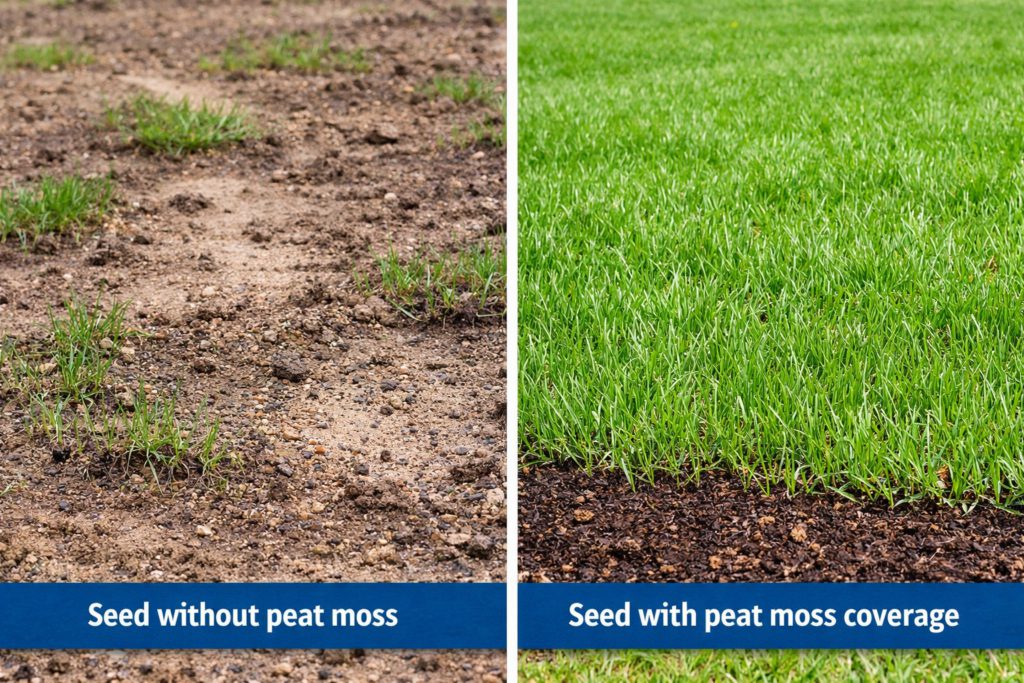
Research from Rutgers University’s turfgrass program confirms that steady surface moisture and seed-to-soil contact are key drivers of germination success.
- Water retention: Peat holds moisture at the surface, reducing dry-out between waterings.
- Seed anchoring: It reduces movement from wind and rain, preventing patchy results.
- Light soil shielding: It protects seed from crusting or baking in direct sun.
Penn State Extension also highlights that good seed-to-soil contact and consistent moisture are what make new turf establish evenly.
However, peat moss has no fertilizing benefit and won’t fix poor soil structure. It’s not a replacement for compost or aeration.
Field note: Peat moss only affects the top half-inch of your soil. If you’re dealing with compaction or runoff, fix the underlying condition first.
Peat Moss vs Topsoil for Grass Seed: When Each Makes Sense
Choosing between peat moss and topsoil depends on whether you’re patching, leveling, or planting from scratch. Both materials are used for seed coverage, but they behave very differently.
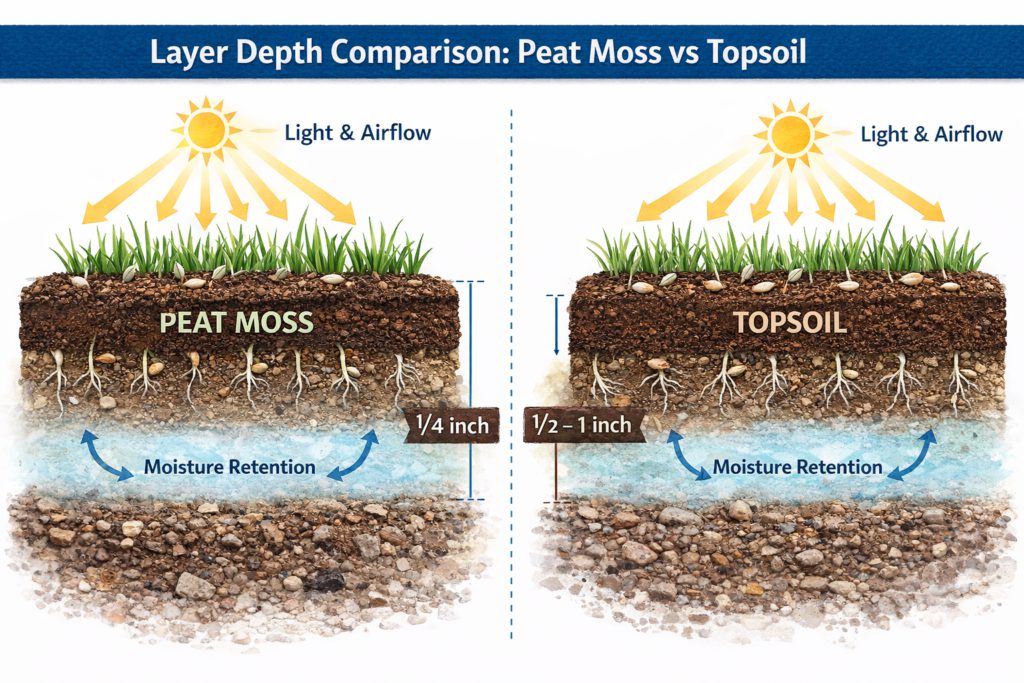
Peat Moss: Best for Surface Moisture Control
- Holds more water at the surface with less mess (USDA soil resources note peat can hold many times its weight in water)
- Lighter, won’t compact or smother seed when applied thinly
- Easy to spread and rake evenly for small patches
Topsoil: Best for Leveling or Soil Structure
- Adds bulk and organic matter to poor-quality soil
- Helps fill low areas or ruts while seeding
- Retains structure better over time
If your goal is to level your lawn and boost soil health while seeding, choose screened topsoil or a compost blend. If you’re fixing patches or working in dry spots, peat moss is quicker, cleaner, and better at moisture control in the short term.
Some homeowners also skip peat for environmental reasons tied to how it’s harvested. If that’s a priority, compost-based topdressings can still protect seed while improving soil structure.
If you’re unsure which is more cost-effective for your goals, our lawn care cost guide helps break it down.
How to Apply Peat Moss for Grass Seed the Right Way
Applying peat moss is simple, but easy to overdo. Too much can smother your seed, while too little won’t hold moisture.
Application Steps
- Seed first. Spread your grass seed directly on prepped soil.
- Add peat moss. Use a light ¼-inch layer. You should still see some seed poking through.
- Rake gently. Use a leaf rake flipped upside down to avoid clumping.
- Water consistently. Keep the top layer moist (not soggy) until sprouting starts. For hot conditions, follow our summer watering guide.
Avoid walking over seeded areas after applying peat moss, especially when wet. It compresses the layer and reduces airflow.
Shortcut: One compressed bale of peat moss (3.8 cu ft) covers up to 1000 square feet at a ¼-inch depth, ideal for small patch repair projects.
Common Peat Moss Mistakes That Reduce Germination
You’ve done the work, but the seed still won’t sprout evenly. Often, the problem comes down to coverage mistakes.
- Layer is too thick. More than ¼ inch creates rot risk and suffocates new grass.
- Peat dried out. Dry peat becomes water-repellent. It needs to be pre-wet or watered carefully.
- Wrong conditions. Shaded, humid, or poorly draining areas can hold too much moisture and slow growth.
- No pre-rake. If soil is crusted or compacted under the seed, peat won’t solve the issue alone.
If your seed isn’t sprouting within 10–14 days, check for dry patches or pooled areas where peat has bunched up or crusted over. You can also review how often and how long you should water your lawn to ensure consistency.
When to Use Peat Moss for Grass Seed
This simple rule set helps you decide whether peat moss makes sense based on your conditions.
- Use peat moss if:
- You’re filling small bare spots.
- Your soil dries out quickly in sun.
- You’re working with sandy or loose topsoil.
- Skip peat moss if:
- You’re seeding in clay-heavy soil that stays wet.
- You’re covering a full lawn, topsoil or compost is more economical.
- The area is shaded and humid, peat may hold too much moisture.
- Stop and reassess if:
- Germination hasn’t started after two weeks.
- You see mold, fungus, or pooling water.
- The peat has dried out and isn’t absorbing water.
For more leveling guidance, visit our uneven lawn repair guide.
FAQ
Does peat moss help all types of grass seed?
Yes, peat moss improves surface conditions for both cool-season and warm-season seeds. The grass type doesn’t affect how peat moss works, it’s about surface moisture, not nutrient content. Cornell’s horticulture department notes peat is slightly acidic, but thin top layers have minimal impact on lawn pH.
For an overview of warm-season and cool-season grass types, check our comparison guide.
Can I use peat moss and topsoil together?
You can, especially when leveling low spots. Use topsoil as a base and a thin layer of peat moss on top to lock in moisture during germination. Just keep the total layer under ½ inch to avoid smothering the seed.
We also cover straw vs peat moss over grass seed for additional context.
How long should I keep peat moss moist after seeding?
Water lightly every day until germination starts, usually 7 to 14 days depending on seed type and temperature. After sprouting, reduce watering to once every other day to encourage root growth.
When It’s Better to Let a Pro Handle It
If you’re juggling patchy turf, compacted soil, or an uneven lawn that needs both leveling and reseeding, consider booking with LawnGuru. We handle seed selection, prep, and aftercare, no guessing, no wasted product. You can even check the average seeding cost before committing.
Get More from Every Seed
Peat moss helps lock in moisture right where grass seed needs it. It works best for patch jobs, sunny spots, and dry soil. Just don’t overdo the layer, and know when to switch to topsoil or compost instead. If germination stalls or you’re dealing with runoff, adjust the conditions, not just the cover.